How to tell if a baby starling is male or female can be confusing for new bird owners and wildlife enthusiasts alike. Unlike many bird species where males and females show clear differences, baby starlings present a unique challenge because they lack obvious physical traits that distinguish gender during their early development stages.
Identifying the sex of juvenile starlings requires careful observation of subtle physical characteristics, behavioral patterns, and sometimes scientific testing methods. Many bird owners struggle with this identification process because baby starlings of both sexes appear remarkably similar until they reach sexual maturity.
In this guide, I’ll walk you through the most reliable methods for determining baby starling gender, from recognizing early physical signs to understanding when professional help becomes necessary. You’ll learn about feather patterns, behavioral differences, scientific testing options, and expert techniques that provide accurate results.
What Makes Sexing Baby Starlings So Difficult?
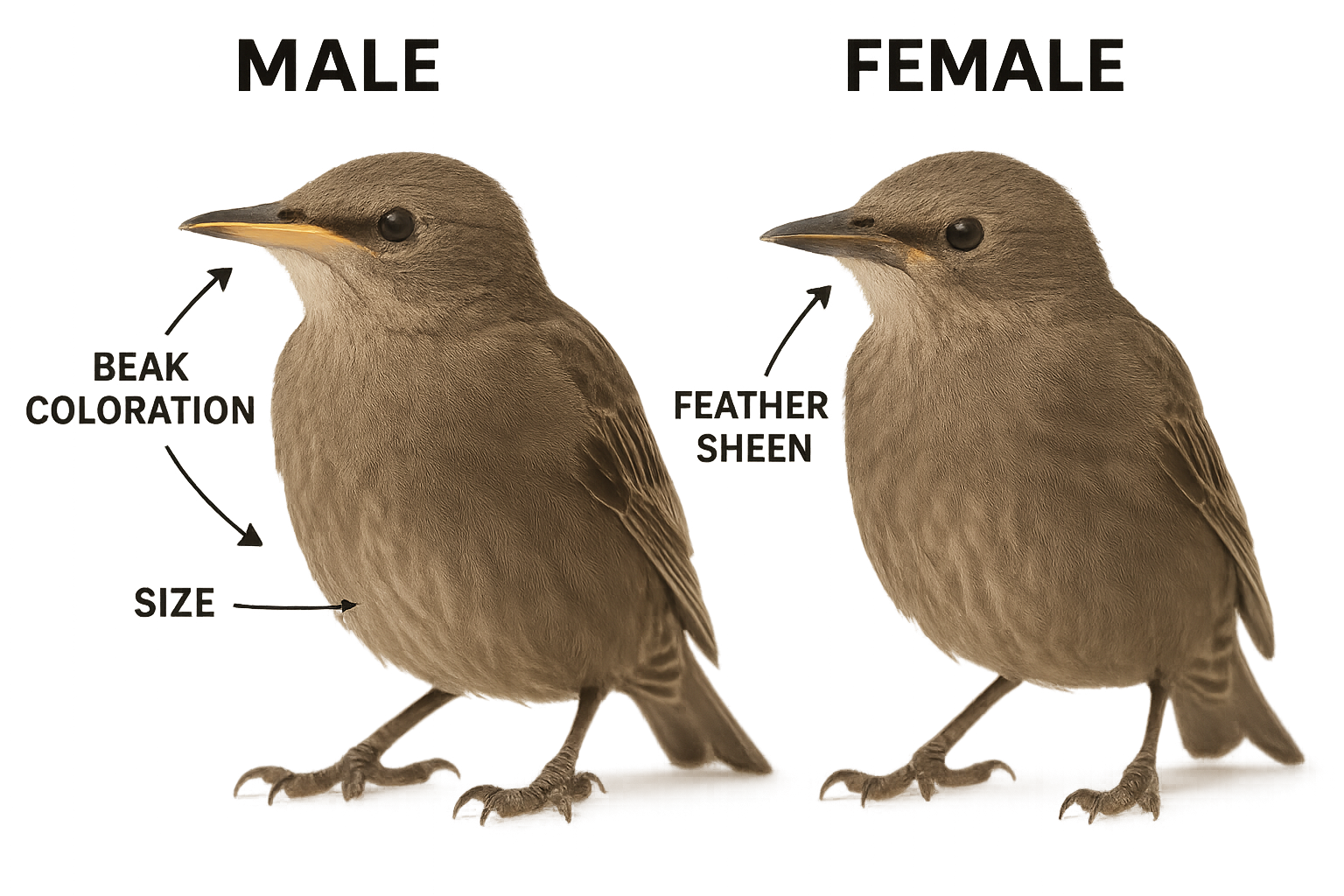
Baby starlings present one of the most challenging bird sexing scenarios because they lack strong sexual dimorphism during their juvenile phase. Sexual dimorphism refers to the physical differences between males and females of the same species – and in baby starlings, these differences are extremely subtle.
Similarities in Early Development
During the first 4-6 weeks of life, male and female starling chicks develop at nearly identical rates. Both sexes share:
- Similar body size and weight
- Identical feather coloration patterns
- Comparable beak development
- Nearly identical behavioral patterns
Why Traditional Sexing Methods Fail
Many bird species can be sexed through obvious physical traits like:
- Color differences (like cardinals or mallard ducks)
- Size variations (hawks and eagles)
- Distinctive markings (many finch species)
Baby starlings don’t exhibit these clear markers, making visual identification unreliable for beginners. Even experienced bird handlers sometimes struggle with accurate identification during the early weeks.
Common Misidentification Issues
Research shows that visual sexing attempts by non-professionals have accuracy rates below 60% for juvenile starlings. The most common mistakes include:
- Assuming larger babies are male
- Misinterpreting normal behavioral variations as gender-specific traits
- Relying on outdated or inaccurate identification methods
Physical Signs to Look For in Baby Starlings
While challenging, certain physical characteristics can provide clues about baby starling gender. These signs become more reliable as the birds mature beyond 6 weeks of age.
Feather Color & Growth Patterns
Male baby starlings often develop:
- Slightly more iridescent sheen on wing feathers
- Faster feather growth on the head and neck region
- More pronounced glossy appearance as juvenile feathers emerge
Female baby starlings typically show:
- More muted coloration in early feather development
- Consistent but less dramatic feather growth rates
- Softer appearance in overall plumage texture
Important Note on Juvenile Feathers
Baby starlings go through multiple molting phases. Their first feathers (down) provide no gender clues. The juvenile feathers that appear around 3-4 weeks offer the first potential indicators, but these remain subtle until the birds approach their first adult molt.
Beak Color & Shape Development
The beak provides one of the more reliable early indicators:
Males:
- Develop slightly larger, more robust beaks
- Show earlier color changes from black to yellow
- Display more pronounced beak ridge development
Females:
- Maintain more delicate beak structure
- Color changes occur 1-2 weeks later than males
- Less prominent beak ridge formation
Size and Body Structure Differences
Adult male starlings average 10-15% larger than females, but this difference emerges gradually:
Week 1-3: No reliable size differences
Week 4-6: Subtle differences may appear
Week 7+: Size differences become more noticeable
Male characteristics:
- Broader chest development
- Longer wing span
- More robust leg structure
Female characteristics:
- More compact body frame
- Proportionally smaller head size
- Lighter overall build
Behavioral Differences Between Male and Female Baby Starlings
Behavioral observation provides valuable clues for determining baby starling gender, especially when combined with physical assessment.
Early Vocalization Patterns
Male baby starlings typically:
- Begin vocalizing 3-5 days earlier than females
- Produce louder, more frequent calls
- Show earlier attempts at song development
- Display more varied vocal repertoires
Female baby starlings generally:
- Start with softer, less frequent vocalizations
- Focus on contact calls rather than territorial sounds
- Develop consistent but simpler vocal patterns
Aggression and Dominance Behaviors
Even at 4-6 weeks old, behavioral differences emerge:
Males often exhibit:
- More aggressive feeding behaviors
- Earlier territorial displays
- Increased activity levels during peak hours
- More exploratory behavior in new environments
Females typically show:
- Calmer feeding approaches
- Less confrontational interactions with siblings
- More cautious exploration patterns
- Earlier development of preening behaviors
Social Interaction Patterns
Observing how baby starlings interact with siblings and parents reveals gender-specific traits:
- Males tend to position themselves more prominently during feeding
- Females often display more cooperative behaviors with nest mates
- Males show earlier interest in objects and environmental exploration
- Females demonstrate more consistent following behaviors with parents
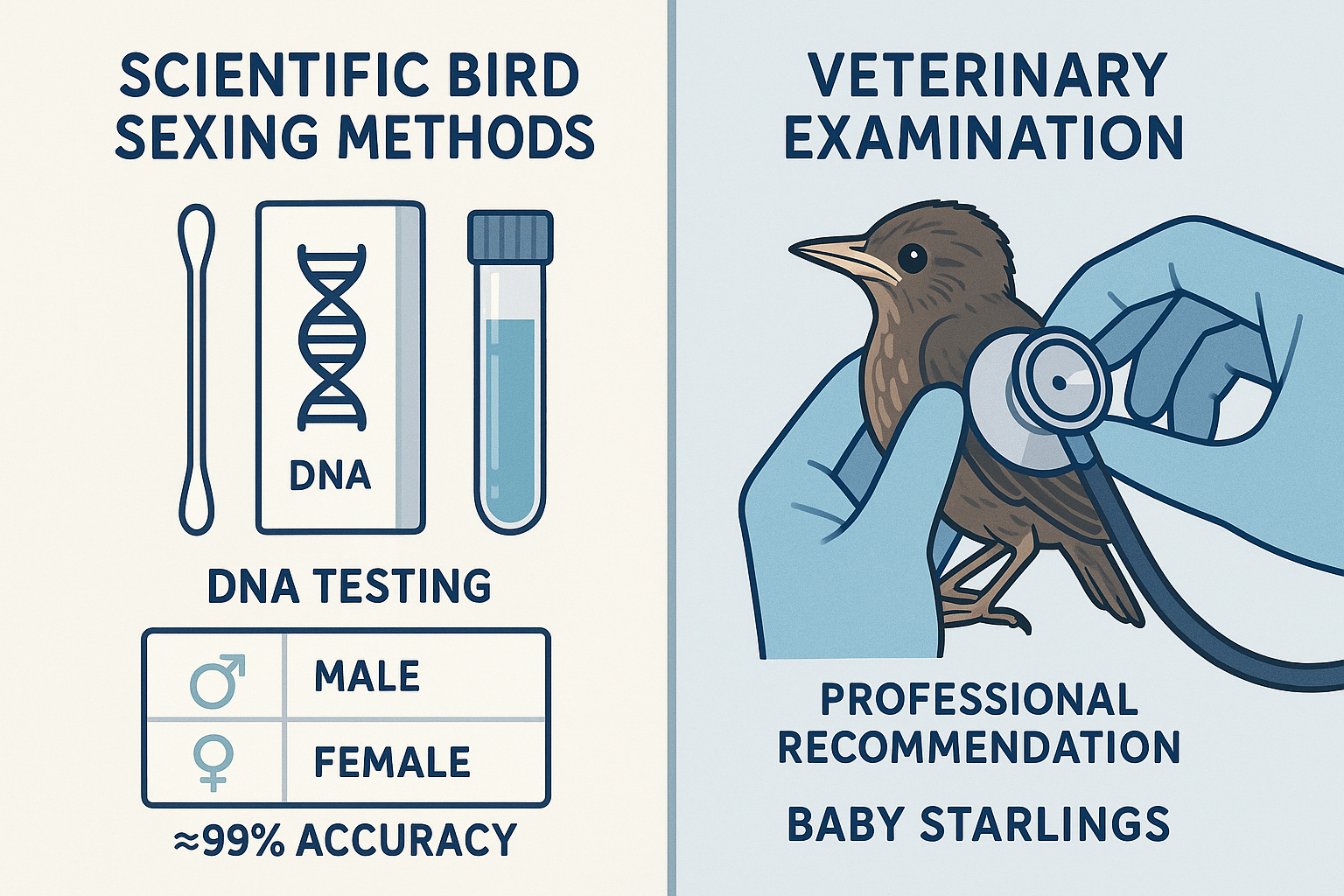
How To Tell If A Baby Starling Is Male Or Female Using Scientific Methods
When accuracy is essential, scientific methods provide the most reliable results for determining baby starling gender.
DNA Testing: The Gold Standard
DNA sexing offers 99%+ accuracy for baby starlings and works from just a few days old.
How DNA Testing Works:
- Small blood sample or feather collection
- Laboratory analysis of sex chromosomes
- Results typically available within 5-7 days
- No stress or handling trauma for the bird
Cost and Availability:
- Average cost: $25-45 per test
- Available through avian veterinarians
- Mail-in testing services offered by specialized labs
- Some wildlife rehabilitation centers provide testing services
When to Choose DNA Testing:
- Breeding program requirements
- Wildlife rehabilitation needs
- When visual methods remain inconclusive
- For valuable or rare bird populations
Professional Veterinary Examination
Experienced avian veterinarians can perform cloacal examination for gender determination.
The Process:
- Gentle physical examination of the cloaca (reproductive opening)
- Requires specialized training and experience
- Most accurate after 6-8 weeks of age
- Minimal stress when performed correctly
Advantages:
- Immediate results
- No laboratory wait time
- Combined with general health assessment
- Professional guidance on bird care
Limitations:
- Requires experienced practitioner
- Small risk of stress to young birds
- Less reliable before 6 weeks of age
- May require sedation for very young birds
Growth Stages: When Gender Differences Become Clearer
Understanding starling development stages helps identify the optimal timing for gender determination.
Hatchling Stage (0-10 days)
Physical Development:
- No reliable gender indicators
- Focus on basic care and feeding
- Both sexes appear identical
Recommendation: Wait for later development stages before attempting identification.
Nestling Stage (10-21 days)
Emerging Characteristics:
- First feather pin development
- Early size differences may appear
- Behavioral patterns begin forming
Identification Accuracy: Less than 40% for visual methods
Fledgling Stage (21-35 days)
Notable Changes:
- Juvenile feathers emerge
- Beak color changes begin
- Vocalization patterns develop
- Size differences become apparent
Identification Accuracy: 60-70% for experienced observers
Juvenile Stage (35+ days)
Clear Indicators Develop:
- Distinct feather patterns emerge
- Behavioral differences solidify
- Physical size differences established
- Beak development shows clear variation
Identification Accuracy: 80-85% for visual methods
When to Seek Expert Help for Baby Starling Gender Identification
Professional assistance ensures accurate identification and proper bird care.
Avian Veterinarians
Best for:
- Health assessment combined with sexing
- DNA testing coordination
- Professional cloacal examination
- Medical concerns about development
What to Expect:
- Comprehensive physical examination
- Discussion of identification methods
- Health status evaluation
- Care recommendations
Experienced Bird Breeders
Advantages:
- Extensive hands-on experience
- Visual identification expertise
- Breeding program knowledge
- Cost-effective consultation
Finding Qualified Breeders:
- Local bird clubs and associations
- Veterinary referrals
- Online breeder directories
- Bird show participants
Wildlife Rehabilitation Centers
Services Provided:
- Professional assessment
- Species-specific expertise
- Educational resources
- Volunteer training opportunities
When to Contact:
- Found orphaned baby starlings
- Injured birds requiring care
- Educational questions about starlings
- Community wildlife concerns
Final Verdict: What’s the Most Reliable Way to Tell If A Baby Starling Is Male Or Female?
After examining all available methods, the most effective approach combines multiple identification techniques:
Most Accurate Method: DNA Testing
- Accuracy: 99%+
- Age: Works from 3-5 days old
- Cost: $25-45
- Timeline: 5-7 days for results
Best Visual Method: Combined Physical and Behavioral Assessment
- Accuracy: 80-85% (experienced observers)
- Optimal Age: 6+ weeks
- Cost: Free
- Timeline: Immediate
Professional Recommendation:
For critical applications like breeding programs or wildlife rehabilitation, DNA testing provides the reliability needed. For general bird keeping and educational purposes, learning visual identification skills offers practical value while understanding the limitations.
Practical Approach:
- Start with observation at 4-6 weeks
- Note physical and behavioral traits
- Consult experienced handlers for confirmation
- Use DNA testing when accuracy is essential
Frequently Asked Questions
Can you tell the gender of a baby starling by looking at it?
Visual identification is possible but challenging. Experienced bird handlers achieve 80-85% accuracy with birds over 6 weeks old by combining physical traits (beak development, size, feather patterns) with behavioral observations (vocalizations, aggression levels, social interactions).
How long until you can visually sex a starling?
Reliable visual sexing becomes possible around 6-8 weeks of age when juvenile feathers are well-developed and behavioral patterns have emerged. Before this age, visual identification accuracy drops below 60% even for experienced handlers.
Do male baby starlings sing earlier than females?
Yes, male baby starlings typically begin vocalizing 3-5 days earlier than females and produce more varied, louder calls. However, individual variation exists, and this should be combined with other identification methods for accuracy.
What is the easiest way to sex a starling at home?
The easiest home method combines beak observation (males develop larger, more colorful beaks earlier) with behavioral assessment (males are typically more vocal and aggressive). However, DNA testing remains the most reliable option for definitive identification.
Are male or female starlings more vocal?
Male starlings are generally more vocal, starting earlier in development and producing more complex vocalizations. Adult males are known for their elaborate songs and mimicry abilities, while females focus more on functional communication calls.
Conclusion
Learning how to tell if a baby starling is male or female requires patience, observation skills, and realistic expectations about accuracy. While visual identification provides valuable insights, especially after 6 weeks of age, scientific methods like DNA testing offer the reliability needed for critical applications.
The key to successful identification lies in combining multiple approaches: observing physical development, noting behavioral patterns, and consulting with experienced professionals when needed. Remember that even experts sometimes struggle with visual identification of very young starlings.
Your next steps:
- Practice observation skills with birds over 6 weeks old
- Connect with local bird experts for hands-on learning
- Consider DNA testing for definitive identification needs
- Focus on proper care while learning identification techniques
Whether you’re caring for orphaned wildlife, managing a breeding program, or simply satisfying curiosity about backyard visitors, understanding these identification methods will enhance your bird knowledge and ensure appropriate care for these intelligent, adaptable birds.