If you’ve ever seen a tiny bird hovering at your flowers with wings beating so fast they blur, you’ve probably spotted one of the hummingbirds in New York. These incredible birds are smaller than your thumb, yet they can fly backward, upside down, and reach speeds over 30 miles per hour. But here’s something that surprises most people: only one hummingbird species actually lives and breeds in New York.
The rest are rare visitors that occasionally wander far from their usual homes out west. This guide breaks down which hummingbirds you might see in New York, how to tell them apart, and what you can do to attract them to your yard. Whether you’re a backyard birder or just curious about these amazing creatures, you’ll get straightforward guidance on what to look for and when.
Key Takeaways
- Only the Ruby-throated Hummingbird regularly breeds in New York — it’s the state’s common hummingbird species
- Three rare western species occasionally appear: Rufous, Anna’s, and Calliope Hummingbirds
- Best viewing time is May through September for Ruby-throated Hummingbirds
- Rare species show up mostly in fall and winter when they stray from migration routes
- Setting up feeders and planting native flowers significantly increases your chances of seeing these birds
How Many Hummingbird Species Are Found in New York?
When people ask about hummingbirds in New York, they often assume the state has several species like Arizona or California. The reality is much simpler and that makes identification easier.
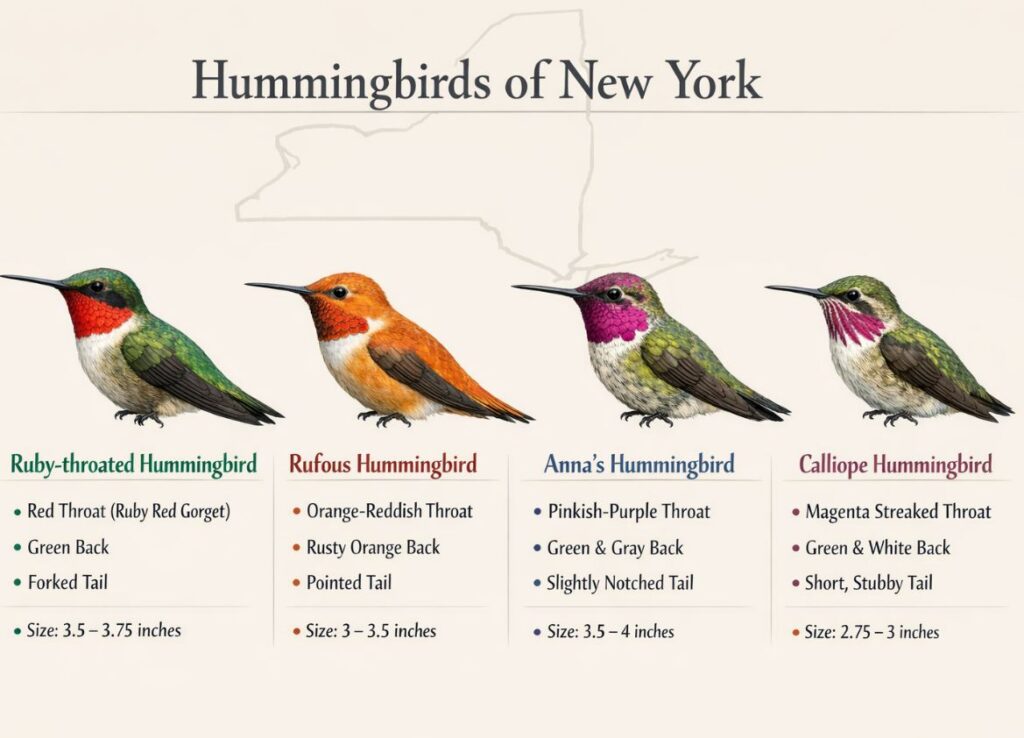
New York has documented four main hummingbird species, but the numbers tell an interesting story:
- 1 common breeding species (seen regularly every year)
- 3 rare documented visitors (appear occasionally, sometimes annually)
- A handful of extremely rare records (reported only a few times in state history)
The New York State Avian Records Committee tracks these sightings carefully. They review unusual reports to confirm that rare species were correctly identified. This authority-driven process helps maintain accurate bird records for the state.
Here’s the breakdown in simple terms:
| Species | Status in New York | Frequency |
|---|---|---|
| Ruby-throated Hummingbird | Common breeder | Every year, statewide |
| Rufous Hummingbird | Rare visitor | Annual, mostly fall/winter |
| Anna’s Hummingbird | Rare visitor | Occasional reports |
| Calliope Hummingbird | Very rare visitor | Few confirmed records |
Beyond these four, a few other species have been spotted in New York under exceptional circumstances. These include Allen’s Hummingbird, Black-chinned Hummingbird, and Broad-billed Hummingbird. Each has been recorded fewer than five times in the state’s birding history.
Why so few species? Geography plays a major role. New York sits far from the hummingbird diversity hotspots of the southwestern United States and Central America. Most hummingbird species prefer warmer climates year-round and don’t migrate this far north.
Common Hummingbirds in New York
Ruby-throated Hummingbird: The Only Regular Resident
The Ruby-throated Hummingbird is the star of the show when it comes to hummingbirds in New York. This species is responsible for nearly every hummingbird sighting in the state during spring, summer, and early fall.
Identification Features
Males and females look different, which helps with identification:
Males:
- Brilliant red throat (called a gorget) that flashes in sunlight
- Emerald green back and crown
- Forked tail with dark feathers
- White or grayish chest and belly
- The red throat can look black in poor lighting
Females:
- No red coloring on throat
- Pale gray or white throat and underparts
- Green back like males
- Rounded tail with white tips on outer feathers
- Slightly larger than males
Juveniles look similar to adult females, which can make fall identification tricky.
Seasonal Presence and Migration
Ruby-throated Hummingbirds follow a predictable schedule in New York:
- Late April to early May: First arrivals appear, usually males first
- May through August: Peak breeding season, birds are widespread
- September to early October: Fall migration begins
- Mid-October: Most birds have left the state
These tiny birds make an incredible journey. They fly across the Gulf of Mexico — a 500-mile, non-stop flight that takes about 20 hours. They nearly double their body weight before migration to fuel this journey.
Habitat and Behavior
You’ll find Ruby-throated Hummingbirds in various habitats across New York:
- Deciduous and mixed forests
- Woodland edges and clearings
- Suburban gardens and parks
- Rural farmland with flower gardens
- Urban areas with sufficient green space
Diet and Feeding
These hummingbirds need two main food sources:
- Nectar from flowers (primary energy source)
- Small insects and spiders (protein for growth and reproduction)
They visit hundreds of flowers daily and can consume up to half their body weight in sugar water each day. Their metabolism is so fast that they must eat every 10-15 minutes during daylight hours.
Breeding in New York
Female Ruby-throated Hummingbirds build tiny nests about the size of a walnut shell. They use:
- Spider silk (for flexibility and strength)
- Plant down and soft materials
- Lichen for camouflage on the outside
Nests are typically placed on downward-sloping branches 10-20 feet above ground. Females lay two white eggs the size of jelly beans and raise the young alone. Males don’t participate in nesting or chick-rearing.
Rare and Accidental Hummingbirds in New York
Rufous Hummingbird: The Most Common Rare Visitor
Among the rare hummingbirds in New York, the Rufous Hummingbird appears most frequently. This western species has become almost expected in small numbers each year.
Why They Appear in New York
Rufous Hummingbirds breed in the Pacific Northwest and western Canada. Their normal migration route takes them south through the western states to Mexico. However, some birds especially young, inexperienced migrants take a wrong turn and end up in the eastern United States.
Identification
Males:
- Bright orange-rufous coloring on back, sides, and tail
- Orange-red throat gorget
- Very distinctive and hard to confuse with other species
Females and juveniles:
- Green back with rufous sides
- Rufous coloring on tail base
- Spotted throat, sometimes with a few red feathers
- More challenging to identify
When and Where to Find Them
- Peak season: Late October through December
- Habitat: Backyard feeders, especially in coastal and suburban areas
- Behavior: Often territorial at feeders, chasing other birds
Most Rufous Hummingbird sightings in New York come from people who keep their feeders up late into fall and winter. These birds may stay at a single feeder for weeks or even months if conditions are favorable.
Real-world example: In 2024, a Rufous Hummingbird spent the entire winter at a feeder in Long Island, surviving temperatures well below freezing. The homeowner provided fresh, unfrozen sugar water multiple times daily.
Anna’s Hummingbird: The Western Wanderer
Anna’s Hummingbird is another western species showing up more frequently in eastern states, including New York.
Identification
Males:
- Rose-pink to reddish throat and crown
- The color extends over the head, unlike Ruby-throated
- Grayish-green back
- Stockier build than Ruby-throated
Females:
- Green back
- Gray underparts
- Small patch of red spots on throat (variable)
- Larger and chunkier than female Ruby-throated
Status in New York
Anna’s Hummingbirds don’t breed in New York. All sightings are considered rare or accidental. However, reports have increased in recent years, possibly due to:
- Range expansion along the West Coast
- More birders actively looking for rare species
- Better feeder coverage providing data
Timing: Most New York records occur in late fall through winter, similar to Rufous Hummingbirds.
Calliope Hummingbird: The Tiny Rarity
The Calliope Hummingbird holds the title of smallest bird in the United States. It weighs less than a penny about 2.5 grams.
Identification Challenges
This species is tough to identify because of its small size and subtle markings:
Males:
- Wine-red streaks on throat (not a solid gorget)
- Short tail that doesn’t extend past wingtips at rest
- Compact, rounded body shape
Females:
- Very similar to female Rufous and Ruby-throated
- Requires expert observation to confirm
Status in New York
Calliope Hummingbirds are very rare visitors to New York. The state has only a handful of confirmed records. Most sightings require photographic documentation and expert review.
Habitat: Breeds in mountain meadows of the western United States. Any New York sighting is far outside normal range.
Extremely Rare Hummingbird Records
A few additional species have been documented in New York under exceptional circumstances:
Allen’s Hummingbird
- Nearly identical to Rufous Hummingbird
- Requires in-hand examination or expert photography to confirm
- Fewer than five confirmed New York records
Black-chinned Hummingbird
- Western species with purple throat band
- Extremely rare in New York
- Most reports lack sufficient documentation
Broad-billed Hummingbird
- Mexican species with blue throat and red bill
- One or two possible New York records
- Requires committee review for acceptance
These ultra-rare sightings generate excitement in the birding community. When one appears, birders may travel hundreds of miles for a chance to see it.
When Can You See Hummingbirds in New York?
Timing matters when looking for hummingbirds in New York. Here’s a month-by-month breakdown:
April
- Late April: First Ruby-throated Hummingbirds arrive
- Males typically arrive 1-2 weeks before females
- Southern New York sees birds first
May
- Peak arrival period for Ruby-throated Hummingbirds
- Birds establish territories and begin nesting
- Excellent time to set up feeders
June – July
- Peak breeding season
- Highest hummingbird numbers statewide
- Young birds fledge and visit feeders
August
- Fall migration begins
- Numbers may actually increase as migrants pass through
- Good time to see multiple birds at feeders
September
- Heavy migration period
- Most Ruby-throated Hummingbirds depart
- First possible rare species sightings
October – December
- Ruby-throated Hummingbirds mostly gone
- Best time for rare western species
- Keep feeders up for late migrants
January – March
- Very rare to see any hummingbirds
- Occasional overwintering individuals at feeders
- Usually rare western species, not Ruby-throated
Migration tip: Male Ruby-throated Hummingbirds leave New York earlier than females and juveniles. By late September, most remaining birds are females and young of the year.
Where to See Hummingbirds in New York
Hummingbirds in New York can appear almost anywhere, but certain habitats and locations produce more sightings.
Best Habitats
Backyard Gardens
- Single best location for reliable sightings
- Feeders and flowers attract birds close to home
- Allows extended observation time
Woodland Edges
- Natural habitat for Ruby-throated Hummingbirds
- Areas where forest meets open space
- Often has diverse flowering plants
Parks and Nature Preserves
- Central Park in New York City gets regular sightings
- Suburban parks with native plantings
- State parks with meadows and gardens
Coastal Areas
- Migration concentration points
- Good for rare species in fall
- Long Island and coastal regions see more vagrants
Regional Differences
Downstate New York
- Earlier spring arrivals
- More rare species reports
- Higher human population means more feeders and observers
Upstate New York
- Slightly later spring arrival
- Excellent breeding habitat in Adirondacks and Catskills
- Fewer rare species records
Urban vs. Rural
- Urban areas: Fewer birds but well-documented sightings
- Suburban areas: Best mix of habitat and observation
- Rural areas: More breeding habitat, fewer observers
Notable Locations
While hummingbirds can appear anywhere, these spots have produced consistent sightings:
- Central Park, Manhattan
- Prospect Park, Brooklyn
- Fire Island National Seashore
- Adirondack Park (breeding habitat)
- Montezuma National Wildlife Refuge
Pro tip: Most rare hummingbird sightings in New York come from private residences with feeders, not public birding hotspots. Your own backyard might be the best place to see something unusual.
How to Attract Hummingbirds in New York
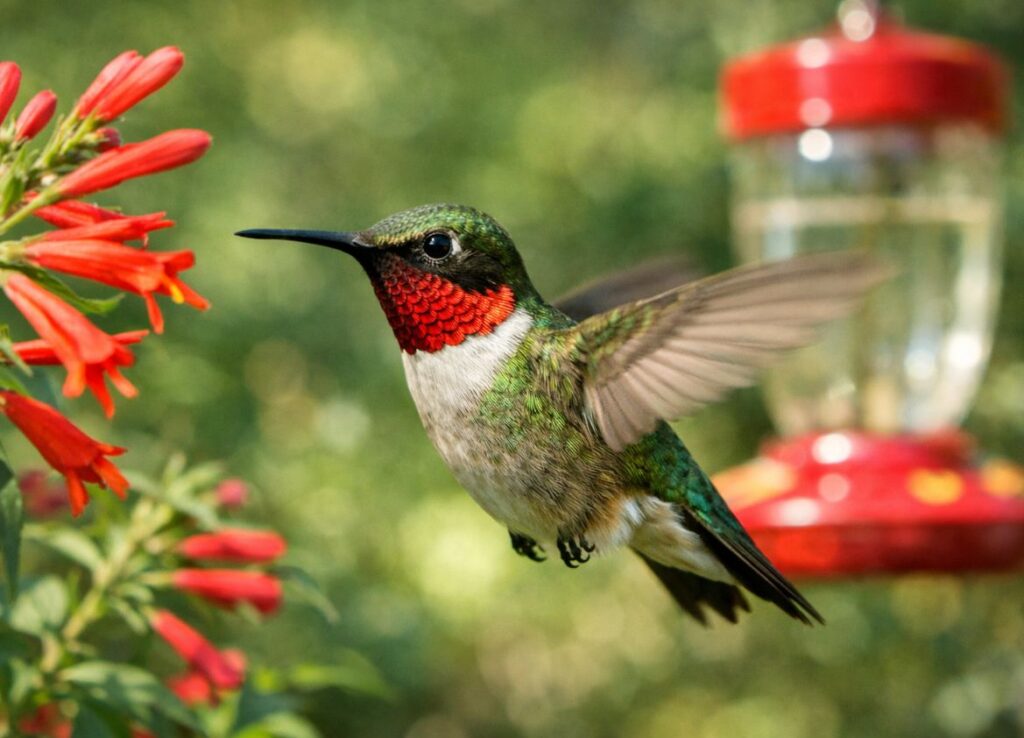
Want to bring hummingbirds to your yard? These actionable steps work for both common and rare species.
Set Up Feeders Properly
Feeder Selection
- Choose red feeders (hummingbirds are attracted to red)
- Get feeders with bee guards and ant moats
- Select easy-to-clean designs (you’ll clean them often)
Sugar Water Recipe
The correct ratio is critical:
Recipe:
- Mix 4 parts water to 1 part white sugar
- Boil water first, then add sugar and stir
- Let cool completely before filling feeders
- Store extra in refrigerator for up to one week
Never use:
- Red food coloring (unnecessary and potentially harmful)
- Honey (promotes dangerous fungal growth)
- Artificial sweeteners (provide no nutrition)
- Brown sugar or other sweeteners (contain impurities)
Maintenance Schedule
- Summer heat: Change sugar water every 2-3 days
- Cooler weather: Change every 5-7 days
- Clean feeders thoroughly with hot water each time
- Use bottle brush to remove mold and residue
Plant Native Flowers
Feeders help, but natural nectar sources are essential for healthy hummingbird populations.
Best Native Plants for New York:
Spring Bloomers:
- Columbine (Aquilegia canadensis)
- Wild bleeding heart
- Red buckeye
Summer Bloomers:
- Cardinal flower (Lobelia cardinalis) — top choice
- Bee balm (Monarda didyma)
- Trumpet honeysuckle vine
- Jewelweed
Fall Bloomers:
- Salvia
- Late-blooming native asters
- Sedum
Planting Tips:
- Choose tubular, red or orange flowers (hummingbird favorites)
- Plant in clusters for easier feeding
- Include plants with different bloom times
- Avoid pesticides that kill insects (protein source)
Create Ideal Habitat
Water Features
- Hummingbirds bathe in fine mist or spray
- Add a misting attachment to garden hose
- Shallow bird baths with moving water work well
Perching Spots
- Hummingbirds spend 80% of their time perching
- Leave small dead branches near feeders
- Provide open sightlines for territorial males
Shelter
- Dense shrubs for protection from predators
- Trees for nesting sites (Ruby-throated Hummingbirds)
- Avoid excessive pruning during breeding season
Timing Matters
Spring Setup
- Put feeders out by late April in southern New York
- Early May for northern regions
- Have feeders ready before first arrivals
Fall Extension
- Keep feeders up through October
- Don’t worry about preventing migration (instinct drives migration, not food availability)
- You might host a rare species
Winter Feeding
- If you see a hummingbird in November or later, keep feeding it
- Provide fresh, unfrozen sugar water multiple times daily in cold weather
- Contact local birding groups (rare species should be documented)
How to Identify Hummingbirds in New York
Correct identification takes practice, especially when rare species appear. Here’s a step-by-step breakdown.
Key Identification Features
1. Throat Color and Pattern
This is often the first thing to check:
- Solid red throat: Male Ruby-throated
- Solid orange-red throat: Male Rufous
- Rose-pink throat and crown: Male Anna’s
- Streaked wine-red throat: Male Calliope
- White or spotted throat: Females of most species
Lighting matters: Gorget colors can look black in poor light, then flash brilliant color when the bird turns.
2. Back and Body Color
- Green back: Ruby-throated, Anna’s, Calliope
- Orange-rufous back: Male Rufous
- Green back with rufous sides: Female Rufous
3. Tail Shape and Color
- Forked tail: Male Ruby-throated
- Rounded tail with white tips: Female Ruby-throated
- Rufous base to tail: Rufous Hummingbird
- Short tail (doesn’t extend past wings): Calliope
4. Size and Build
- Tiny (smallest): Calliope
- Small and slender: Ruby-throated
- Slightly stockier: Anna’s, Rufous
Size differences are subtle and hard to judge without direct comparison.
Identification Challenges
Female and Juvenile Birds
These are the toughest to identify:
- Most lack distinctive throat colors
- Green backs look similar across species
- Require careful observation of multiple features
Focus on:
- Tail pattern and color
- Overall size and shape
- Bill length
- Behavior and vocalizations
Worn Plumage
By late summer, feathers can be worn and faded:
- Colors appear duller
- Gorgets may look patchy
- Tail feathers may be damaged
Documentation for Rare Species
If you think you’ve found a rare hummingbird in New York:
Photograph It
- Take as many photos as possible from different angles
- Capture throat, back, tail, and overall body
- Photos in different lighting help show color
Note Details
- Date, time, and location
- Weather conditions
- Behavior (feeding, perching, vocalizing)
- Size comparison if other birds present
Report It
- Contact local Audubon chapter
- Submit to eBird with photos
- Notify New York State Avian Records Committee for very rare species
Don’t feel bad about uncertainty. Even expert birders struggle with female and juvenile hummingbird identification. When in doubt, photograph and consult experts.
Helpful Tools
Field Guides
- Sibley Guide to Birds (excellent illustrations)
- Peterson Field Guide to Birds of Eastern North America
- Kaufman Field Guide to Birds of North America
Apps
- Merlin Bird ID (free, includes photos and sounds)
- eBird (for reporting and checking recent sightings)
- Audubon Bird Guide
Online Resources
- All About Birds (Cornell Lab of Ornithology)
- New York State Ornithological Association
- Local birding group websites and forums
Are Rare Hummingbird Sightings Increasing in New York?
Over the past 20 years, birders have reported more rare hummingbirds in New York. This trend raises interesting questions about what’s changing.
Possible Explanations
1. More Feeders and Observers
The number of people feeding birds has grown significantly:
- More feeders means more opportunities to detect rare birds
- Increased awareness of rare species
- Better cameras make documentation easier
- Social media spreads news of sightings quickly
This doesn’t mean more rare birds are arriving — we might just be finding the ones that were always here.
2. Extended Feeder Seasons
More people now keep feeders up year-round or late into fall:
- Captures late migrants that would have gone unnoticed
- Provides stopping points for vagrant birds
- Allows rare species to survive longer in unusual locations
3. Climate and Environmental Changes
Some researchers suggest environmental factors:
- Warmer fall and winter temperatures
- Changes in migration patterns
- Range expansions of western species
- Shifts in food availability
The evidence is mixed. While climate change affects many bird species, it’s hard to separate this from increased observer effort.
4. Natural Vagrancy
Birds sometimes wander far from normal ranges:
- Young, inexperienced migrants make navigation errors
- Weather systems push birds off course
- Some individuals are naturally more exploratory
This has always happened, but we’re better at finding and documenting it now.
What the Data Shows
The New York State Avian Records Committee tracks rare bird sightings:
- 1990s: Rufous Hummingbirds reported every few years
- 2000s: Annual reports becoming more common
- 2010s-2025: Multiple Rufous reports annually, plus increasing Anna’s sightings
Key insight: The increase appears real for some species (especially Rufous), but observer effort plays a major role.
What This Means for Birders
Opportunities:
- Greater chance of seeing rare species at your feeder
- Valuable data collection through eBird and other platforms
- Contribution to understanding bird distribution changes
Responsibilities:
- Accurate identification and documentation
- Proper feeder maintenance to support visiting birds
- Reporting sightings to appropriate databases
Frequently Asked Questions About Hummingbirds in New York
How many hummingbird species live in New York?
Only one species, the Ruby-throated Hummingbird, regularly lives and breeds in New York. Three other species (Rufous, Anna’s, and Calliope) appear as rare visitors, mostly in fall and winter. A few additional species have been recorded only a handful of times in state history.
What is the most common hummingbird in New York?
The Ruby-throated Hummingbird is by far the most common. It accounts for more than 99% of all hummingbird sightings in the state during the regular season from May through September.
Are hummingbirds in New York year-round?
No, most hummingbirds leave New York in fall. Ruby throated Hummingbirds migrate to Central America for winter. However, rare individuals usually western species like Rufous Hummingbirds occasionally stay into winter at feeders.
What is the rarest hummingbird seen in New York?
Species like the Calliope, Broad-billed, and Black-chinned Hummingbirds are among the rarest recorded in New York, with only a few confirmed sightings each. Allen’s Hummingbird is also extremely rare.
When should I put out hummingbird feeders in New York?
Put feeders out in late April in southern New York and early May in northern regions. This timing ensures food is available when the first Ruby-throated Hummingbirds arrive from migration.
When should I take down hummingbird feeders in New York?
Don’t take feeders down until at least mid-October, even if you haven’t seen hummingbirds for a while. Late migrants and rare species may still pass through. If you see a hummingbird in November or later, keep the feeder up all winter.
Will leaving feeders up prevent hummingbirds from migrating?
No. Migration is triggered by instinct and day length, not food availability. Leaving feeders up helps late migrants and potentially supports rare species, but it won’t prevent birds from migrating when they’re supposed to.
How do I keep sugar water from freezing in winter?
If you’re feeding a winter hummingbird, bring feeders in at night and put fresh ones out in early morning. During the day, change feeders every few hours to provide unfrozen sugar water. Some people rotate multiple feeders, keeping backups warm inside.
Do hummingbirds eat anything besides nectar?
Yes. Hummingbirds eat small insects and spiders for protein. This makes up about 20-30% of their diet and is essential for growth, reproduction, and maintaining feathers. Avoid pesticides in your yard to protect this food source.
How can I tell if I have a rare hummingbird at my feeder?
Look for these signs: a hummingbird appearing in late fall or winter, orange or pink coloring (not green and red), or a bird that looks “wrong” compared to Ruby-throated. Take photos and contact local birding experts for help with identification.
Conclusion
Hummingbirds in New York offer both predictable pleasures and unexpected surprises. The Ruby-throated Hummingbird provides reliable summer entertainment, visiting gardens and feeders across the state from May through September. These tiny dynamos bring energy and beauty to any yard willing to offer flowers or sugar water.
But the real excitement comes from the rare visitors those western wanderers that take a wrong turn and end up at a New York feeder in November. A Rufous Hummingbird at your feeder in December creates a memorable birding experience and contributes valuable data about bird distribution and behavior.
Your Next Steps
Ready to attract hummingbirds to your space? Here’s what to do:
This week:
- Set up a feeder with proper 4:1 sugar water ratio
- Plant at least one native nectar plant (cardinal flower is a top choice)
- Download eBird app to track and report sightings
This month:
4. Create a feeding station with multiple feeders and perching spots
5. Add a water feature with misting capability
6. Join local birding groups to learn about rare sightings in your area
This season:
7. Keep feeders up through October to catch late migrants
8. Document any unusual birds with photos
9. Share your sightings on eBird and with local bird clubs
The world of hummingbirds in New York is small in species count but rich in opportunity. Whether you’re watching a male Ruby-throated Hummingbird defend his territory or documenting a rare Rufous visitor in December, these birds offer endless fascination.
Start with a simple feeder and some native flowers. Pay attention to what shows up. You might be surprised by what visits your yard — and you’ll definitely be amazed by these remarkable birds.