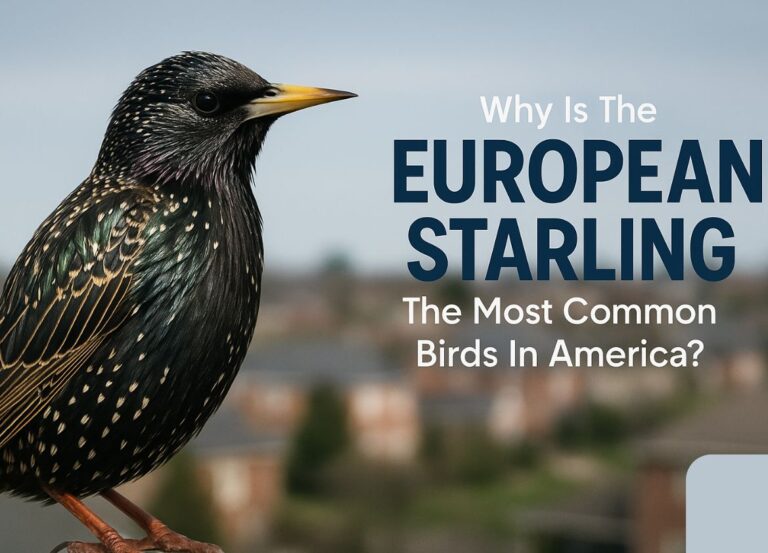
European starlings are among the most widespread birds in North America, but their distribution across the United States isn’t random. Understanding where do starlings live in the US helps bird watchers, homeowners, and wildlife enthusiasts better prepare for encounters with these adaptable birds.
From bustling city centers to quiet farmlands, starlings have claimed territory in nearly every corner of America. Their success story began with just 100 birds released in New York’s Central Park in 1890, and today they number over 200 million across the continent.
Key Takeaways
• Starlings live in all 50 US states, with the highest populations concentrated in urban and agricultural areas
• Urban environments provide ideal nesting sites in buildings, bridges, and infrastructure
• Agricultural regions offer abundant food sources and open spaces for large flocks
• Northern states see seasonal migration patterns, while southern populations remain year-round
• Roosting sites can house thousands of starlings in single locations during winter months
Where Do Starlings Live in the US Today
Complete US Coverage
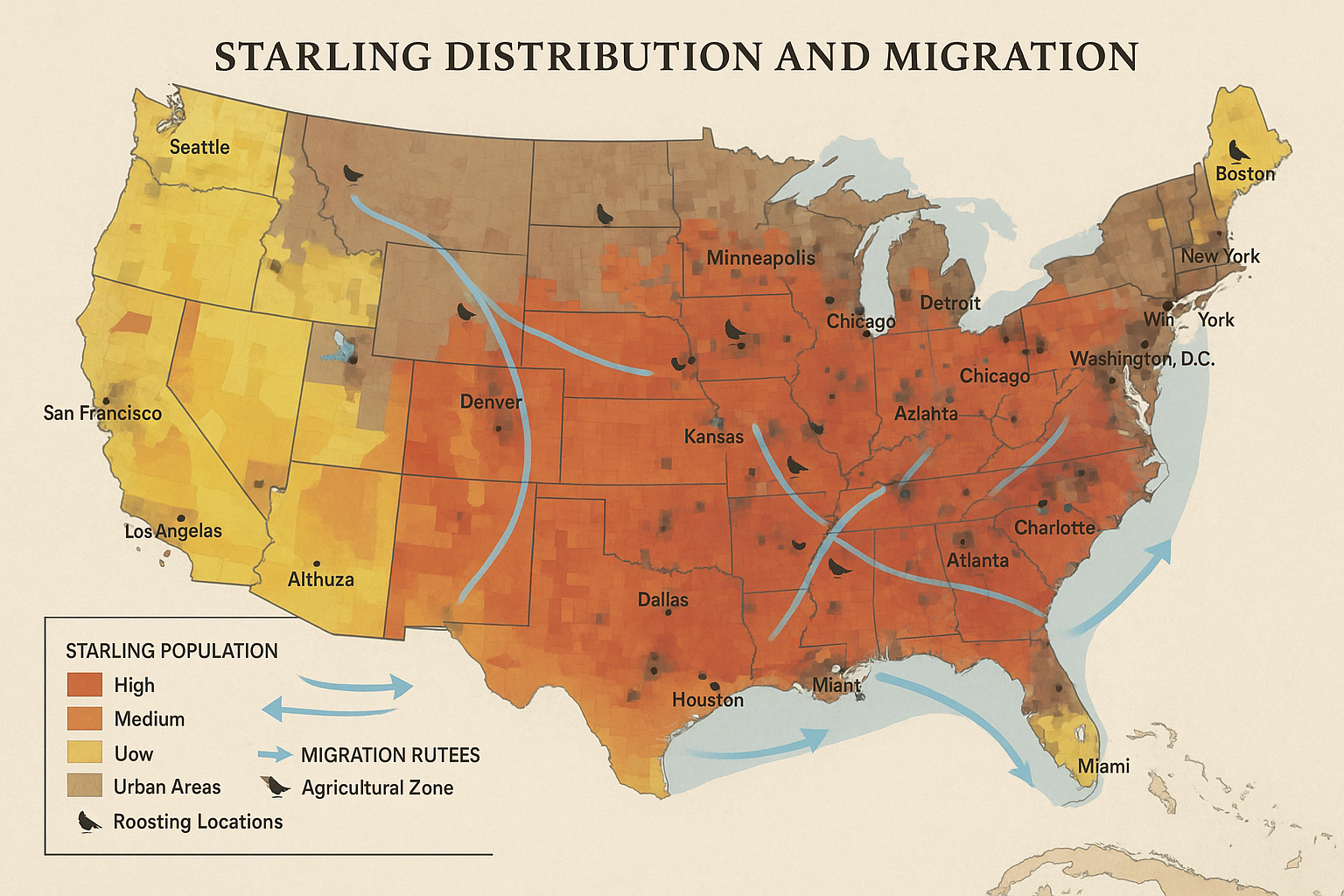
Starlings now inhabit every state in the continental United States, plus Alaska and Hawaii. This complete coverage happened remarkably fast – within just 60 years of their introduction, they had spread from coast to coast.
Population density varies significantly by region:
- Northeast and Midwest: Highest concentrations due to urban centers and agricultural land
- Southeast: Year-round populations with additional winter migrants
- Western states: Established populations in cities and farming areas
- Alaska: Smaller populations, mainly in developed areas
- Hawaii: Limited populations on main islands
The starling population explosion represents one of the most successful bird invasions in modern history.
Regional Population Patterns
High-Density Areas:
- Great Lakes region
- Northeast corridor (Boston to Washington DC)
- California’s Central Valley
- Texas agricultural regions
- Pacific Northwest cities
Moderate-Density Areas:
- Mountain West urban centers
- Southern agricultural zones
- Coastal plain regions
Lower-Density Areas:
- Desert Southwest
- High-altitude mountain regions
- Dense forest areas
Where Starlings Thrive in Cities
Building and Infrastructure Use
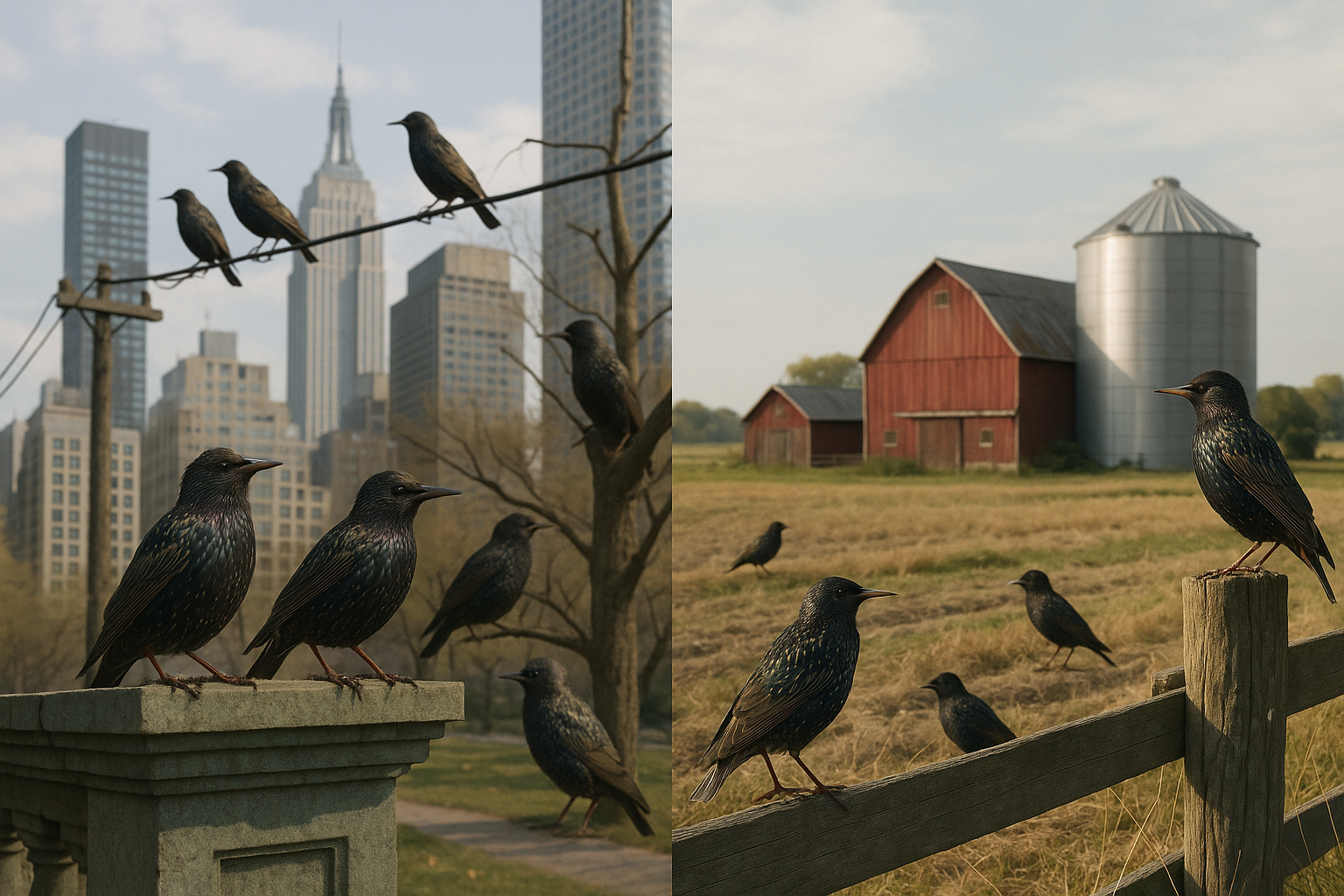
Cities provide perfect starling habitat because these birds excel at using human-made structures. Urban starlings commonly nest in:
- Building cavities – gaps in walls, roof spaces, and architectural features
- Bridge structures – especially older bridges with accessible crevices
- Traffic signs and lights – hollow poles and fixture spaces
- Parking structures – multi-level garages offer numerous nesting spots
- Industrial buildings – warehouses and factories with accessible openings
Food Sources in Urban Areas
Urban environments offer diverse food options that support large starling populations:
Primary urban food sources:
- Garbage and food waste from restaurants and households
- Insects found in parks, lawns, and landscaped areas
- Fruits and berries from ornamental trees and gardens
- Pet food left outdoors
- Bird feeders (though they’re often unwelcome visitors)
Many homeowners struggle with starlings at bird feeders because these aggressive birds can dominate feeding stations.
Urban Roosting Behavior
Winter roosting sites in cities include:
- Large parking lots with overhead structures
- Shopping center rooflines
- Industrial complexes
- Bridge underpasses
- Dense urban tree groves
These roosting sites can house 10,000 to 100,000+ starlings during peak winter months, creating significant noise and waste issues for nearby residents.
Agricultural and Rural Starling Populations
Farm and Ranch Habitats
Rural areas provide ideal starling habitat, especially regions with mixed agriculture and livestock operations. Key rural habitat features:
Nesting locations:
- Barn cavities and farm building gaps
- Old trees with natural hollows
- Fence posts and utility poles with cavities
- Abandoned structures like old silos or sheds
Feeding opportunities:
- Livestock feed – grain spilled around feeding areas
- Crop fields – especially corn, wheat, and fruit crops
- Insect populations in pastures and fields
- Compost areas and organic waste
Agricultural Impact Zones
Starlings cause significant agricultural damage in certain regions:
High-impact agricultural areas:
- Dairy farming regions – Great Lakes states, Northeast
- Fruit growing areas – California, Washington, Michigan
- Grain belt – Midwest corn and soybean regions
- Livestock operations – concentrated in Texas, Nebraska, Iowa
Annual agricultural damage from starlings exceeds $800 million in the United States, according to USDA estimates.
Seasonal Agricultural Patterns
Spring and Summer (Breeding Season):
- Smaller flocks focused on nesting areas
- Heavy insect consumption (beneficial to farmers)
- Limited crop damage during this period
Fall and Winter (Flocking Season):
- Large flocks form and move between feeding areas
- Peak crop damage occurs
- Concentrated feeding on grain and fruit crops
Seasonal Migration Patterns and Regional Movements
Northern State Migration Patterns
While many starlings are year-round residents, northern populations show distinct seasonal movements:
Fall migration (September-November):
- Northern breeding populations move south
- Flocks can number in the thousands
- Movement follows major river valleys and coastlines
Winter distribution:
- Concentration in southern and central states
- Large roosting sites form in milder climates
- Urban heat islands attract winter populations
Spring return (March-May):
- Gradual movement back to northern breeding areas
- Earlier return than many native species
- Competitive advantage for prime nesting sites
Year-Round vs. Migratory Populations
Year-round residents:
- Most urban populations
- Southern states (below 35°N latitude)
- West Coast populations
- Areas with reliable winter food sources
Migratory populations:
- Northern Great Plains states
- Upper Midwest regions
- Northern New England
- Areas with harsh winter conditions
Understanding these patterns helps explain why starling problems intensify in certain regions during specific seasons.
Climate and Environmental Factors Affecting Starling Distribution
Temperature Preferences
Starlings show remarkable adaptability to different climates, but certain patterns emerge:
Optimal temperature ranges:
- Breeding season: 60-80°F preferred
- Winter tolerance: Can survive temperatures below 0°F
- Heat adaptation: Tolerate temperatures above 100°F with adequate water
Habitat Requirements
Essential habitat components:
- Nesting cavities – natural or artificial
- Open foraging areas – lawns, fields, parking lots
- Water sources – within 1-2 miles of nesting sites
- Perching sites – trees, wires, buildings
Less suitable environments:
- Dense forests with limited openings
- Extremely arid deserts
- High-altitude areas above timberline
- Areas with limited human development
Weather Impact on Distribution
Severe weather effects:
- Ice storms can cause temporary population shifts
- Drought conditions concentrate birds near water sources
- Heavy snow triggers movement to more sheltered areas
- Extreme cold pushes northern populations further south
State by State Starling Population Overview
Highest Population States
Top 10 states by starling population:
| State | Estimated Population | Primary Habitat Type |
|---|---|---|
| Texas | 15-20 million | Agricultural/Urban |
| California | 12-15 million | Urban/Agricultural |
| Illinois | 8-10 million | Agricultural/Urban |
| Iowa | 7-9 million | Agricultural |
| Ohio | 6-8 million | Mixed |
| Pennsylvania | 6-8 million | Urban/Agricultural |
| New York | 5-7 million | Urban |
| Michigan | 5-7 million | Agricultural/Urban |
| Wisconsin | 4-6 million | Agricultural |
| Minnesota | 4-6 million | Agricultural |
Regional Characteristics
Northeast Region:
- High urban concentrations
- Year-round populations in cities
- Seasonal influx during migration
Southeast Region:
- Stable year-round populations
- Less seasonal variation
- Agricultural damage issues
Midwest Region:
- Highest overall densities
- Strong agricultural associations
- Significant seasonal movements
Western Region:
- Urban concentrations
- Agricultural valleys
- More limited mountain populations
For bird enthusiasts interested in attracting other species to their yards, understanding starling distribution helps in planning feeding strategies.
Roosting Sites and Large Gatherings
Winter Roosting Behavior
Winter roosting represents one of the most dramatic aspects of starling behavior. Large roosts form from October through February and can create significant local impacts.
Typical roosting site characteristics:
- Protection from wind – buildings, dense vegetation, or natural windbreaks
- Elevated positions – trees, buildings, bridges
- Proximity to food sources – within 5-10 miles of feeding areas
- Safety from predators – areas with multiple escape routes
Famous Roosting Locations
Notable large roosting sites:
- Shopping centers in suburban areas
- Industrial complexes with large building clusters
- Urban parks with mature tree canopies
- Agricultural areas with woodlots and farm buildings
Some roosting sites have hosted over 1 million starlings during peak winter periods, though most range from 10,000 to 100,000 birds.
Roosting Site Problems
Large roosts create significant challenges:
- Noise pollution – especially during arrival and departure
- Waste accumulation – health and aesthetic concerns
- Property damage – acidic droppings damage buildings and vehicles
- Agricultural impact – nearby crop damage from daily feeding flights
Managing Starling Populations in Different Regions
Urban Management Strategies
Cities across the US employ various strategies to manage starling populations:
Building modifications:
- Sealing cavity access points
- Installing bird-proof building materials
- Using exclusion netting on structures
Habitat modification:
- Removing food sources
- Modifying landscaping to reduce appeal
- Installing deterrent systems
Population control:
- Targeted removal programs
- Nest box management
- Coordinated regional efforts
Agricultural Management
Farm-level strategies:
- Feed management – reducing spilled grain access
- Crop timing – adjusting harvest schedules
- Physical barriers – netting high-value crops
- Frightening devices – various deterrent systems
Regional coordination:
- Multi-farm management programs
- Timing control efforts for maximum effectiveness
- Sharing successful strategies between operations
Understanding why starlings are so common helps in developing effective management approaches.
Future Distribution Trends
Climate Change Impacts
Predicted changes in starling distribution:
- Northern range expansion as temperatures warm
- Altered migration patterns with milder winters
- Increased year-round populations in currently migratory areas
- Potential range shifts in extreme southern areas
Urban Development Effects
Growing urbanization impacts:
- Increased urban populations as cities expand
- New habitat creation through suburban development
- Changing food availability with urban growth patterns
Population Management Evolution
Emerging management approaches:
- Integrated pest management strategies
- Technology-based solutions for monitoring and control
- Regional coordination programs
- Research-based adaptive management
Conclusion
Starlings live throughout the entire United States, from dense urban centers to rural farmlands, making them one of the most successful invasive species in North American history. Their adaptability to diverse environments – from the skyscrapers of New York to the wheat fields of Kansas – explains their remarkable population growth from 100 birds to over 200 million in just over a century.
Key points about starling distribution:
- Complete US coverage with highest densities in urban and agricultural areas
- Seasonal movements in northern regions but year-round residence in most areas
- Flexible habitat use allowing success in diverse environments
- Ongoing management challenges requiring coordinated regional approaches
For property owners dealing with starling issues, understanding their local distribution patterns and seasonal behaviors provides the foundation for effective management strategies. Whether you’re a farmer protecting crops, a homeowner managing bird feeders, or a city planner addressing roosting problems, knowing where and why starlings thrive in your area is the first step toward successful coexistence.
The starling story continues to evolve as climate change, urban development, and management practices shape their future distribution across America. Staying informed about starling behavior and ecology helps communities prepare for and respond to the ongoing challenges these adaptable birds present.