Baby cardinals are young Northern Cardinals, and they look nothing like the bright red adults at your feeder. Most leave the nest as brown, female-like birds with a dark bill, and they keep relying on their parents for food for weeks. This guide explains how to identify baby cardinals at each stage, how long they stay in the nest, how their parents feed them, and what to do if you find one on the ground.
How to Identify Baby Cardinals by Stage
Young Northern Cardinals change quickly, so the stage a bird is in tells you a lot about what you are seeing. Use the three stages below to narrow down your sighting.
Hatchlings
Newly hatched baby cardinals are mostly naked, with sparse gray down and closed eyes. They are helpless and stay in the nest, where both parents keep them warm and fed. If you see a bird this young outside a nest, it has most likely fallen from a nearby shrub or tree.
Nestlings
As the days pass, feathers grow in and the chicks become more active. Nestlings beg loudly with open mouths when an adult approaches the nest. Their calls are often the first clue that a nest is nearby, even when you cannot see the chicks themselves.
Fledglings and Juveniles
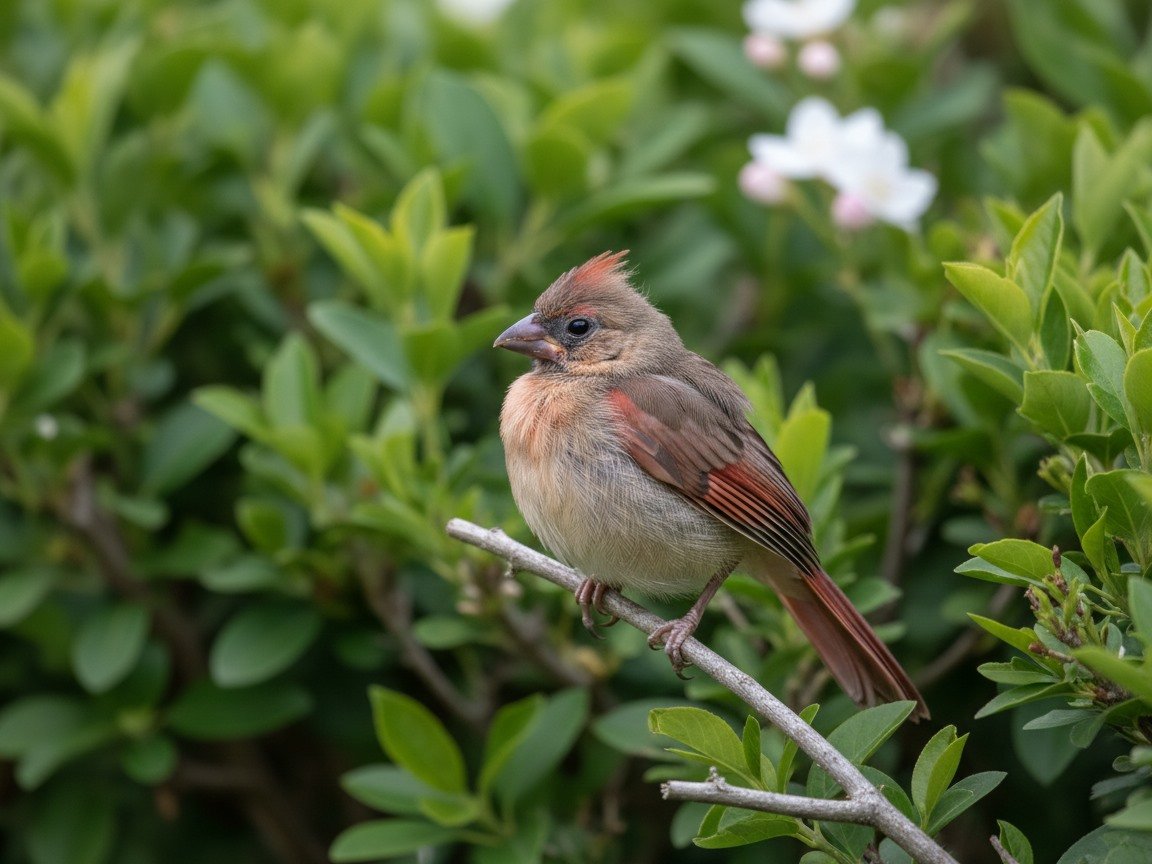
Fledglings are young birds that have left the nest but cannot yet fly well. Juveniles are the stage after that, when they are more independent. Both look like a muted, drabber version of an adult female. Their plumage is brownish gray overall, with warm reddish tinges in the wings, tail, and crest. The crest is smaller on a young bird and grows more noticeable as the bird matures.
The bill is one of the most useful clues. Young cardinals have a gray to black bill, while adults of both sexes have an orange-red bill. Keep in mind that the bill is a strong hint rather than proof, because light and angle can change how it looks in the field.
Baby Cardinals or Pyrrhuloxias?
Fledglings are easy to confuse with the Pyrrhuloxia, a desert cousin of the cardinal. Young Pyrrhuloxias also have a darker bill and fewer red highlights. If a young bird looks grayer than a typical female cardinal, especially in the Southwest, check whether it is a Pyrrhuloxia instead. The Cornell Lab of Ornithology’s side-by-side comparison of similar species is a helpful reference when you are unsure.
How Long Baby Cardinals Stay in the Nest
Northern Cardinals usually lay 2 to 5 eggs per clutch, and the eggs are grayish, buffy, or greenish white with pale gray to brown speckles. The female incubates the eggs for 11 to 13 days. According to the Northern Cardinal life history page from the Cornell Lab of Ornithology, a nestling period of about 7 to 13 days follows, which is when chicks become ready to leave.
Other sources give a slightly narrower window. Birds of the World, a comprehensive species account, reports that fledglings leave the nest at about 10 days old. Exact timing varies with food supply and weather, so you may see fledglings anywhere in that range.
Cardinals begin nesting as early as late February and can nest into late August or September. Most pairs raise one or two broods per season, which means baby cardinals can show up across much of the warm months.
How Cardinal Parents Feed Their Young
Both parents care for their young. Birds of the World notes that males and females both feed nestlings, although males may supply more of the food. Nestlings depend mainly on insects, which give growing chicks the protein they need. As adults, cardinals eat more seeds and fruit, so the diet of nestlings and adults is quite different.
Feeding does not stop when the young leave the nest. Birds of the World reports that parents keep delivering most of their food for another 12 to 20 days after fledging. In one Indiana study, fledglings were fed about eight times per hour, usually in rapid series of trips. Some young continue to receive food occasionally for 25 to 56 days after leaving the nest.
This long period of care explains why a fledgling on the ground is so often still being fed. Its parents may be close by, watching and waiting for you to move away. For a more detailed look at the adult diet, see the diet and foraging account for Northern Cardinals.
What to Do If You Find a Baby Cardinal
Many young birds found on the ground are being cared for by parents who are nearby but out of sight. Before you intervene, take a moment to look at the bird and its surroundings.
- Leave a fledgling alone if it is fully feathered and hopping or perching. This is normal fledgling behavior, and the parents are very likely to return.
- Return a nestling to its nest if it is on the ground and does not yet have full feathers. Pick it up gently, place it back in the nest, and limit handling to the minimum needed.
- Look for the nest in the shrub or tree closest to where you found the bird. Cardinals often nest in dense shrubs, vines, and small trees.
- Keep cats indoors for a few weeks while young birds learn to fly and forage. Cats are one of the biggest threats to fledglings on the ground.
- Contact a local wildlife rehabilitator if the bird is injured, bleeding, or cannot be safely returned to a nest. Rehabilitators can give the bird proper care.
Avoid feeding a baby cardinal yourself. Adults provide food suited to young birds, and the wrong food can cause serious harm.
Attracting Cardinal Families to Your Yard
Parents need food and cover to raise their young, and a yard that provides both will often attract a pair. Black oil sunflower seeds and safflower seeds are popular choices at feeders, and cardinals are frequent visitors to platform and hopper feeders. Dense shrubs, evergreens, and native plants give adults places to nest and shelter. Fresh water for drinking and bathing is also valuable, especially during hot weather. For a full breakdown of feeder choices, read our guide to the best seeds for cardinals.
Avoid placing feeders right next to dense cover where cats can hide. Keeping feeders a short distance from shrubs gives birds a clear escape route.
Frequently Asked Questions About Baby Cardinals
What do baby cardinals eat?
Nestlings are fed mostly insects by both parents. Fledglings continue to receive food from their parents for weeks, and gradually learn to find seeds and fruit on their own.
How can you tell a young cardinal from a female?
Young cardinals look very similar to females. The clearest clue is the bill: juveniles keep a gray to black bill, while adult females have an orange-red bill. For a visual comparison, see our female cardinal picture guide.
When is baby cardinal season?
Nesting can begin in late February and continue into late August or September. Young birds can therefore appear from late spring into late summer, depending on where you live.
How long do baby cardinals stay with their parents?
Fledglings leave the nest at about 10 days old. Parents keep delivering most of their food for roughly 12 to 20 days after that, so young cardinals often stay close to their parents for several weeks.
When to Expect Baby Cardinals Through the Year
Timing depends on where you live, but the general pattern is consistent across most of the Northern Cardinal’s range. Pairs begin courtship and nest building in late winter, often as early as late February in the southern part of the range. Eggs are laid soon after, and the first young typically leave the nest in spring.
Many pairs go on to raise a second brood in the same season, and some attempt a third. A second family often leaves the nest in midsummer, so it is common to see young birds in the same yard weeks apart. Late-season nests can continue into late August or September, which is why baby cardinals sometimes appear well after the first spring rush.
Keep in mind that not every nest succeeds. Predators, weather, and nest location all play a role, and young birds are most vulnerable in the first days after they leave the nest. If you notice a fledgling on the ground, the best approach is usually to watch from a distance for a while before deciding whether it needs help. A bird that is hopping, fluttering, and calling for food is usually doing exactly what it should.
Watching for these seasonal patterns can also help you plan your yard. Keeping feeders stocked and water fresh from late winter through summer gives parents steady sources of food during the busiest months of the nesting season.
Keeping Baby Cardinals Safe in Your Backyard
Baby cardinals rely on their parents for weeks after they leave the nest, so most young birds you find are not abandoned. Checking before you act, keeping cats indoors, and offering good food and cover give young cardinals the best start. With a little patience, you may even see the same family visit your yard for seasons to come.
Sources
- Northern Cardinal Life History, All About Birds, Cornell Lab of Ornithology
- Northern Cardinal Identification, All About Birds, Cornell Lab of Ornithology
- Similar Species to Pyrrhuloxia, All About Birds, Cornell Lab of Ornithology
- Breeding, Northern Cardinal, Birds of the World
- Diet and Foraging, Northern Cardinal, Birds of the World