The Michigan state bird is the American Robin, a familiar songbird that lives across the state. The Legislature made the robin the official state bird in 1931, after a statewide vote organized by the Michigan Audubon Society. This guide covers how the robin earned its title, what it eats, how it nests, and whether it stays in Michigan through winter.
How the American Robin Became the Michigan State Bird
The robin was not chosen by chance. The Michigan Audubon Society ran a statewide vote, which drew nearly 200,000 ballots. The Michigan Legislature’s publication describes the Legislature adopting the robin by resolution in 1931, praising it as the best known and best loved bird in the state.
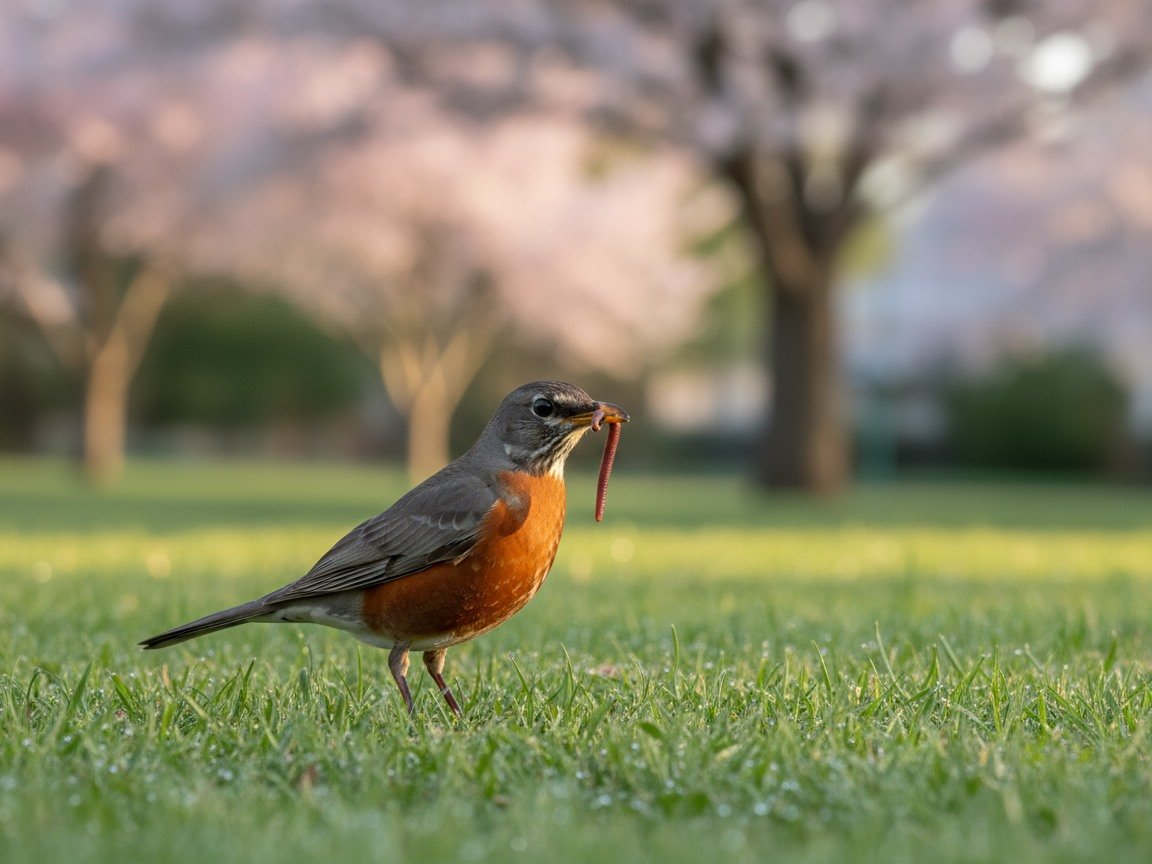
Its orange breast, gray back, and bold song make it easy to spot on a lawn in spring, which may help explain why it was such a popular pick.
Is the Michigan State Bird Still the Robin?
Yes, as far as the sources we checked show. The American Robin remains the official state bird of Michigan. Some people have argued for a different bird. In 2003, a group of elementary school students traveled to the state capital to lobby for the Kirtland’s warbler, a rare songbird that nests in Michigan’s jack pine forests. Their case centered on the warbler’s limited range and its recovery through conservation work. We did not find evidence that a bill to change the state bird has been enacted.
What the American Robin Looks Like
The American Robin is a medium-sized thrush with a gray-brown back, a rusty-orange breast, and a yellow bill. Adult males often look darker on the head than females, but both sexes share the same basic pattern. Robins are often seen hopping across lawns, pausing to tilt their heads as they listen for worms beneath the grass.
Young robins look different at first. Juveniles have spotted breasts, which fade as they mature. If you see a bird with a speckled chest in summer, it may be a young robin rather than a different species.
What Michigan Robins Eat
Diet changes with the seasons. Birds of the World reports that robins eat mostly earthworms and other soft invertebrates in spring and summer, then shift to mostly fruit in autumn and winter. Earthworms are eaten throughout the day, with more of them taken in the morning and more fruit later on.
That seasonal shift explains why robins gather in trees with berries in cold months. A tree full of fruit can draw a large flock, while a lawn with soft soil and worms becomes the main feeding ground in warmer weather. Providing a shallow water source and keeping lawns moist during dry spells can also support robins through the busy spring months.
How Michigan Robins Nest
Robins build cup-shaped nests of mud, grass, and twigs, often in trees, shrubs, or on ledges. Typical clutches are 3 to 5 eggs, and the eggs are sky blue or blue-green. Birds of the World reports an incubation period of about 12 to 14 days, and nestlings usually leave the nest after about 13 days.
Robins can raise one to three broods in a season. That means you may see nesting activity from early spring into late summer. Once the young leave the nest, they often stay close to their parents while they learn to forage.
Do Robins Stay in Michigan for Winter?
Some do, and some do not. Migration in this species is partial, which means not every robin leaves for the winter. Birds breeding in the far north generally head south in fall, while many others remain in their range. Robins have been reported in January across most of the United States, which shows that a good number of birds spend the cold season far from their summer breeding areas.
In winter, robins often form nomadic flocks that gather where fruit is plentiful. Their winter distribution changes with the weather and food supply. A flock that is in your yard one week may be gone the next, which is normal behavior for this species.
How to Attract Robins to Your Yard
Robins are easy to attract with the right habitat. Leave some lawn areas damp and open for foraging, and plant native shrubs and fruit-bearing trees for winter food. A shallow birdbath with fresh water gives robins a place to drink and bathe, especially in dry weather.
Keep in mind that robins eat mostly insects and fruit, not seed. A bird feeder full of sunflower seed is not likely to draw many robins. For birds that do visit feeders, our guide to the best seeds for cardinals covers the seed types that work well for seed-eating species.
American Robin Facts at a Glance
Here are the core facts for the Michigan state bird, drawn from the Birds of the World account:
- Clutch size: 3 to 5 eggs, sky blue or blue-green
- Incubation: about 12 to 14 days
- Time in the nest: nestlings usually leave after about 13 days
- Broods: one to three per season
- Diet: earthworms and other invertebrates in warm months, fruit in cool months
Because a pair can raise up to three broods, you may see robins with young at several points in the warm season. Knowing these basics also helps you tell whether a bird on your lawn is an adult, a recently fledged youngster, or a flock passing through.
Do Michigan Robins Nest Near People?
Robins often nest close to houses, porches, and garden beds. Their nests are easy to find, and that closeness can lead to nest disturbance. Avoid handling eggs or nestlings, and keep pets away from any nest with young. If a nest sits in a risky spot, such as a doorway or a busy path, wait until the young have left before making changes. Fledglings usually stay close to their parents for a while after leaving the nest.
Watching Robin Behavior on Michigan Lawns
Many people notice a robin that runs a few steps, stops, and tilts its head. The pause is a common foraging pattern as the bird listens and watches for movement in the grass before pulling up a worm. Earthworms come closer to the surface in the morning, which is one reason robins are often busiest at dawn. Watching this routine is a simple way to enjoy the Michigan state bird without any special equipment.
How the Michigan State Bird Compares With Other Backyard Birds
Compared with other backyard birds, the Michigan state bird is a thrush that relies mainly on worms and fruit. It is less likely than a cardinal or chickadee to visit a seed feeder. Our female cardinal picture guide covers another common backyard bird, and the comparison shows how different diets shape which species you see from your window.
Michigan Robins Through the Seasons
Spring is when robins are easiest to notice. Males sing from treetops and rooftops, and pairs start building nests. Lawns are soft and moist after rain, which makes foraging for earthworms productive. Summer brings nesting activity and young birds learning to hunt on their own.
Autumn shifts the diet toward fruit. Robins gather in trees and shrubs with berries, and they can strip a tree quickly. Winter depends on the weather and food supply. Some robins stay in the state, while others move south. Flocks may appear and disappear from one week to the next as they follow fruit and conditions. Each season gives the Michigan state bird a different look, and a backyard with fruit trees and open lawn can support robins across the whole year.
Frequently Asked Questions
What is the Michigan state bird?
The American Robin is the official state bird of Michigan. The Legislature made it the state bird in 1931.
Why is the robin the state bird of Michigan?
The robin was selected in a statewide vote organized by the Michigan Audubon Society. Its familiar appearance and popularity with residents helped it win.
Do American Robins migrate from Michigan?
Some do, and some remain in the area. Migration is partial, so robins may be present in Michigan year-round or may move south for the winter depending on the population.
What do Michigan robins eat?
Robins eat earthworms and other invertebrates in warm months and fruit in cool months.
Michigan State Bird: What It Means for Your Backyard
The Michigan state bird is a familiar part of the state’s landscape, from city lawns to rural woodlots. Its seasonal habits, from worm-hunting in spring to fruit-eating in winter, make it an easy bird to observe throughout the year. Whether you see a robin on your lawn or a flock in a berry tree, you are watching the state bird of Michigan at work.