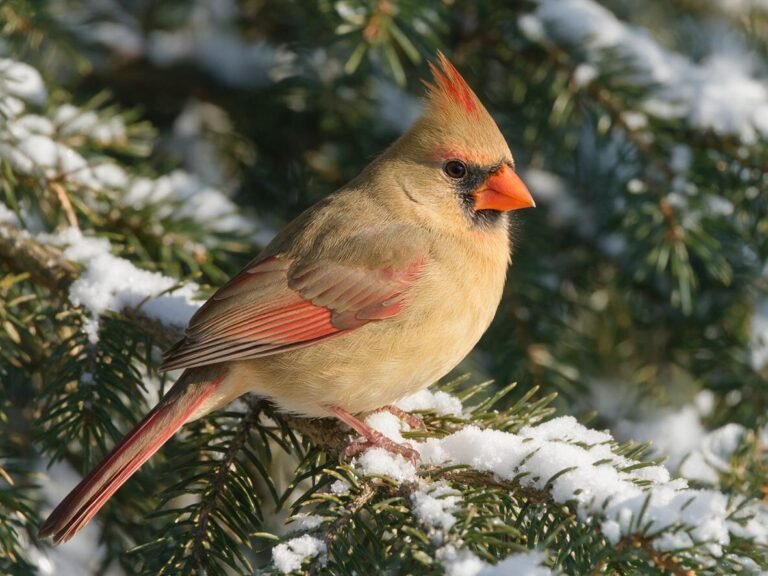
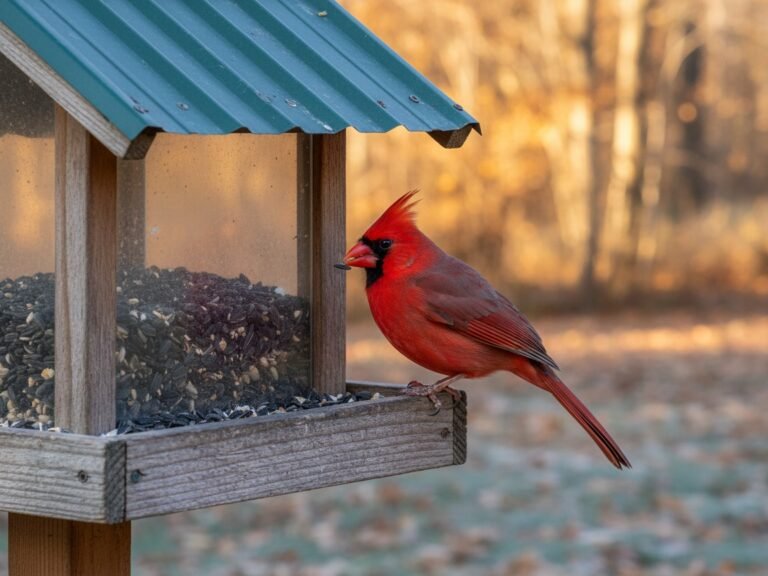
Do female cardinals sing? Yes. Female Northern Cardinals have a full song, and they use it in the breeding season, often from the nest. Many people assume that only males sing, because the male’s bright red plumage and loud whistles get most of the attention. In fact, the two sexes share the same song types, and the female’s singing has a job of its own. This guide explains what the song sounds like, when females sing, and why their song matters to the pair.
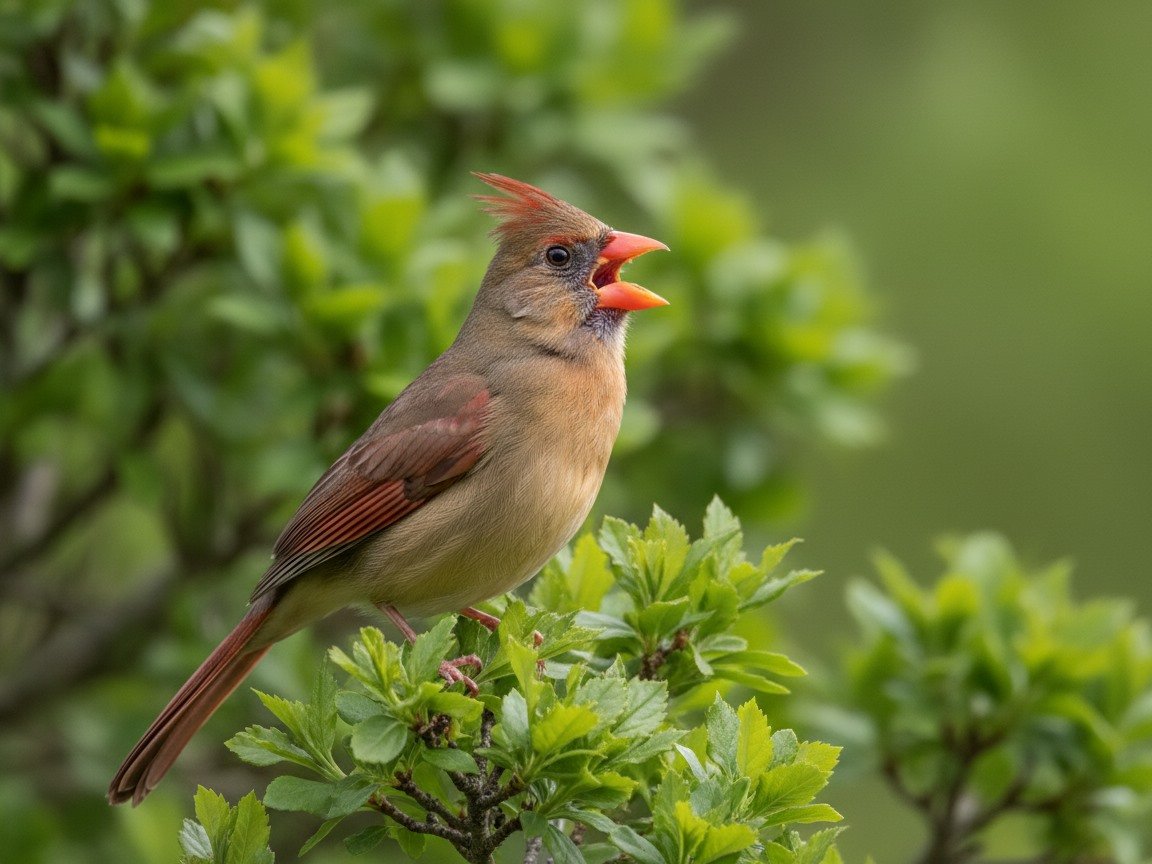
Yes, Female Cardinals Sing
Female Northern Cardinals sing regularly. Birds of the World notes that the female song season is shorter than the male’s, running from about mid-February or March into August in parts of the southeastern United States. The female does not sing as often as the male in every study, but she clearly has a full, working song.
Put simply, do female cardinals sing during nesting? Usually, yes. If you hear a whistling cardinal in spring, it may be a female. Listen for a clear, repeated song coming from a shrub or low perch, especially near a nest site. Her singing is part of how the pair coordinates its nesting, which makes it more than a simple call.
What the Female Cardinal Song Sounds Like
The cardinal song is a pure-toned, whistle-like series of repeated syllables. Birds of the World describes the notes as having a fundamental frequency of about 1 to 8 kilohertz, and many songs last 2 to 5 seconds. People often describe the phrases with words such as “what cheer, cheer, cheer,” “cheer, cheer, what what what what,” or “birdie, birdie, birdie.”
Some sounds are less pure. The chirr is the least pure-toned syllable, and both sexes produce it. Because the sounds overlap, a short recording can be hard to assign to a sex by ear alone. Context helps more than pitch. A cardinal singing from a nest site during the breeding season is more likely to be a female, especially if a male is bringing food nearby.
Male and Female Songs Use the Same Repertoire
Male and female cardinals share the same syllable types and combine them using the same rules. Birds of the World states that the same songs are sung by both males and females, following the same structural rules. In other words, a female is not singing a different language from the male. She uses the same building blocks.
Researchers have reported some differences in how the sexes sing. Some studies found that nest-sitting females sometimes give longer songs with more syllable types. Results across populations are not fully consistent, though, so differences in length or complexity should be treated as tendencies rather than rules.
When Female Cardinals Sing
Female song is strongly tied to nesting. Females sing while they incubate eggs and while they brood young, often from a shrub or a lower perch near the nest. Their song is usually quieter than the male’s, which may help keep the nest location less obvious to predators.
Timing also varies. Birds of the World reports that new-pair females sing more than females in established pairs, and that the amount of singing differs widely between studies. If you are trying to hear a female, spring mornings during active nesting are your best chance.
Why Female Cardinals Sing From the Nest
The most useful explanation for female song is communication with the male. Birds of the World suggests that female song from the nest gives the male information about when to bring food to the nest. In one Wisconsin sample, male nest visits followed female song more often than not, at about 80 percent compared with 45 percent when the female was silent.
This kind of coordination helps the pair keep the female fed during the long hours she spends on the eggs or young. A female that sings from the nest may be telling her mate that she is ready for a visit, which makes the song a practical part of raising a family.
How to Hear a Female Cardinal Sing
Spring and early summer are the best seasons. Go out in the early morning, when cardinals are most vocal, and listen near dense shrubs, hedges, and thickets. Watch for a bird that sits low and sings in short bursts. A female is usually less visible than a male, so a quiet approach gives you a better chance to hear her.
Be careful not to disturb a nest. If you find a nest, watch from a distance and avoid lingering near it. Frequent visits can cause adults to abandon the site, and the nest is more vulnerable to predators when people are nearby.
Why This Matters for Backyard Birders
Hearing a female sing is often the first sign that a pair is nesting nearby. That makes female song useful information for anyone who wants to protect a yard’s cardinal family. Keeping cats indoors, placing feeders away from dense cover where cats can hide, and avoiding nest disturbance all help the pair raise young successfully.
If you want more on the species, our female cardinal picture guide covers identification, and our baby cardinals guide explains what to expect once the young hatch.
Mistakes People Make When Listening for Female Song
The most common mistake is assuming that every cardinal song comes from a male. Many people still wonder, do female cardinals sing at all? They do. Because the sexes share song types, a quiet whistle in a thick shrub can easily come from a female, especially in spring. Waiting for a bright red bird to appear can cause you to miss her entirely, since many females sing from cover rather than open branches.
Another mistake is trying too hard to find the singer. Walking straight toward a shrub can flush the bird and interrupt the song. Stand still, watch the area for a few minutes, and let the bird return to its perch. Patience usually gives a better view and a longer listen.
A third mistake is drawing conclusions from a single song. Cardinals sing at different times, so several listening sessions on different days tell you more than one burst of sound. Note the time, the location, and whether a nest seems to be nearby. A female singing from a shrub near an active nest is a much stronger clue than a song heard across the yard.
What Female Song Tells Us About the Pair
Female song is a window into how a pair works together. When a female sings from the nest and the male responds with a food visit, the two birds are coordinating care in real time. That cooperation is a central part of the pair bond, which is why researchers pay attention to who sings and when.
People often ask, do female cardinals sing mainly to keep the male close? The evidence points to nest coordination rather than a single purpose, and the pattern is strongest during active incubation and brooding. Because the data come from a limited number of studies, it is best to treat this explanation as well supported but not settled for every population.
New pairs add another layer. Birds of the World reports that new-pair females sing more than females in established pairs. The sources do not fully explain why, but the pattern fits a pair that is still learning how to share nest duties.
Ways to Support a Singing Female in Your Yard
If a female is singing near your home, the best help is to keep the area quiet and safe. Avoid heavy pruning of dense shrubs during active nesting, and keep cats indoors, since cats are a common threat to nests and to birds sitting low in cover.
Feeders can also help. A reliable food source near cover gives the male an easy place to find food for his mate during the nesting period. Our best seeds for cardinals guide covers which seeds work well for pairs.
Frequently Asked Questions
Do female cardinals sing all year?
Not usually. Female song is most common during the nesting season, and Birds of the World notes that the female song season is shorter than the male’s.
Can you tell a female cardinal’s song from a male’s?
Often not by ear alone, because both sexes share the same song types. Context is a better clue. Song from an active nest site in spring is more likely to come from a female.
Why does a female cardinal sing from the nest?
Her song may signal the male to bring food to the nest. Studies suggest that males visit more often after a female sings.
Do female cardinals sing as loudly as males?
Often not. Female song is usually quieter, and it is typically sung from lower, more concealed perches near the nest.
So, Do Female Cardinals Sing? Yes, and for a Reason
Do female cardinals sing? Yes. Their song uses the same repertoire as the male’s and plays a real role in nesting. Listen for it in spring near shrubs and hedges, and give the nest space. Hearing a female is a good sign that a cardinal family is close by.