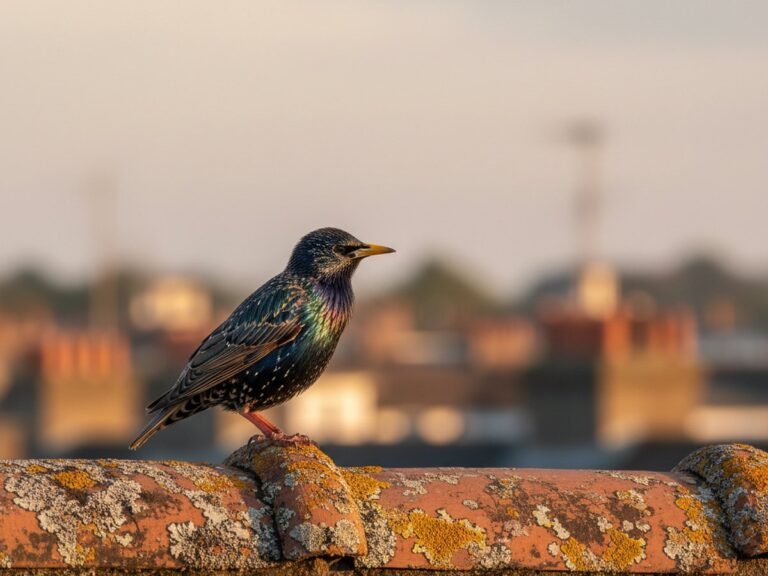
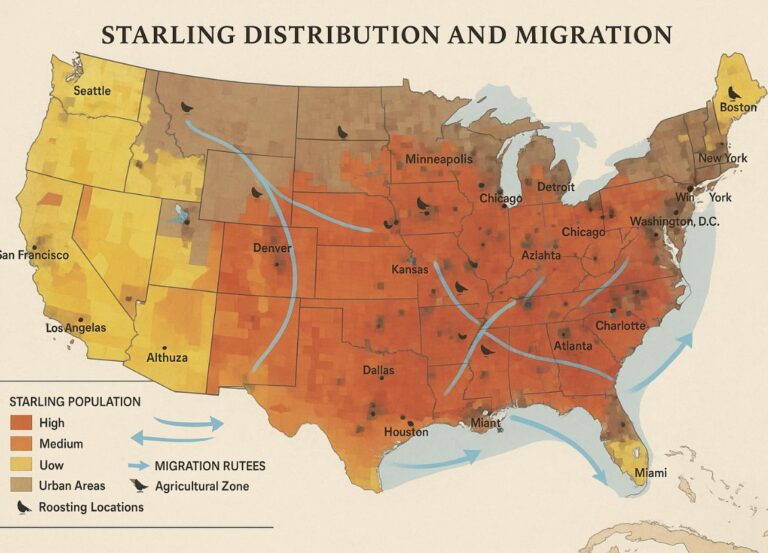
What food attracts starlings to yard depends on the season, but the answer is usually the same: foods that are cheap, soft, and easy to swallow. Starlings eat mostly insects, then shift to berries, fruit, and seeds in the cooler months. They also come to bird feeders for a variety of items, which is why a yard with feeders often draws them in.
Foods That Draw Starlings to Feeders and Yards
Audubon says starlings eat mostly insects when they are available, and they forage mostly on the ground in open areas. The main food groups are:
- Insects: beetles, grasshoppers, flies, and caterpillars, plus spiders, snails, and earthworms. Starlings forage on open ground and probe the soil with their bills.
- Berries and fruit: Audubon notes that starlings eat a wide variety of berries, fruits, and seeds, especially in fall and winter.
- Seeds and grain: cheap seed blends, which feeder retailers often say contain milo, wheat, and cracked corn.
- Suet and soft fats: a feeder retailer’s guide reports that starlings take suet readily because their bills handle soft food easily.
The first two groups are the strongest findings. The seed and suet points come from feeder-industry advice and should be tested in your own yard.
Why Starlings Go After Fruit in Fall and Winter
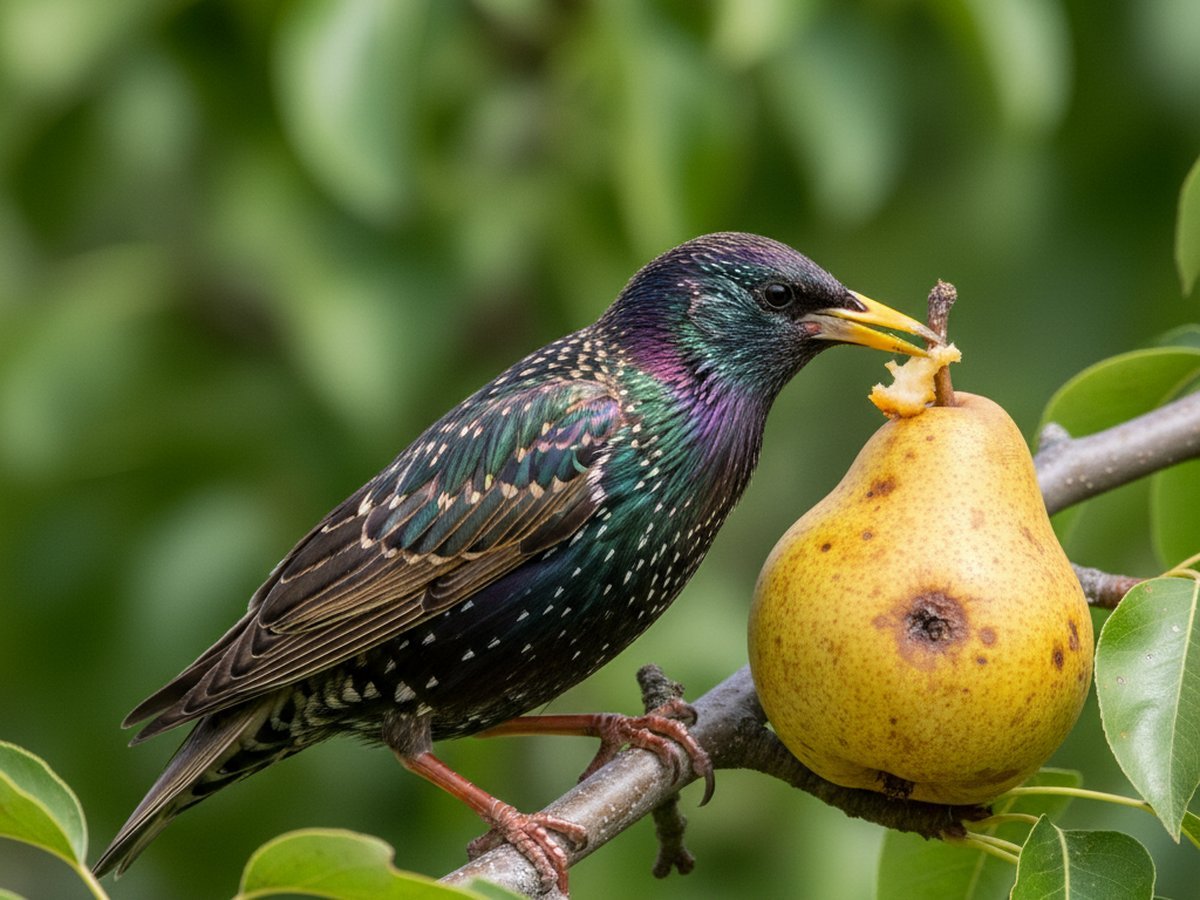
When insects are scarce, starlings switch to fruit. Audubon describes berries and fruit as a major part of their diet in the cooler months, so a tree with ripe fruit can pull in a large flock quickly. Fruit such as pears is one of the foods they take, as the photo below shows.
Which Feeder Foods Starlings Tend to Skip
Feeder retailers report that starlings avoid some seeds, mainly because of their soft bills. These points come from feeder-industry guides, so treat them as practical advice:
- In-shell peanuts: hard to crack with a soft bill.
- Safflower: often avoided by starlings, blackbirds, grackles, and squirrels.
- Nyjer (thistle): seen as a seed starlings do not seem to care much for.
Skipping these seeds does not guarantee that starlings will stay away. It only lowers the chance that they will settle at the feeder.
Feeder Designs That Keep Starlings Out
Feeder design matters as much as the food. Retailers recommend a few changes:
- Upside-down suet feeders: starlings struggle to hang upside down, so suet in a design that requires it can favor woodpeckers and other clingers.
- Caged feeders: a wire cage stops larger birds from reaching the food while smaller birds fit through the openings.
- Safflower or clinging feeders: these can favor songbirds over starlings.
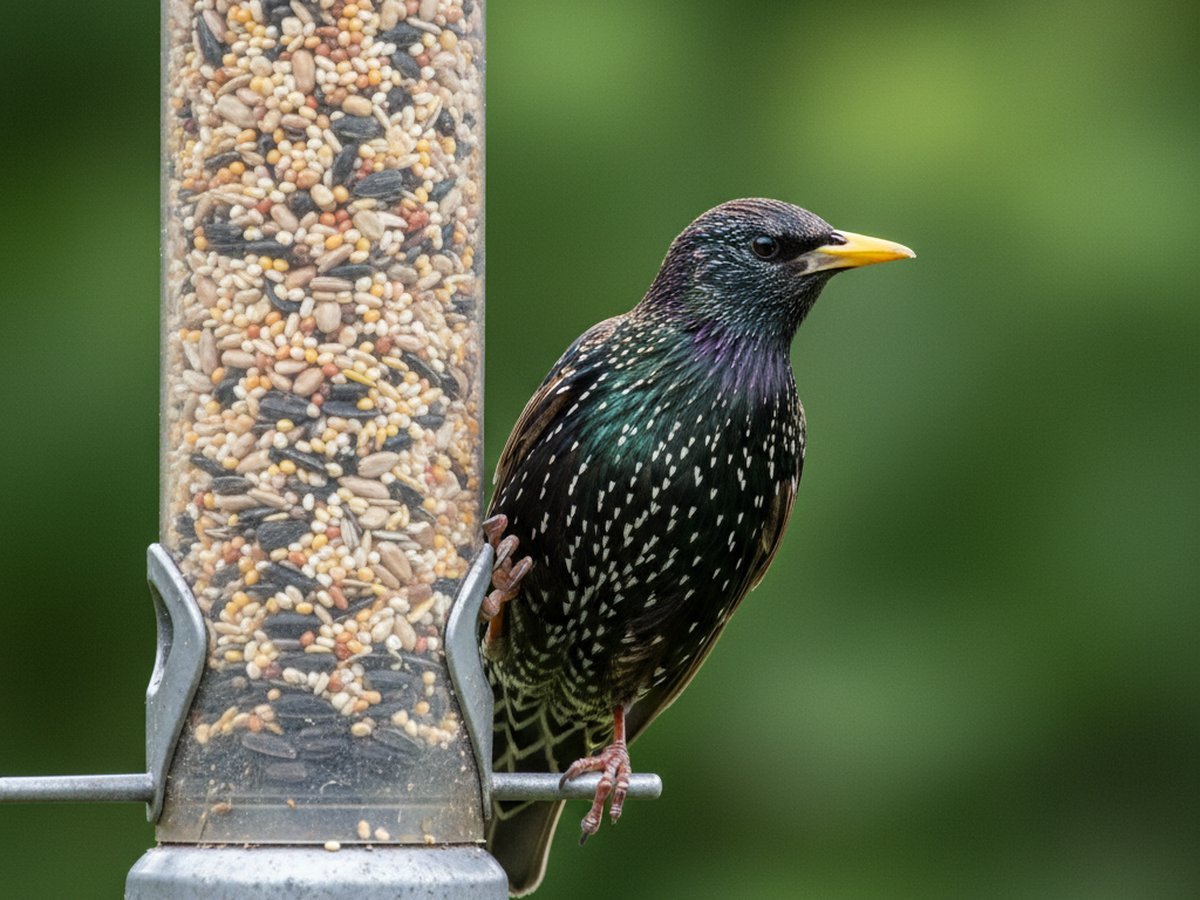
The photo below shows a starling on a seed feeder. Starlings can cling to tube feeders, so design alone does not solve the problem.
Feeding Schedule Tips
Timing can help you feed the birds you want before starlings arrive. Feeder retailers suggest this routine:
- Fill feeders with only enough fresh food for the morning, so the birds you want eat it before starlings show up.
- Refill with a small amount in the evening, and not with a full load.
- Remove food before the late-day arrival of large flocks, when starlings usually gather.
- Clean up spilled seed each day. Starlings forage on the ground, so loose seed under feeders is an easy meal for them.
This routine is a tactic from feeder guides, not a tested rule for every yard. Results depend on local flock sizes.
Why Starlings Are a Concern
Starlings are often regarded as a pest. Birds of the World notes that the European Starling has had a significant impact on native birds. For more on keeping them away from feeders, see our guide to getting rid of starlings at bird feeders. Attracting starlings is not usually the goal of a backyard feeding station, so the safest approach is to feed in ways that favor the birds you want.
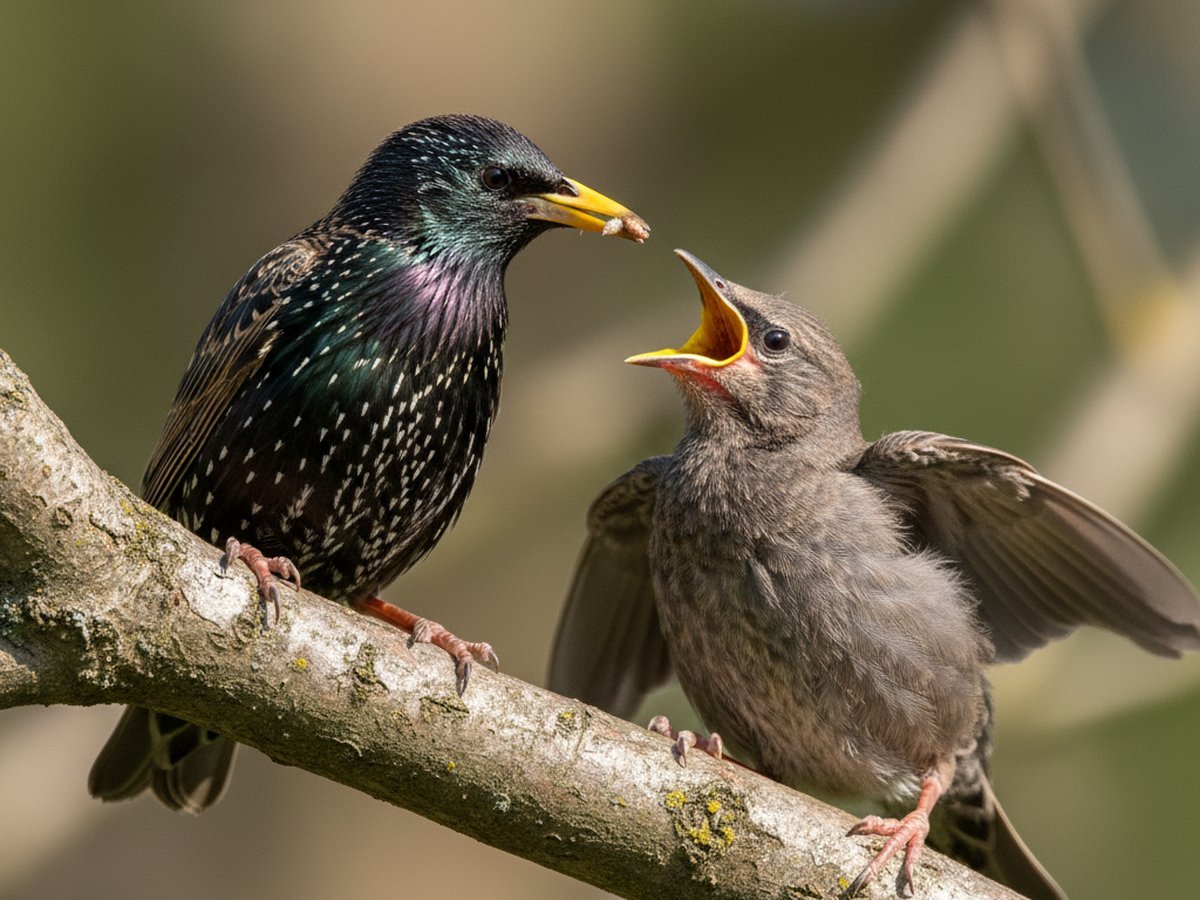
Audubon notes that both parents feed nestlings, so a yard near a nesting pair may see steady trips to food sources.
How Starlings Feed on the Ground and in the Air
Starlings use several feeding methods, and most of their time is spent on the ground. Wikipedia notes that starlings forage close to the ground, taking insects from the surface or just beneath it, and that they prefer short-cropped grass. Audubon describes the same habit: they forage mostly on the ground in open areas, often probing the soil with their bills.
Starlings also catch insects in the air and feed on fruit high in trees. Audubon notes that they sometimes feed on fruit up in trees and sometimes catch flying insects. Wikipedia adds that starlings have skull and jaw adaptations that help them probe into the ground.
In large flocks, starlings sometimes practice what Wikipedia calls roller-feeding. Birds at the back of the flock keep flying to the front, where the feeding is best, so the flock keeps moving across a feeding area.
What Starlings Eat Through the Year
Starling diet changes with the season, and feeder visits can follow the same pattern.
- Breeding season: Invertebrates are essential. Wikipedia notes that eating invertebrates is necessary for successful breeding.
- Insect-rich months: When insects are available, starlings eat beetles, grasshoppers, flies, and caterpillars, along with spiders, snails, and earthworms (Audubon).
- Fall and winter: Starlings eat a wide variety of berries, fruits, and seeds, and Audubon notes they may gather in immense flocks during these months.
- Human food: Wikipedia reports that starlings also eat grains, seeds, fruit, nectar, and food waste when the opportunity arises.
Starlings have one dietary limit that matters for fruit choices. Wikipedia reports that they cannot easily process foods with high levels of sucrose, although they can cope with fruits such as grapes and cherries.
In practice, the answer to what food attracts starlings to yard depends on the season: fruit in fall and winter, insects during the warm months, and cheap seed or suet at feeders.
Why Suet Draws Starlings and How to Discourage Them
Suet is one of the strongest draws for starlings at feeders, according to feeder-store guides. One guide reports that starlings prefer soft, easy-to-eat suet cakes, especially those mixed with seeds, nuts, or fruit. Plain or firmer suet blends are harder for them to grip.
Feeder design is the other half of the answer. One retailer guide says the Cornell Lab of Ornithology recommends a feeder that requires birds to hang upside down. Woodpeckers and nuthatches can feed in that position, but many starlings cannot. Cage-style suet feeders are also common and can limit access. These claims come from feeder guides rather than a controlled study, so check the results in your own yard.
Starlings During the Nesting Season
Audubon describes starlings as sociable for most of the year, breaking up their large flocks for the breeding season. Males establish a territory, choose a nest site, and sing to attract a mate. They also show a skill for mimicry, mixing imitations of other birds into their songs.
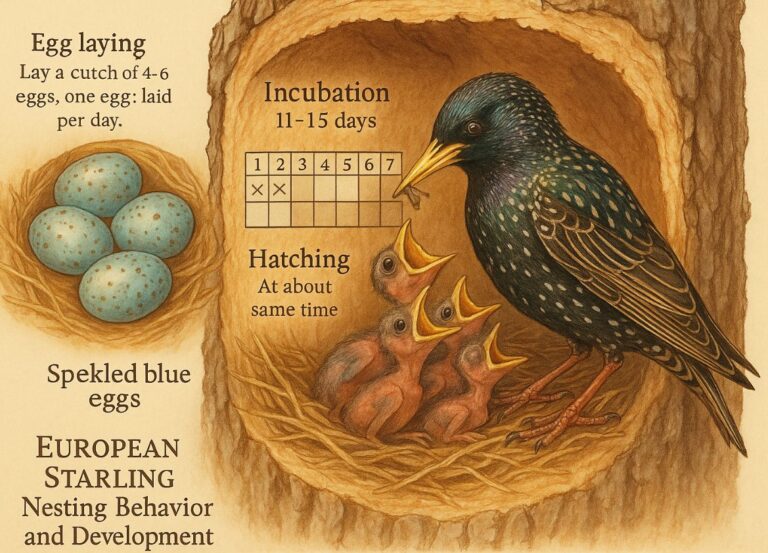
Both parents feed the nestlings, and the young leave the nest about 21 days after hatching. Audubon notes that starlings sometimes lay eggs in each other’s nests. Juveniles seen in summer flocks look very different from adults: they are dusty gray with dark bills. Because invertebrates are necessary for successful breeding, insects stay central to their diet during nesting.
Frequently Asked Questions
What is the main food that attracts starlings?
Starlings eat mostly insects in warm months and berries, fruit, and seeds in fall and winter. At feeders, cheap seed blends and suet are the most common draws, according to feeder guides.
Do starlings eat birdseed?
Yes. Audubon lists seeds among the foods starlings eat, and they come to feeders for a variety of items. Cheap mixes are the most likely to draw them.
Are starlings helpful or harmful?
Both. Wikipedia reports that large flocks can help agriculture by controlling invertebrate pests, but starlings can also be pests when they feed on fruit and sprouting crops.
Why do starlings gather in such large flocks?
Audubon describes starlings as sociable at most seasons, and says they may gather in immense flocks in fall and winter. Those flocks are most visible when food is plentiful.
Sources
- European Starling, Audubon Bird Guide
- European Starling, Birds of the World (Cornell Lab of Ornithology)
- Why Your Suet Feeder Only Attracts Starlings, Wild Bird Scoop (feeder retailer guide)
- Dealing With Starlings, Wild Birds Unlimited (feeder retailer guide)
- Common starling (European starling), Wikipedia