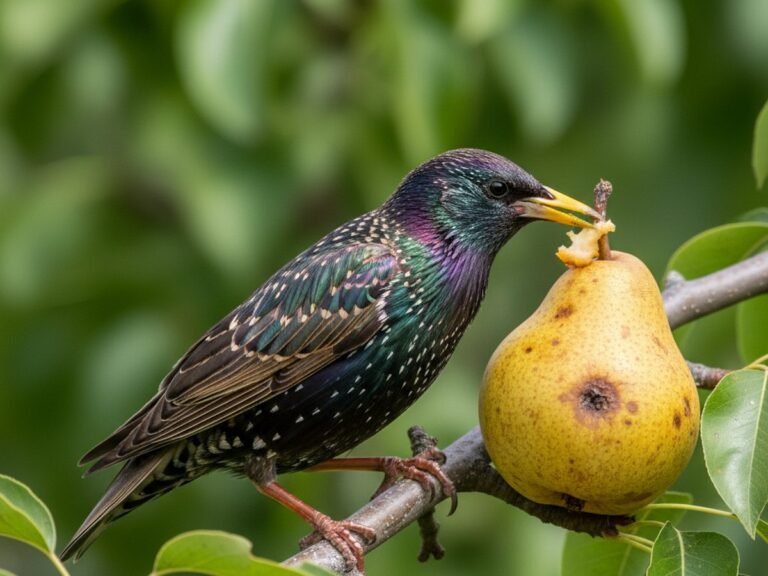
How long do starlings live depends on whether you mean the average bird or the longest-lived one. Wikipedia gives the average European starling life span as about 2 to 3 years, with a longevity record of 22 years and 11 months. eBSCO’s research guide gives a more generous typical figure of around five years, with some birds reaching 17. Both sources agree on the main point: most starlings do not reach old age, but a few live far longer than average.
Average Lifespan Versus the Longest-Lived Starling
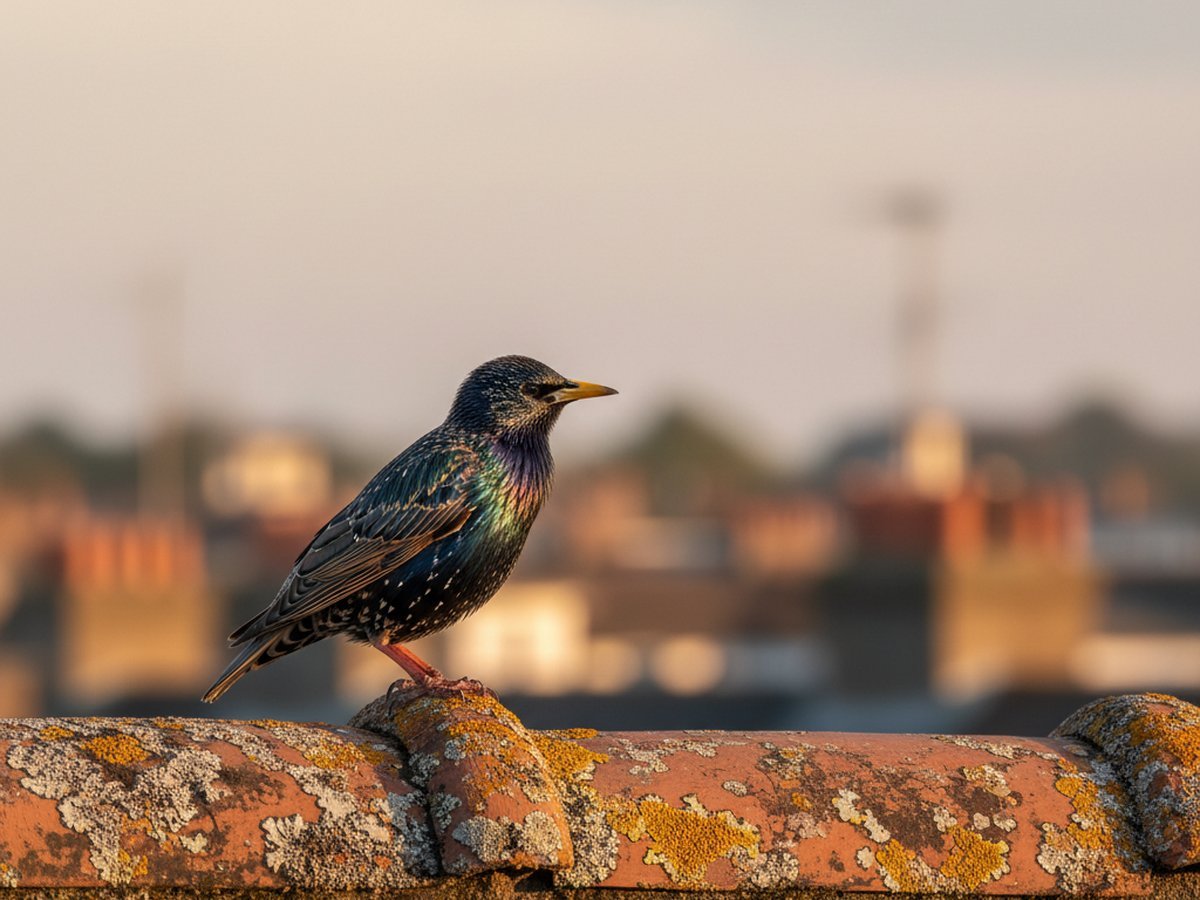
An average life span is pulled down by the many birds that die young. The record, 22 years and 11 months, is the figure most often quoted, but it describes an exceptional bird rather than a typical one.
The wide gap between sources also reflects how each one counts. Compare the numbers carefully, and check whether a source describes all birds or only adults.
Why Most Young Starlings Die Young
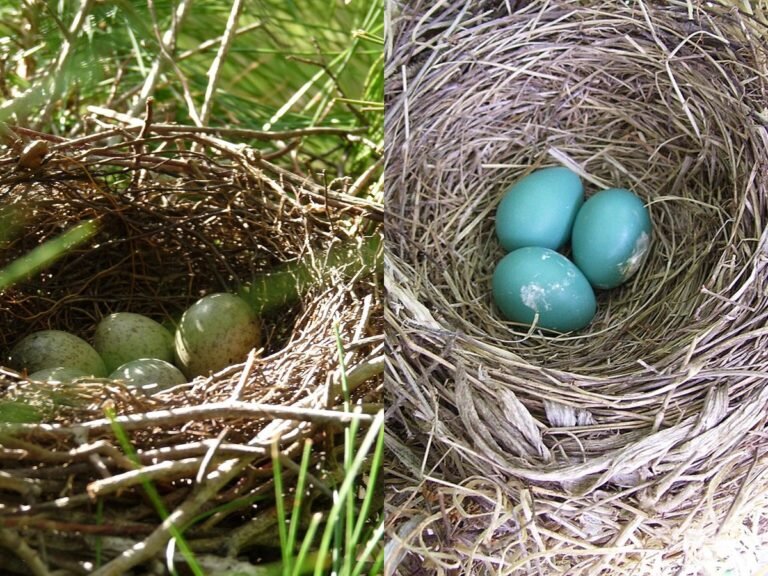
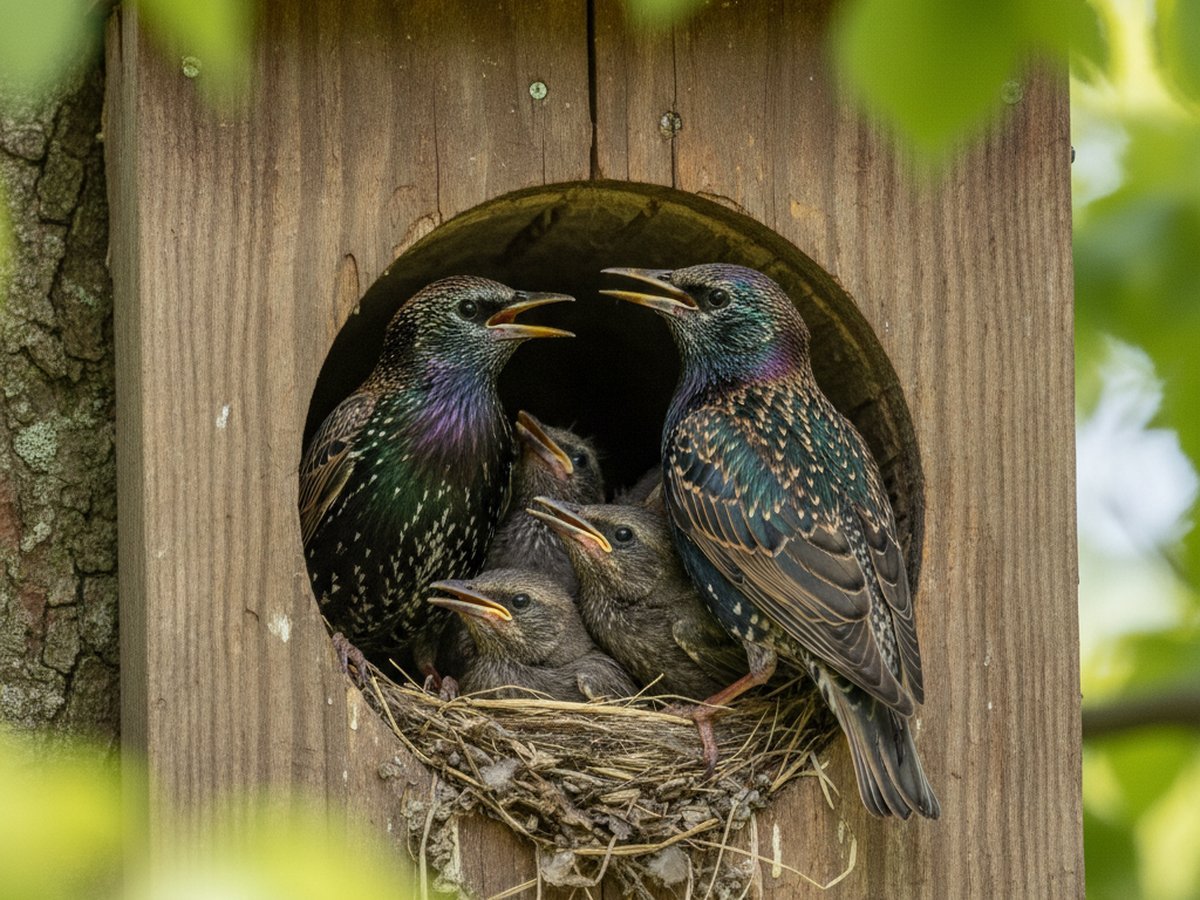
Survival numbers show where starlings are lost. Wikipedia reports that common starling nests have a 48 to 79 percent rate of successful fledging, but only about 20 percent of nestlings survive to breeding age. The adult survival rate is closer to 60 percent. The greatest loss happens in the first stage of life.
Several factors make the early years risky:
- Nest failure: Only 48 to 79 percent of nests fledge young successfully.
- Predation: Starlings are hunted by various mammals and birds of prey.
- Parasites: The species hosts a range of external and internal parasites.
- Food supply: Growing chicks depend on insects, and fewer grassland invertebrates have been available in parts of northern and western Europe.
Adult starlings survive at a much higher rate, about 60 percent, than nestlings. That gap is the main reason the average life span is so short.
How Starlings Defend Themselves
Starlings gather in large flocks for much of the year. Wikipedia notes that dense concentrations of birds are thought to be a defense against attacks by birds of prey such as peregrine falcons and Eurasian sparrowhawks. A bird in a large flock has more eyes watching for danger, and a predator has a harder time singling out one target.
Flocking is a defense, not a guarantee. Wikipedia also notes that it takes time for young starlings to perfect their feeding technique, and that the diet of young birds often contains fewer insects as a result.
From Juvenile to Adult: Plumage and Age
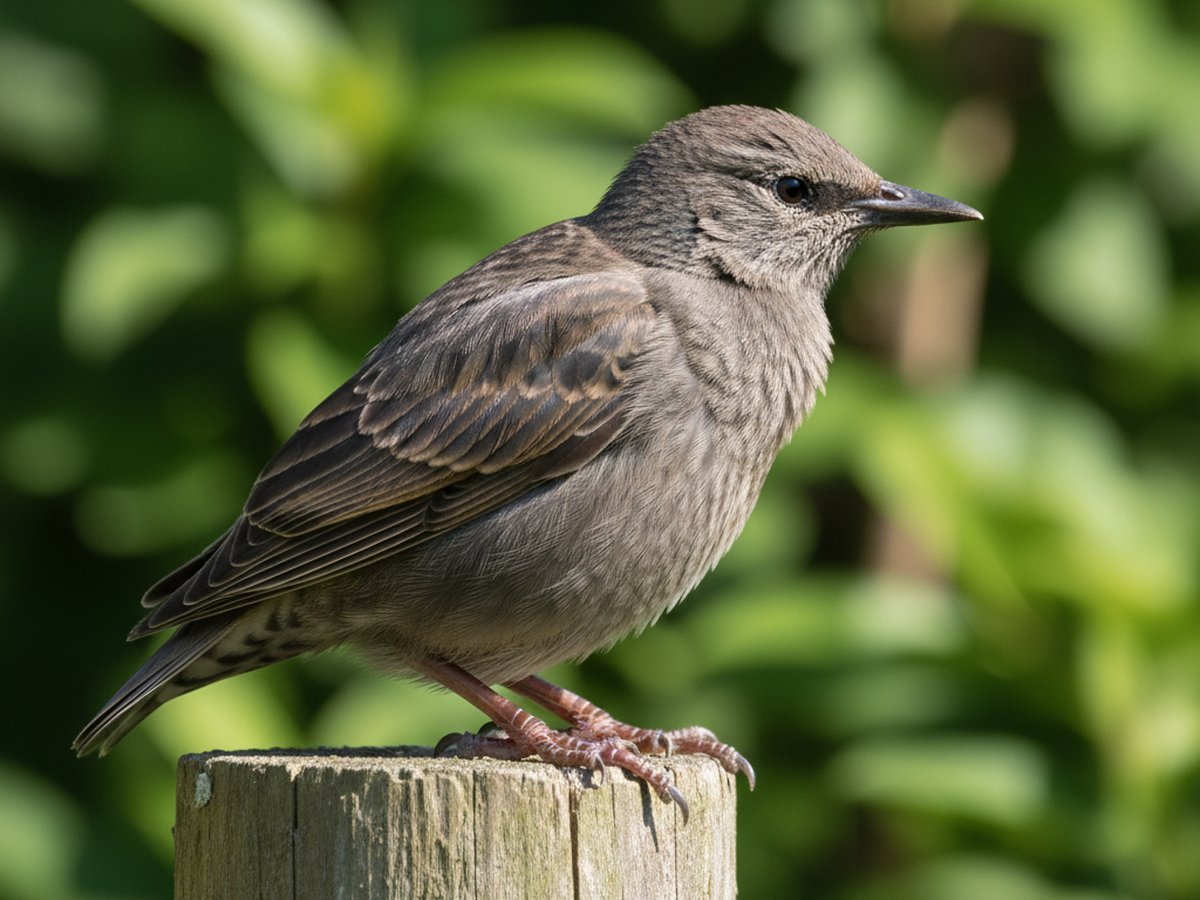
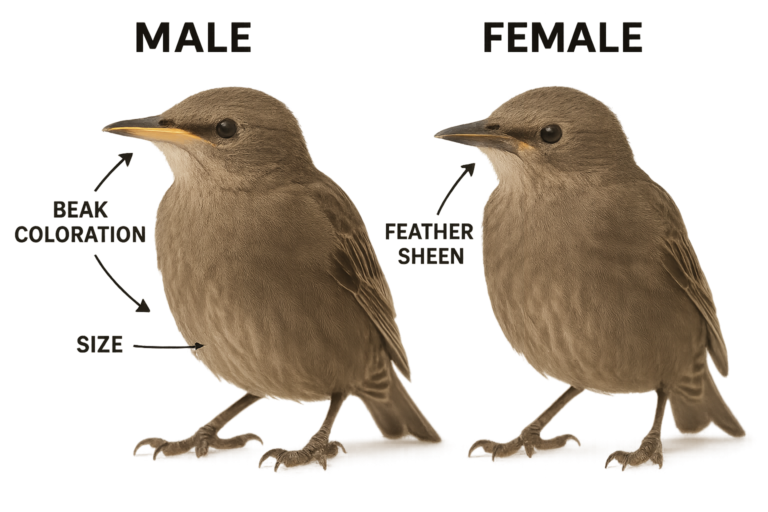
Juvenile starlings look very different from adults. Audubon describes juveniles as dusty gray with dark bills, and they are often seen in flocks during the summer. Wikipedia reports that juveniles are grey-brown, and that most will have molted and gained their first basic plumage within about two months.
By their first winter, many young starlings closely resemble adults, though they often keep some brown juvenile feathers on the head and neck. Plumage is a useful clue to age in the field, but it is not always reliable on its own.
The nesting timeline also matters. Audubon notes that young leave the nest about 21 days after hatching, and that both parents feed the nestlings. Both parents’ work continues after the young leave the nest, which is one reason the early weeks are part of the species’ breeding story.
Do Starlings Live Longer in Captivity?
Starlings are sometimes kept as pets in cages, according to eBSCO. The sources I checked do not give a reliable captive lifespan figure, so this article does not state one. Any number you see online should be checked against a published study or an avian care source before you rely on it.
Population and Conservation Status
The European starling has a huge global population. Wikipedia reports that it is classified as least concern by the International Union for Conservation of Nature, and that the global population is not thought to be declining significantly. The species has declined in parts of northern and western Europe since the 1980s, a change linked to fewer grassland invertebrates available as food for growing chicks.
Mimicry in Starlings
Starlings are known for mimicry. eBSCO notes that many starling species can imitate other birds and human speech. Wikipedia reports that the starling’s gift for mimicry has been noted in literature for centuries, including in the Mabinogion and in the works of Pliny the Elder and William Shakespeare.
Frequently Asked Questions
What is the average lifespan of a starling?
Wikipedia gives an average life span of about 2 to 3 years for the common starling. eBSCO gives a typical figure of around five years, with some birds living up to 17 years.
What is the oldest recorded starling?
Wikipedia lists a longevity record of 22 years and 11 months for the species.
Why do so few starlings reach old age?
Wikipedia reports that only about 20 percent of nestlings survive to breeding age, which means most starlings are lost in their first stage of life. Adults have a survival rate closer to 60 percent.