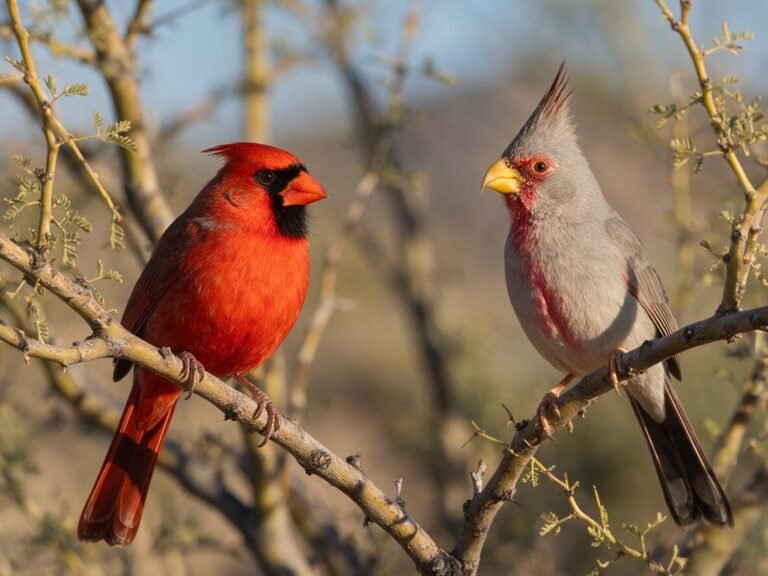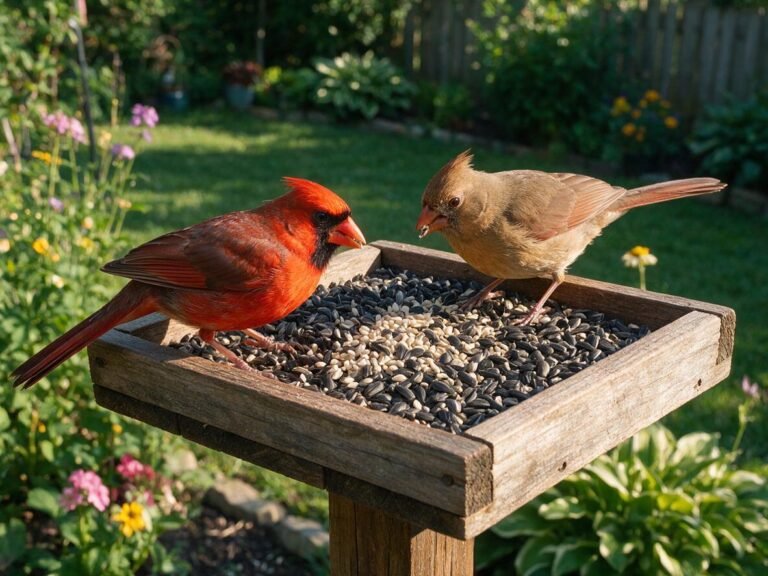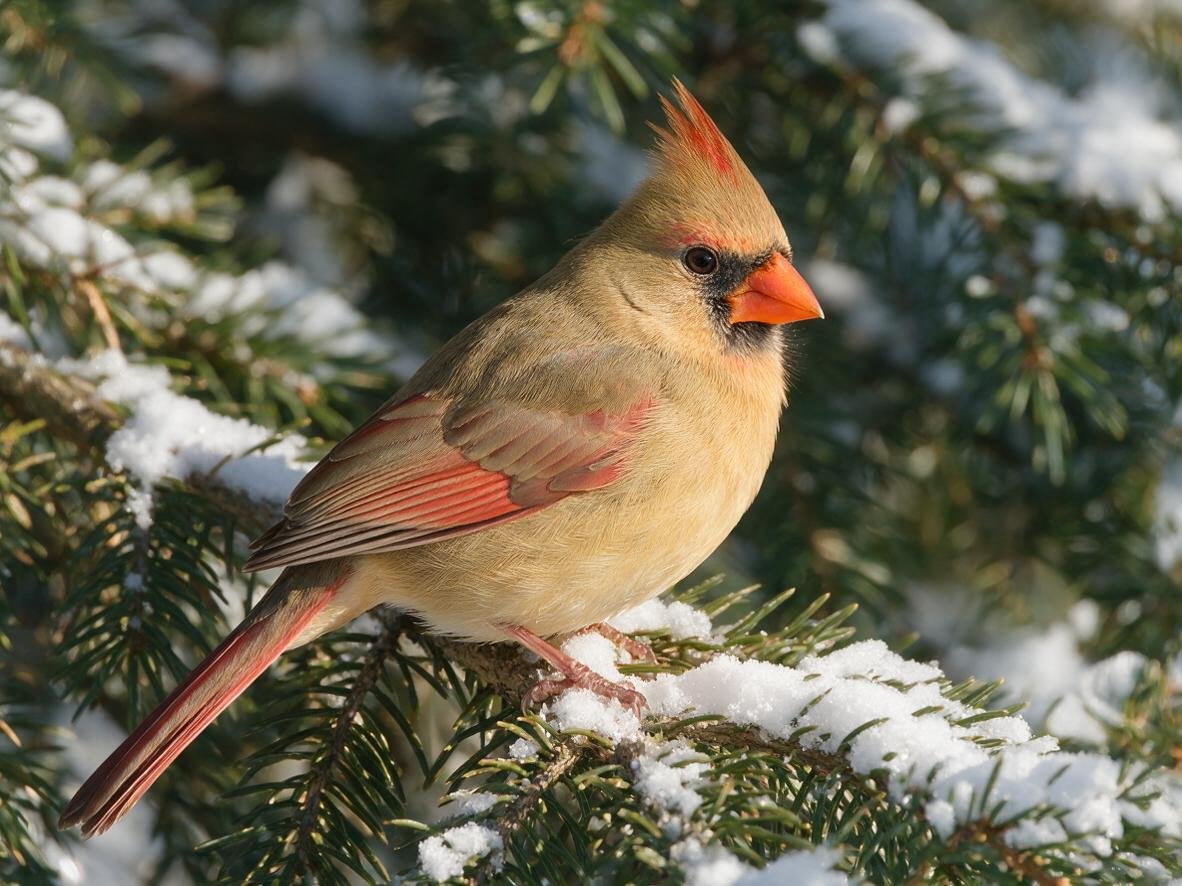
Every female cardinal picture tells the story of an exceptionally elegant songbird whose warm, earthy plumage is just as captivating as the flamboyant crimson coat of her mate. While male Northern Cardinals (Cardinalis cardinalis) grab immediate attention with their fiery red feathers, the female displays a sophisticated palette of warm buffy-tan, soft fawn-brown, and subtle rosy-crimson accents. These natural camouflage tones serve an essential biological purpose, shielding her from watchful predators while she incubates eggs deep within tangled backyard shrubs.
Whether you are trying to identify an unfamiliar brown bird visiting your backyard feeder or searching for clear visual cues, studying a detailed female cardinal picture provides the field marks needed to confirm the species with confidence. Despite her muted body coloration, the female cardinal shares the same regal silhouette, prominent pointed crest, and stout coral-orange bill that define North America’s favorite songbird family.
Key Field Marks to Spot in a Female Cardinal Picture
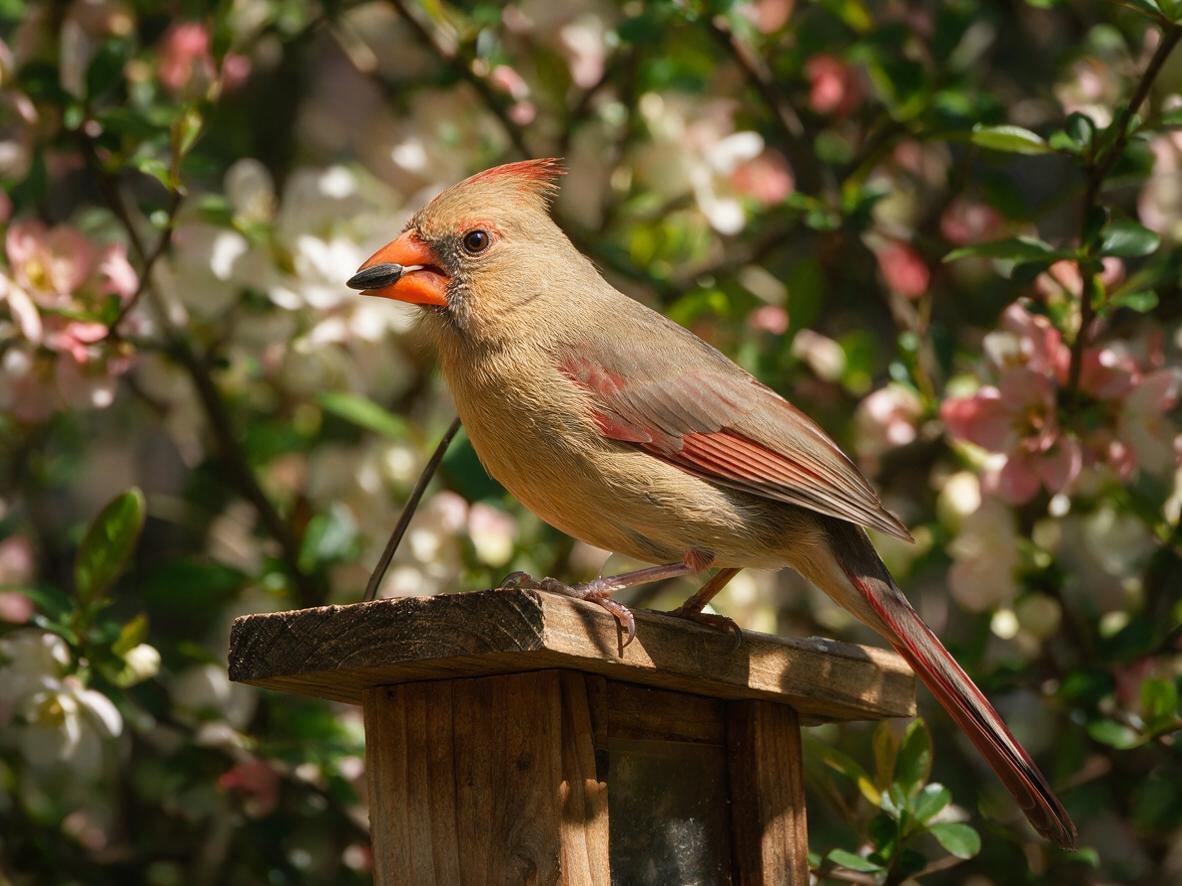
When examining any high-resolution female cardinal picture, ornithologists and birdwatchers focus on five diagnostic physical traits that separate her from other brown songbirds:
- Warm Buffy-Brown Body: The primary body plumage across her breast, mantle, and belly is a soft fawn-brown to pale olive-tan. This neutral coloration provides perfect camouflage against dried leaves and nesting twigs.
- Rosy-Red Wing and Tail Accents: While predominantly brown, close inspection reveals delicate reddish-crimson wash on the outer edges of her flight feathers, crest tips, and long graduated tail.
- Prominent Pointed Crest: Just like the male, the female features an erectile head crest. She raises or flattens this crest to communicate emotion, territorial vigilance, or curiosity.
- Heavy Conical Coral-Orange Beak: Her beak is thick, stout, and bright orange-red. This massive seed-cracking bill is an unmistakable hallmark of the cardinal genus.
- Soft Gray-Black Facial Mask: She possesses a dark charcoal or slate-gray mask encircling the base of her bill and eyes. While subtler than the jet-black mask of the male, it creates a striking visual contrast.
Visual Comparison: Adult Female vs. Adult Male vs. Juvenile Cardinal
To avoid misidentification in the field, it is helpful to compare the plumage of all three life stages side by side. The biometric data below highlights how plumage and bill color evolve across maturity:
The Secret to Telling Females Apart from Young Cardinals
One of the most common identification puzzles occurs in late spring and summer, when newly fledged cardinals forage alongside their parents. In any typical female cardinal picture, the definitive feature to check is the bill color. Adult females always possess a vibrant coral-orange beak, whereas young cardinals of both sexes have a distinctive dark blackish-gray bill for their first three to four months of life.
As juvenile males mature into autumn, their bills gradually turn orange from the base outward while patchy red feathers begin replacing their juvenile brown down. If you capture a bird on camera that resembles a female cardinal but has a charcoal-colored beak, your photograph shows a juvenile cardinal rather than an adult female.
Common Look-Alike Birds Mistaken for Female Cardinals
Because brown songbirds are common in backyards across North America, several species are frequently confused with female cardinals. Comparing an authentic female cardinal picture against these look-alikes makes separation straightforward:
- Female Pyrrhuloxia (Desert Cardinal): Native to the arid Southwest and Mexico, the female Pyrrhuloxia closely mirrors a female Northern Cardinal. However, the Pyrrhuloxia has a stubby, strongly curved, parrot-like yellow bill, a gray back, and less crimson wash on the wings.
- Female House Finch: Female finches are universally brown and streaked across the chest. They lack a head crest entirely, are noticeably smaller (5 inches vs. 9 inches), and carry a small triangular bill rather than a robust cardinal cone.
- Cedar Waxwing: While Cedar Waxwings possess a sleek crest and black eye mask, their plumage is silky yellowish-brown with bright yellow tail tips and red waxy wingtips, lacking the cardinal’s heavy orange beak.
- Tufted Titmouse: Titmice share an upright crest and curious nature, but they are slate-gray with white underparts, a black forehead patch, and a tiny black seed-cracking beak.
Understanding size and body volume is also essential when observing birds at your feeders. For example, comparing which bird is bigger starling or cardinal reveals that despite a cardinal’s prominent crest and long tail, European Starlings carry significantly heavier body mass and broader chests.
Fascinating Behavior: Female Cardinals Sing Elaborate Duets
In most North American songbird species, only males sing to defend territories and attract mates. The Northern Cardinal is a celebrated exception to this rule. Female cardinals are gifted vocalists who sing rich, melodic whistling songs directly from the nest.
Ornithologists believe female singing serves as a coordinated communication system between mated pairs. When approaching the nest with food, the male sings a specific sequence, and the female responds in kind. Her song can convey nest security, prompt the male to bring more food, or warn him to stay away if a hawk or domestic cat is nearby. Listening to these duets offers a wonderful glimpse into why birds sing in the morning and how backyard songbirds maintain lifelong pair bonds.
How to Attract Female Cardinals to Your Yard
Female cardinals are ground and platform foragers who appreciate quiet, sheltered feeding stations. If you want to take your own striking female cardinal picture, incorporate these proven backyard elements:
- Serve High-Oil Seeds: Fill hopper or tray feeders with black oil sunflower seeds and whole white safflower seeds. Cardinals have the heavy jaw muscles required to crack these nutritious shells effortlessly.
- Provide Wide Perching Trays: Because cardinals measure 8 to 9 inches, they struggle to balance on tiny perch pegs. Wide platform feeders or ground feeding trays allow both male and female pairs to feed comfortably together.
- Plant Dense Shrubbery: Female cardinals nest in dense tangles of dogwood, honeysuckle, viburnum, and blackberry brambles. Combining nesting cover with the best flowers to attract birds guarantees year-round cardinal activity in your garden.
- Keep Water Fresh: A shallow birdbath with a moving water dripper or solar fountain will quickly become a favorite bathing spot for female cardinals during early morning and late evening hours.
Frequently Asked Questions About Female Cardinals
What color is a female cardinal?
An adult female cardinal is primarily warm fawn-brown and buffy-tan across its back and breast, accented by delicate reddish-crimson tinting on its crest, wings, and tail, with a charcoal-gray face mask and a bright coral-orange bill.
Do female cardinals have a red crest?
Yes, but it is not solid scarlet like the male. A female cardinal’s crest is predominantly tan-brown with vibrant reddish-pink tips that flare outward when the crest is raised in excitement or alarm.
Why are female cardinals brown instead of red?
Female cardinals are brown for protective camouflage. Because females build the nest and incubate the eggs, their muted earthy tones blend seamlessly into twigs and foliage, keeping eggs and hatchlings safe from hawks, owls, and squirrels.
Do female cardinals mate for life?
Yes, Northern Cardinals generally form lifelong monogamous pairs. Mated pairs stay together year-round, feeding side by side through winter and performing intimate courtship feeding where the male feeds seeds directly into the female’s bill.
Final Thoughts on Identifying Female Cardinals
Studying an authentic female cardinal picture proves that beauty in the avian world does not require neon-bright plumage. The female Northern Cardinal’s delicate fawn-brown tones, subtle red feather edgings, and expressive coral bill make her one of the most charming visitors in any backyard. The next time you spot a pair of cardinals outside your window, take a moment to admire the female’s refined elegance and essential role in the survival of this beloved species.
Authoritative Field References & Ornithological Data:
- Cornell Lab of Ornithology (All About Birds): Northern Cardinal (Cardinalis cardinalis) Identification & Plumage Guide.
- National Audubon Society Guide to North American Birds: Northern Cardinal Life History & Female Song Studies.
- American Bird Conservancy (ABC Birds): Bird ID Tips for Female and Juvenile Cardinals.