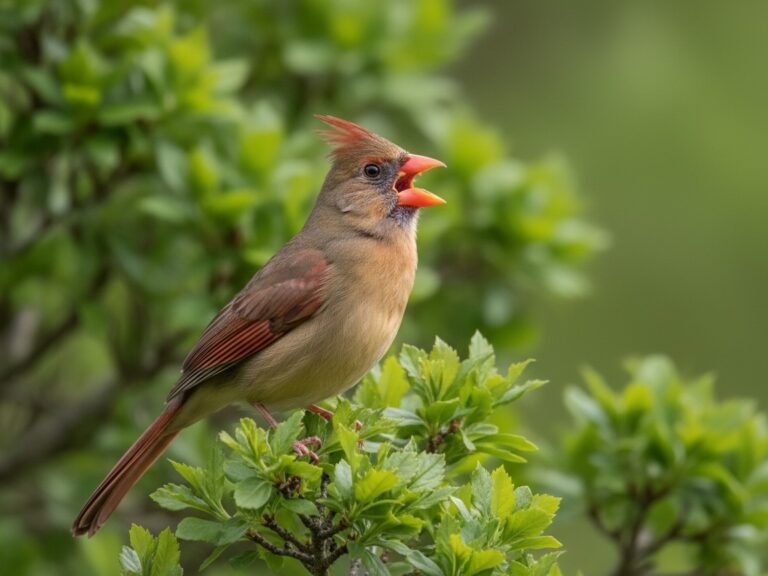
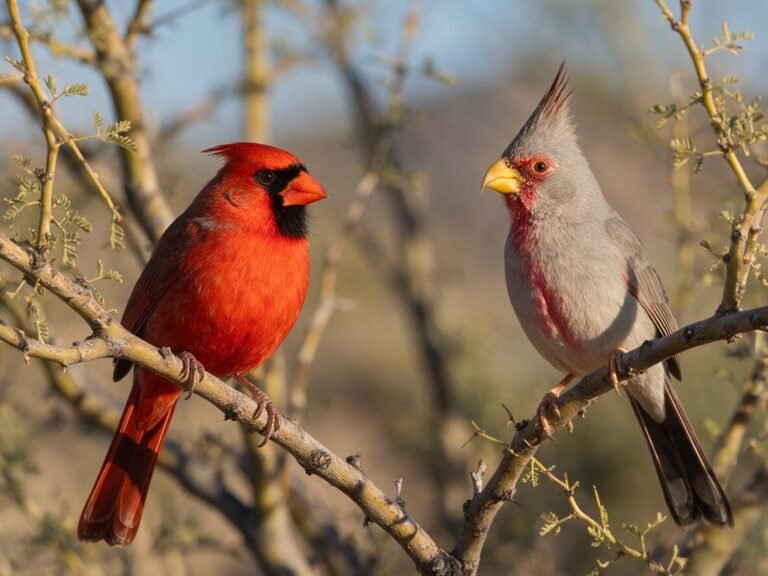
The best bird feeders for cardinals are large, sturdy designs that give a heavier seed-eating bird room to land, perch, and eat without crowding. Northern Cardinals visit many feeder types, but the ones that work best share a few features: a wide feeding area, a place to perch, and seed that stays dry. This guide compares five feeder types that suit cardinals, explains which seed to use in each, and offers tips for keeping squirrels and other visitors in check.
How We Chose These Five Feeder Types
This list of the best bird feeders for cardinals focuses on feeder styles rather than specific brands or models. We looked at four things: whether the feeder suits a larger seed-eating bird, whether it gives the bird a place to perch, how well it keeps seed dry, and how easy it is to clean. We did not test feeders in a yard, and we do not list prices, so use this guide to choose a style and then compare models that match it.
All About Birds, the Cornell Lab of Ornithology’s bird guide, is a useful starting point. Its guidance on feeder types points to large tube, large hopper, platform, and ground feeders as the styles that attract Northern Cardinals best. Our five picks build on that advice.
1. Covered Hopper Feeder (Top Pick)
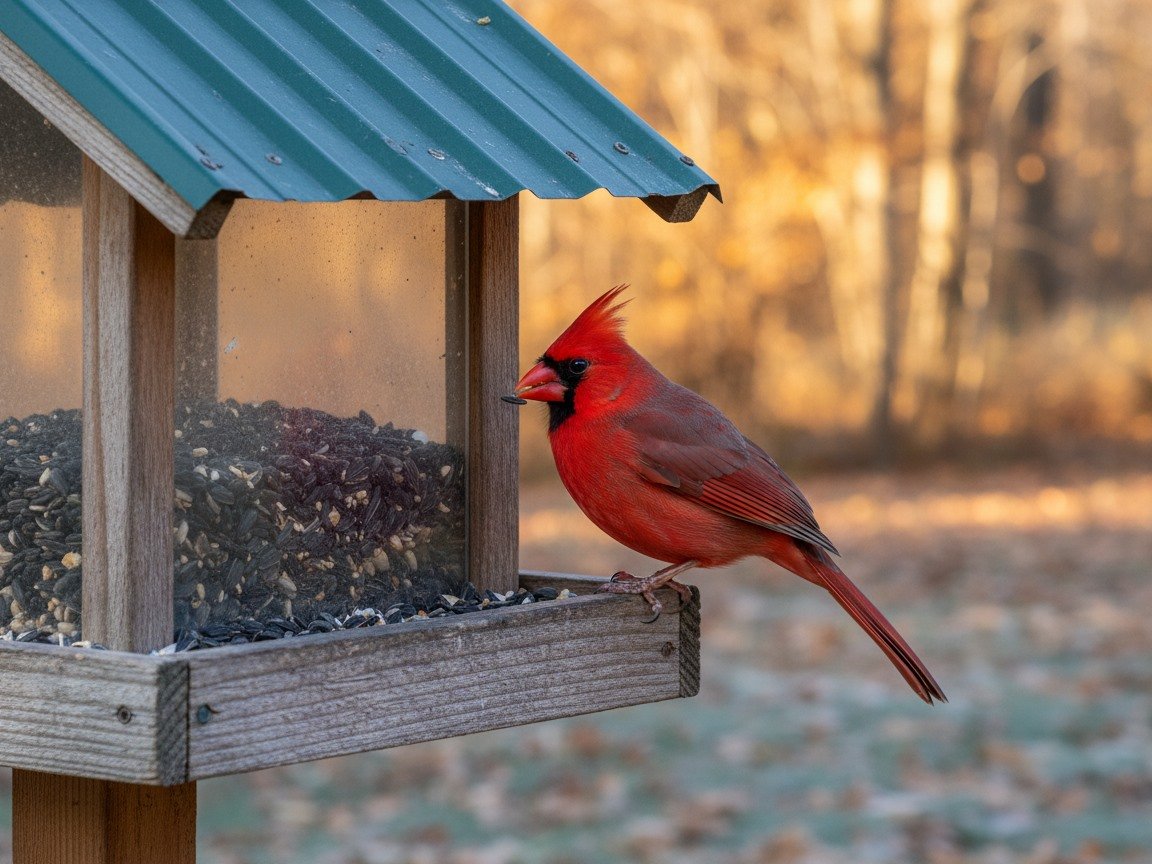
A covered hopper feeder is the most reliable choice for cardinals. It holds a large amount of seed under a roof, so the seed stays dry through rain and snow. Cardinals can perch on the tray or the side ledge and eat in comfort, which suits a bird that prefers to feed from a stable spot.
For many yards, a covered hopper is one of the best bird feeders for cardinals because it combines a perch, dry seed, and a large capacity.
Hopper feeders have trade-offs. They can be harder to clean than open designs, because seed and hulls collect in the corners. Many hoppers also give squirrels easy access unless the feeder has a gate. Look for a model with a weight-activated or adjustable gate if squirrels are a problem.
Best seed: black oil sunflower seed or safflower. Cardinals readily eat both.
2. Open Platform Feeder
A platform feeder is a flat tray, often with a low rim, that gives birds a broad surface to land on. When easy cleaning is your priority, a platform can be one of the best bird feeders for cardinals in the yard. Cardinals use platform feeders regularly, and a platform is easy to clean and fill. It also lets you offer several seed types at once, which can attract a wider range of birds.
The main drawback is that an open tray gets wet. Rain and snow can spoil seed quickly, so use a platform with a drainage design, or add a small roof above it. Empty and dry the tray when it gets damp.
Best seed: safflower, which many birds leave alone, and black oil sunflower. Some owners add cracked corn for ground-feeding species.
3. Large Tube Feeder With Wide Ports
Tube feeders are long, vertical containers with small ports along the sides. Most are built for small songbirds such as finches, but a large tube feeder with wide ports and a sturdy perch can work for cardinals. Choose a model with a ledge or a perch that can hold a heavier bird.
Tube feeders are easy to clean and keep seed dry, but they are not ideal for every visitor. All About Birds notes that squirrels can usually reach most tube feeders, and cardinals may have to share a small feeding space with more aggressive birds.
Best seed: black oil sunflower seed. Its thin shell suits a range of birds, and cardinals are known to eat it.
4. Ground or Low Tray Feeder
Ground and low tray feeders sit close to the ground, and they give birds a natural place to feed. All About Birds lists ground feeders among the styles that attract Northern Cardinals. This is a good option for a yard where cardinals are already active on the lawn or under shrubs.
Ground feeding comes with real risks. Seed on the ground can get wet, moldy, or contaminated with droppings. It also gives cats an easy hiding place and can draw in rodents. If you use a ground feeder, keep it small, clean it often, and place it in an open area where you can see predators coming. Consider a raised tray instead if cats are common in your neighborhood.
Best seed: safflower or black oil sunflower, offered in small amounts so it does not pile up on the ground.
5. Adjustable Squirrel-Resistant Hopper
Some hopper feeders have a gate that closes the seed ports when a heavier animal stands on the perch. Some of these gates can also be adjusted to keep out larger birds, so check the settings before you buy. If you choose a model with an adjustable gate, set it so that a cardinal can reach the seed while squirrels cannot.
Keep your expectations realistic. No feeder is fully squirrel-proof. All About Birds notes that squirrels can learn to outsmart many feeder designs, and a determined squirrel may still find a way to the seed. A squirrel-resistant feeder reduces waste and frustration, but it does not eliminate the problem.
Best seed: black oil sunflower seed, which is a favorite of cardinals and many other feeder birds.
Which Seed to Use in Any Feeder
Seed matters as much as the feeder itself when you are picking among the best bird feeders for cardinals. Different seeds attract different birds. Black oil sunflower seed is a strong all-around choice, and All About Birds notes that cardinals seem especially drawn to sunflower. Safflower is another good option. Its thick shell takes some effort to open, so some common visitors may leave it alone, while cardinals are known to eat it readily.
For a full breakdown of seed types and how each one fits different birds, read our guide to the best seeds for cardinals. Fresh seed is also important. Stale or damp seed loses its appeal and can make birds sick.
Where to Place Your Feeder and How to Keep It Clean
Good placement helps any of the best bird feeders for cardinals work well. Place feeders near shrubs or trees, but not so close that a cat can hide and pounce. A distance of a few feet from dense cover lets birds retreat quickly when a hawk or cat appears. Mount the feeder on a pole or hang it from a sturdy branch where you can refill it easily.
Cleaning matters for the health of your visitors. Remove old seed, hulls, and droppings on a regular schedule, and scrub the feeder with mild soap and water. Dry it before refilling. A clean feeder reduces the risk of disease spreading among birds that feed together.
Common Mistakes to Avoid
The most common mistake is buying a feeder that looks attractive but does not suit a larger bird. A narrow perch, shallow tray, or tight tube can leave a cardinal struggling to balance, so check the perch size before you buy. Another mistake is filling the feeder with cheap mixes full of filler seed. Millet and other fillers often end up on the ground, where they attract starlings and sparrows that crowd out your target birds.
Waiting too long to clean is also a problem. Damp seed can grow mold, and mold can make birds sick. Many owners find it easier to fill smaller amounts more often than to refill a large feeder that sits out for days. Finally, do not move a feeder around too much. Cardinals learn a feeding spot, and a feeder that stays in one place is easier for them to find over time.
Avoiding these mistakes costs little and makes any feeder work better. A sturdy perch, quality seed, and regular cleaning will help you get the most from the best bird feeders for cardinals you choose.
Frequently Asked Questions
What are the best bird feeders for cardinals?
A covered hopper feeder is the most reliable choice. It keeps seed dry, gives a cardinal a perch, and holds enough seed for a busy yard. An open platform feeder is a good second choice, especially if you want easy cleaning.
Do cardinals eat safflower?
Yes. Cardinals readily eat safflower, and many owners use it to discourage some other visitors. Black oil sunflower is also a strong choice if you want to attract cardinals quickly.
Can cardinals use a tube feeder?
Some can, especially a large tube feeder with wide ports and a sturdy perch. Most standard tube feeders are designed for smaller birds, so a hopper or platform is usually a better fit for a cardinal.
How do I keep squirrels off a cardinal feeder?
Use a feeder with an adjustable gate, place the feeder away from jumping points, and add a baffle above or below the feeder. Keep in mind that no feeder is fully squirrel-proof.
Choosing the Best Bird Feeders for Cardinals in Your Yard
The best bird feeders for cardinals share a few traits: they hold seed dry, offer a sturdy perch, and are easy to clean. A covered hopper is the top pick for most yards, and a platform feeder is a solid alternative. Choose the seed that fits your yard, place the feeder near cover, and keep it clean. With those basics in place, cardinals are likely to make your feeder part of their regular route.