Birds with red beaks are some of the easiest birds to spot in the wild. That bright, bold color stands out against feathers of any shade. From backyard visitors like the Northern Cardinal to exotic shorebirds and tropical parrots, a red beak is one of nature’s most striking field marks.
This guide covers 10 of the most well-known birds with red beaks. For each one, you will find simple ID tips, where it lives, and what makes its beak unique.
Why Do Some Birds Have Red Beaks?
Red beaks are not random. The color comes from pigments and blood vessels close to the surface of the bill. In many species, a bright red beak signals health and fitness. Birds use it to attract mates. The brighter the beak, the more attractive the bird tends to be to potential partners.
Some red-beaked birds also use their bills as tools for specific jobs, like prying open shellfish, skimming the water surface, or grazing on underwater plants. The color sometimes matches a specific diet or lifestyle.
10 Birds with Red Beaks
1. Northern Cardinal
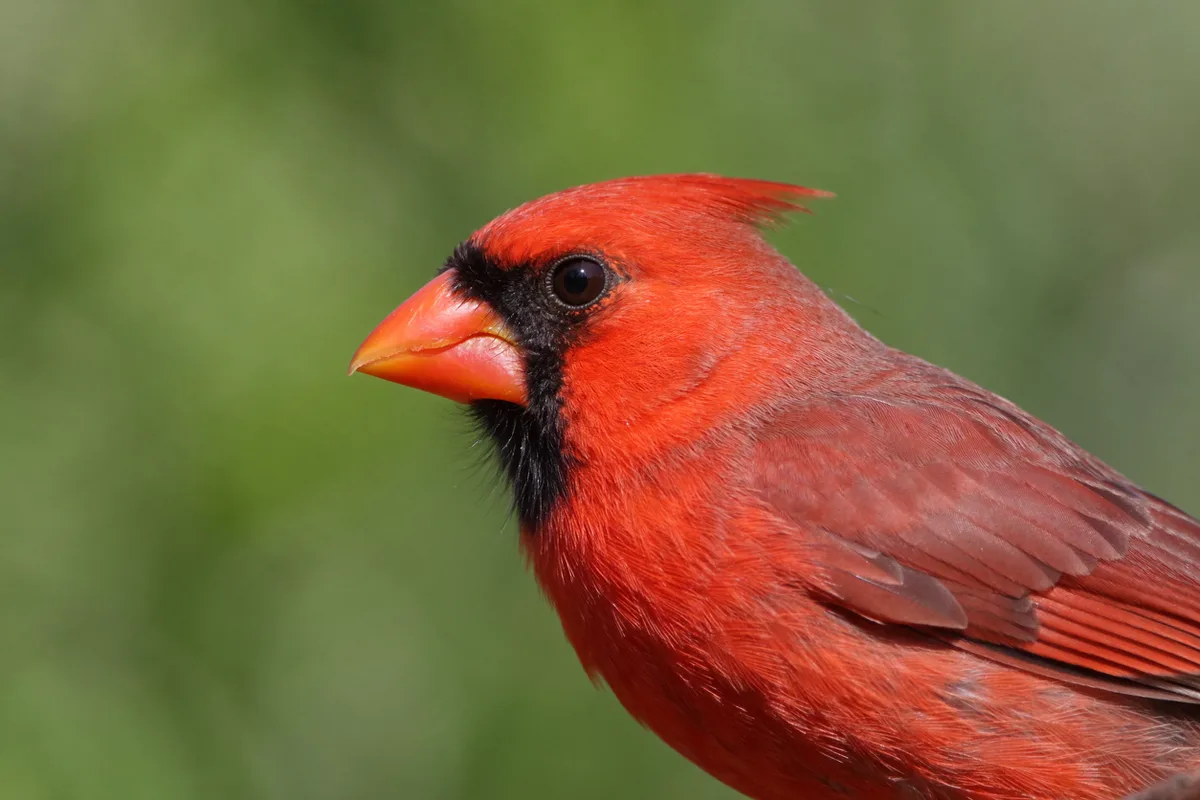
The Northern Cardinal is probably the most familiar bird with a red beak in North America. The male is fully red with a pointed crest and a thick, cone-shaped orange-red bill. The female is brown with red tinges on her wings and tail, and she has the same red bill.
Cardinals use their strong beaks to crack open seeds. They love sunflower seeds and safflower seeds at backyard feeders. You can find them year-round across the eastern United States, parts of the Southwest, and into Mexico.
Bill type: Thick, conical seed-cracker
Habitat: Woodlands, gardens, suburban yards
Range: Eastern and central North America
2. American Oystercatcher
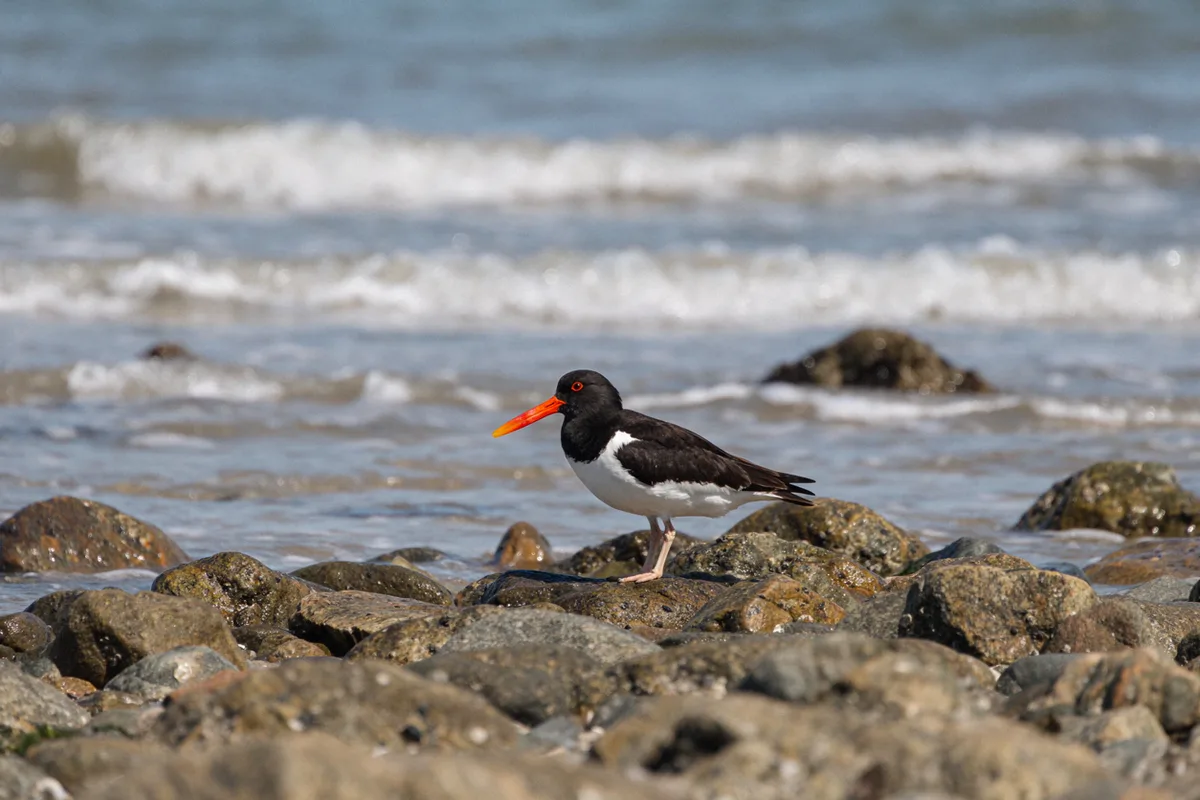
The American Oystercatcher has one of the most dramatic red beaks of any shorebird. It is long, flat, and bright orange-red, almost like a blade. The bird uses it to stab into oysters, mussels, and clams, prying them open along the shoreline.
The body is black and white, which makes the vivid red bill even more striking. You will find this bird on coastal beaches, tidal flats, and salt marshes from New England down to South America.
Bill type: Long, blade-like, laterally flattened
Habitat: Coastal beaches and tidal flats
Range: Atlantic and Gulf coasts of North America, South America
3. Red-billed Chough
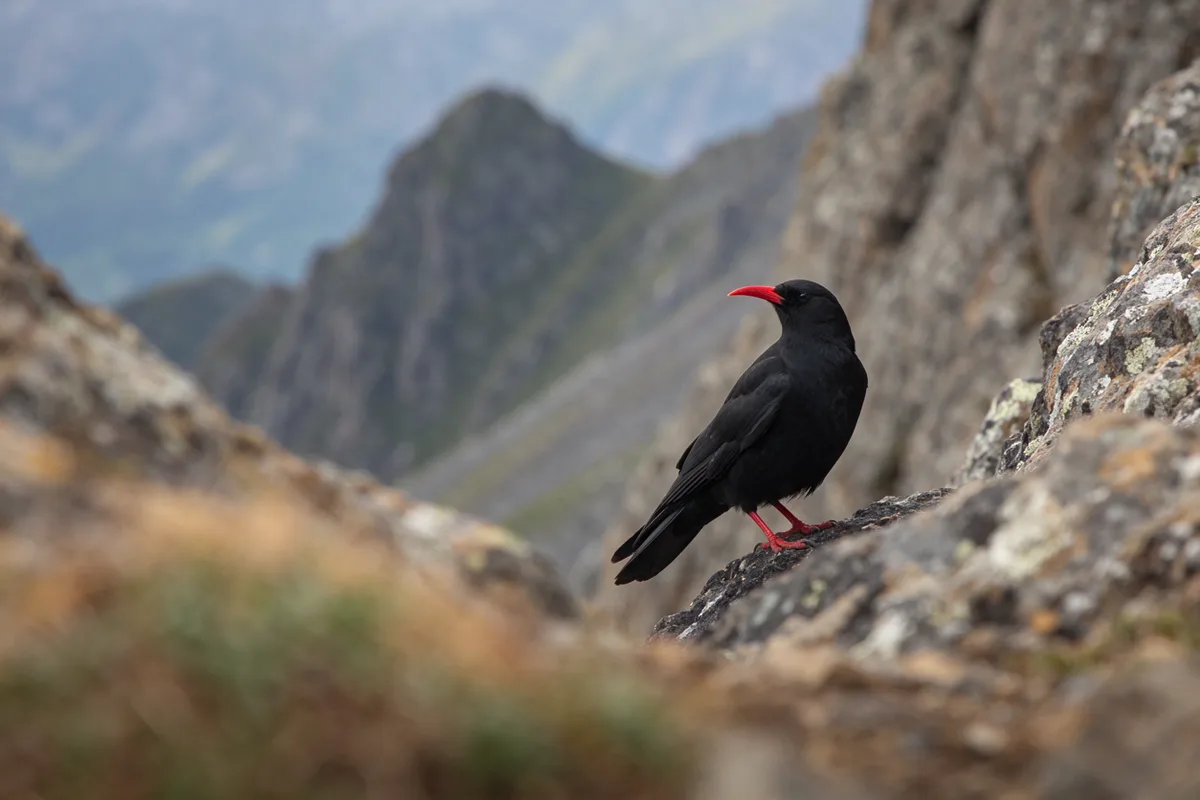
The Red-billed Chough is a black crow-like bird found in mountainous parts of Europe and Asia. Its long, curved red bill gives it a distinctive and elegant look. The red legs match the beak, making it one of the most visually striking members of the crow family.
Choughs are acrobatic fliers. They nest on cliff faces and feed on invertebrates in short grass and rocky soil. They are considered a symbol of Cornwall in England, where the bird appears on the county’s coat of arms.
Bill type: Long, slim, and curved downward
Habitat: Mountain cliffs, coastal headlands
Range: Parts of Europe, Central Asia, and China
4. Common Moorhen
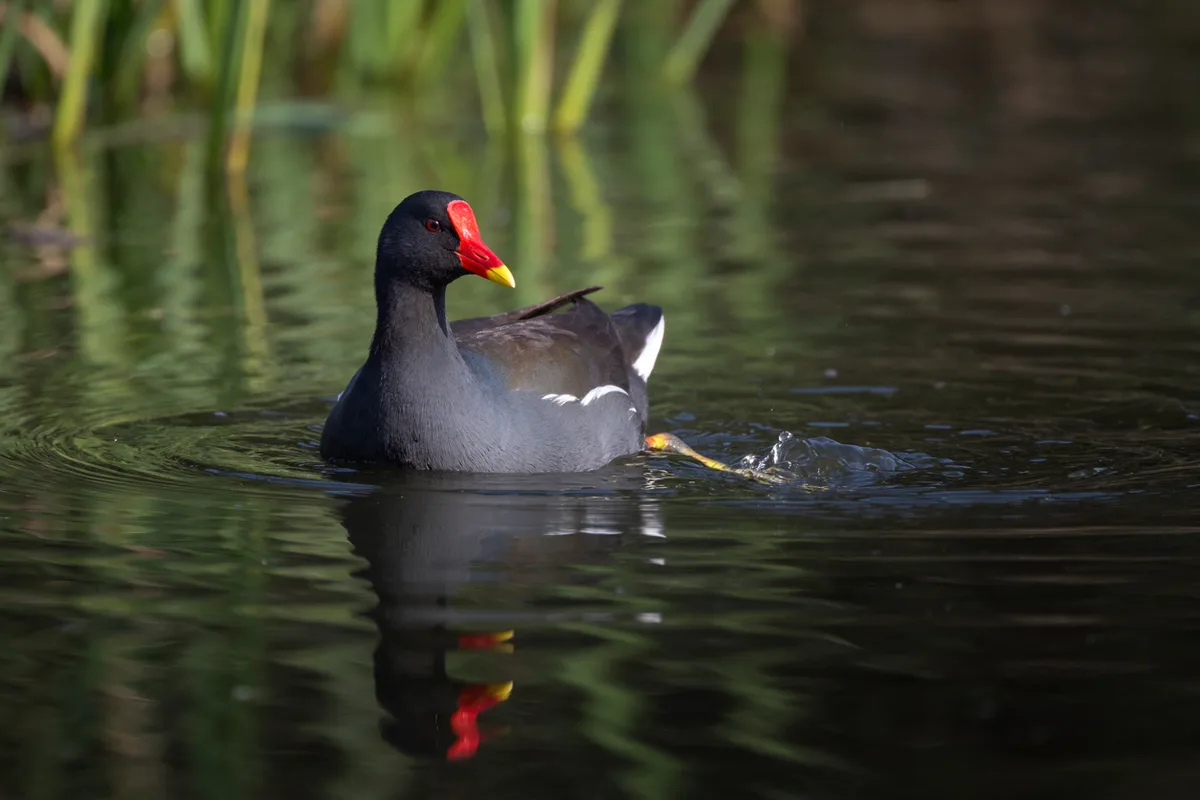
The Common Moorhen is a waterbird that looks a bit like a small dark chicken. It has a bright red frontal shield on its forehead and a red bill with a yellow tip. The red stands out sharply against its gray-black body.
Moorhens are found on slow-moving rivers, ponds, and wetlands across much of the world. They walk along the edges of reeds and water plants, bobbing their heads as they go. You will often hear them before you see them, since they make loud, sharp calls.
Bill type: Short and stout with a yellow tip
Habitat: Ponds, rivers, marshes
Range: Europe, Africa, Asia, Americas
5. Purple Gallinule
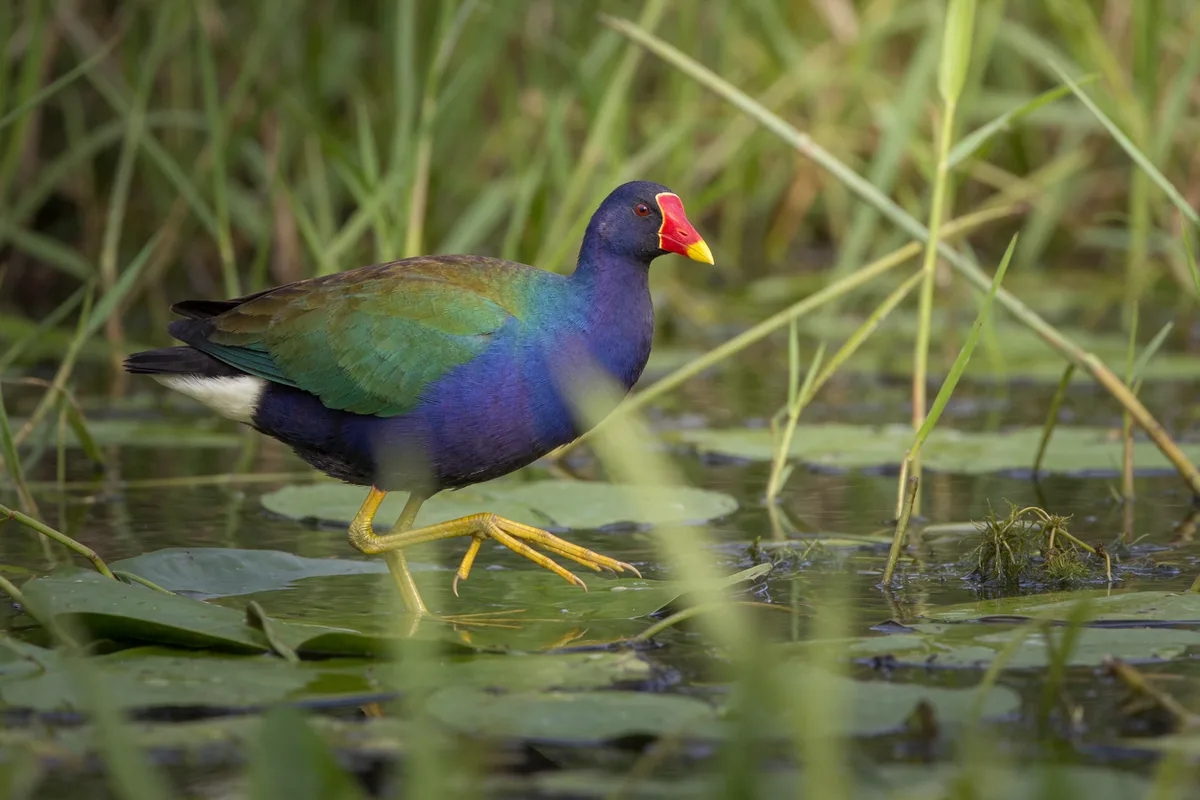
The Purple Gallinule is one of the most colorful waterbirds in North America. Its body is a mix of deep purple, blue, and green. It has a red bill with a yellow tip and long yellow legs. The red and yellow colors together make for a vivid contrast against the purple plumage.
Purple Gallinules walk on lily pads and floating vegetation. They have very long toes that spread their weight across the surface. You can find them in freshwater marshes in the southeastern United States, Central America, and South America.
Bill type: Short, stout, red with yellow tip
Habitat: Freshwater marshes, lily pads
Range: Southeastern US, Central and South America
6. Caspian Tern
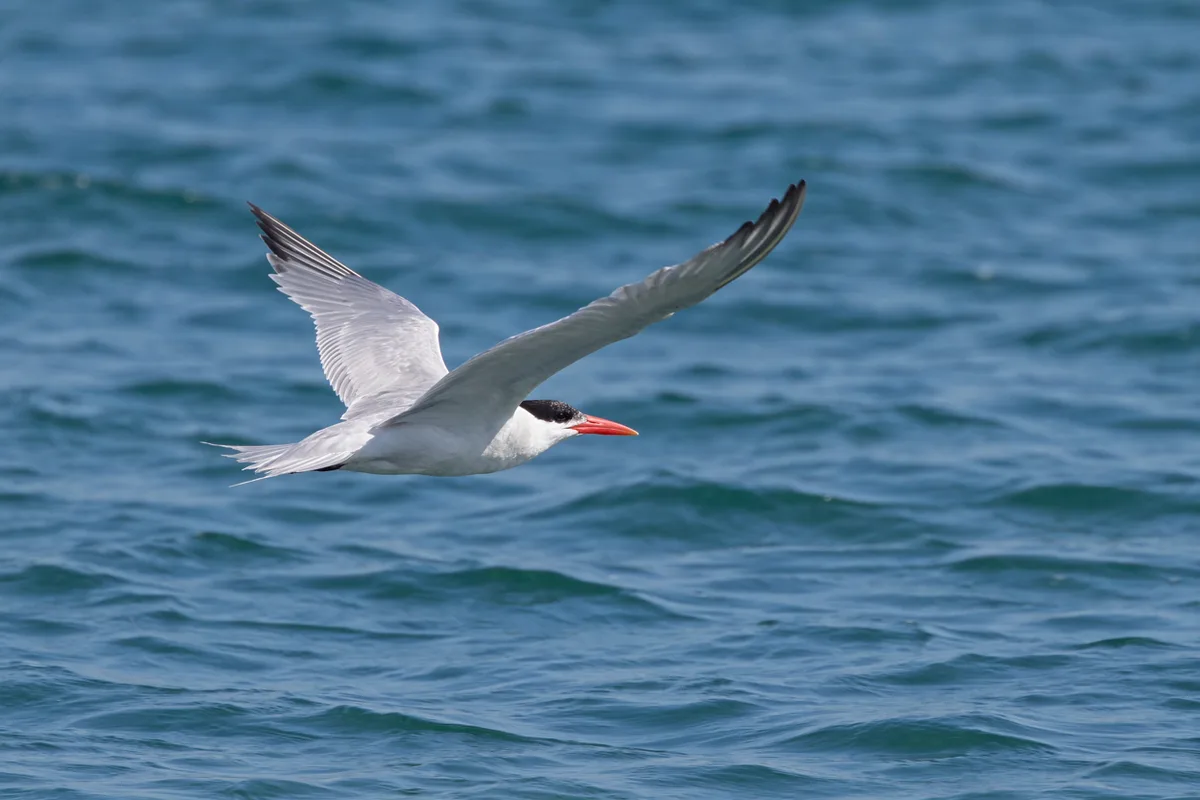
The Caspian Tern is the largest tern in the world. Its most striking feature is its massive coral-red bill, which is much heavier than the bills of other terns. The body is light gray and white with a black cap on the head.
Caspian Terns dive headfirst into the water to catch fish. They are loud birds that make harsh, raspy calls you can hear from far away. They breed near large lakes, rivers, and coastal areas on every continent except Antarctica.
Bill type: Large, heavy, coral-red
Habitat: Large lakes, rivers, coastlines
Range: Worldwide except Antarctica
7. Black Skimmer
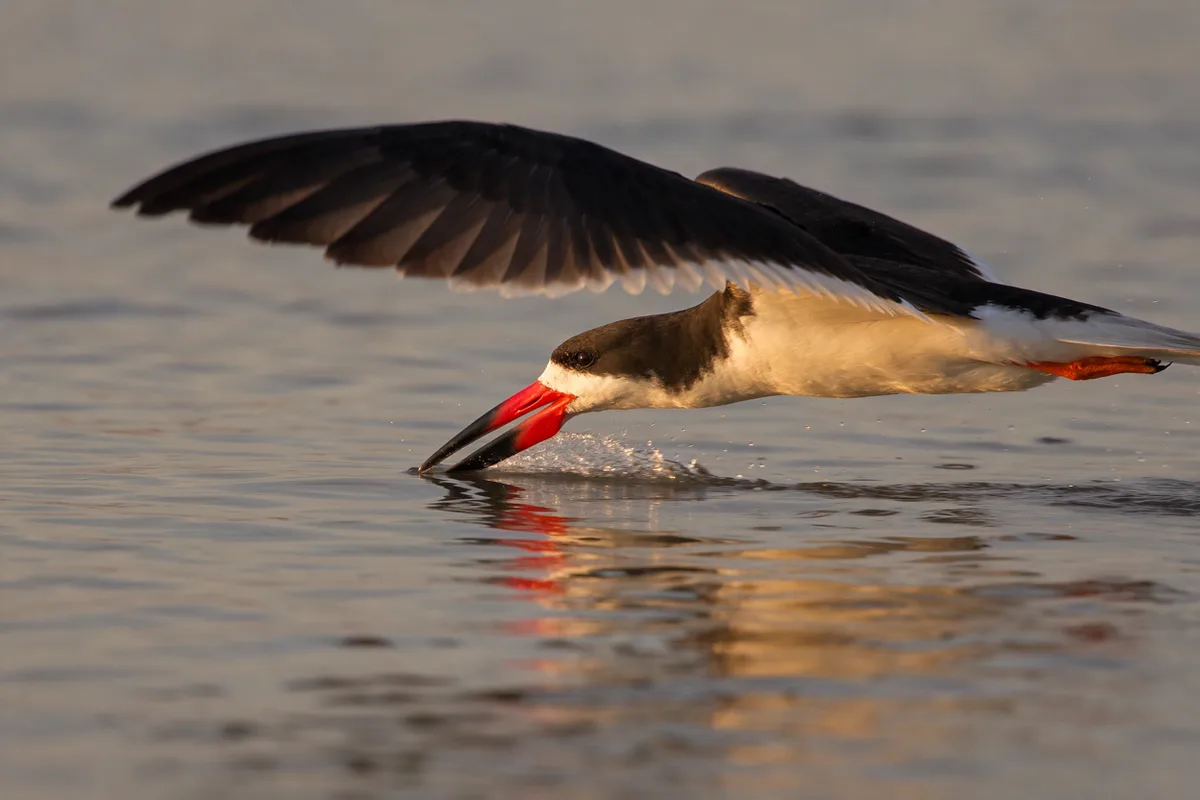
The Black Skimmer has one of the most unusual red beaks of any bird in the world. The lower half of its bill is longer than the upper half. This lets it skim the water surface with the lower mandible cutting through, snapping shut on fish the moment it makes contact.
The bill is red at the base and black at the tip. The bird is black on top and white underneath. Skimmers fly low along the water’s surface at dusk and dawn, which is the best time to watch them feed.
Bill type: Red at base, black tip, lower mandible longer than upper
Habitat: Coastal beaches, estuaries, lagoons
Range: Atlantic and Gulf coasts, South America
8. Red-billed Oxpecker
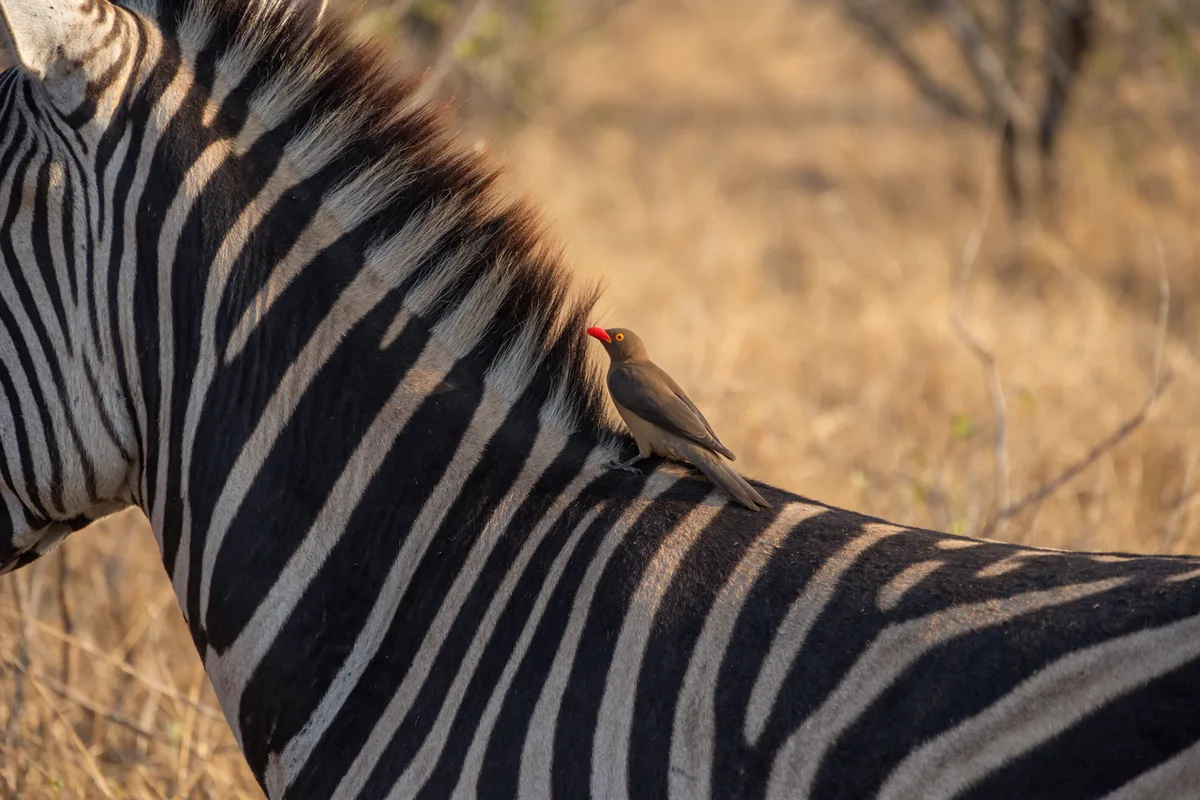
The Red-billed Oxpecker lives in sub-Saharan Africa. It is a dull brown bird, but its all-red bill and bright yellow eye-ring make it stand out. Oxpeckers spend most of their time clinging to large mammals like zebras, rhinos, and buffalo, picking ticks and parasites from their skin.
This relationship is called mutualism. The oxpecker gets a steady food supply, and the mammal gets pest control. The bird’s red beak is built for picking and combing through fur, not for cracking seeds or catching fish.
Bill type: Short, pointed, all-red
Habitat: African savannah and grassland
Range: Sub-Saharan Africa
9. Rose-Ringed Parakeet
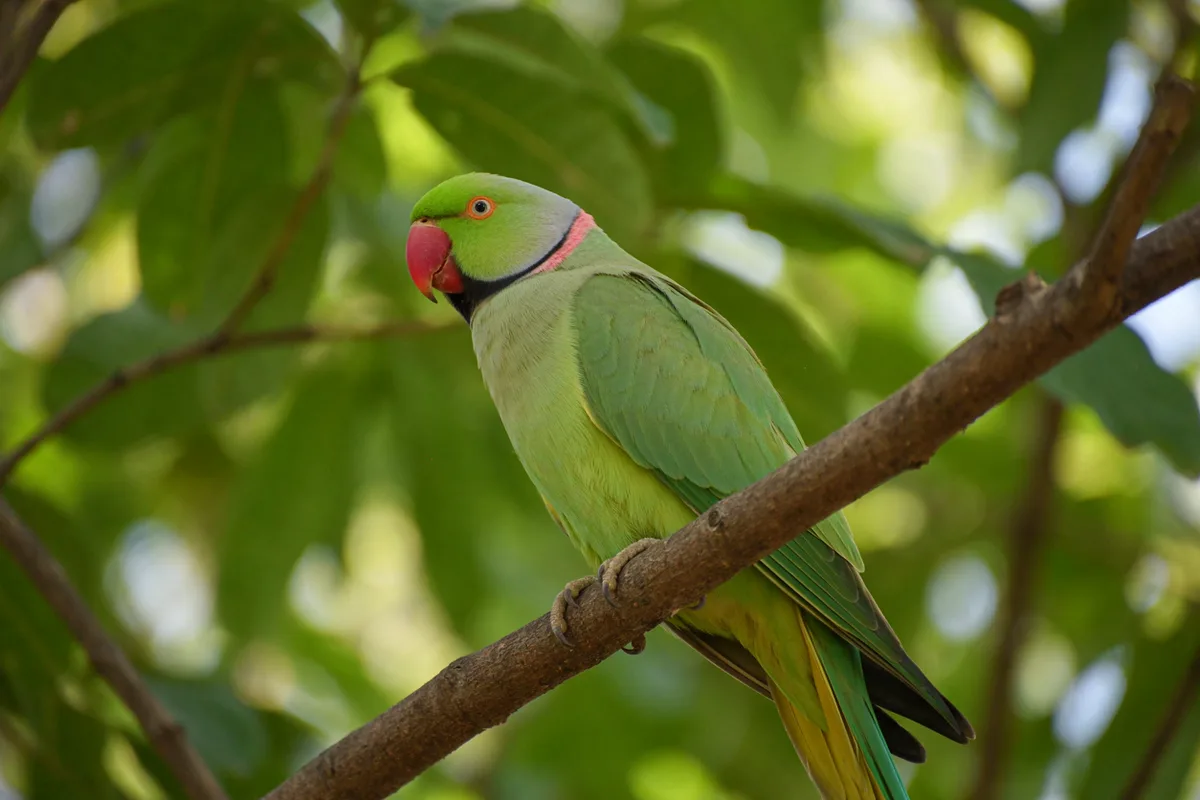
The Rose-Ringed Parakeet is a bright green parrot with a curved coral-red bill. Males have a black and pink ring around their neck. It is native to Africa and South Asia but has established wild populations in many cities across Europe, the Middle East, and North America.
These parakeets are very loud and social. They roost in large flocks and are becoming a common sight in cities like London, Brussels, and Amsterdam. Their red hooked beak is designed for splitting open fruit, berries, and seeds.
Bill type: Curved, hooked, coral-red
Habitat: Forests, farmland, urban parks
Range: Africa, South Asia, feral populations worldwide
10. Arctic Tern
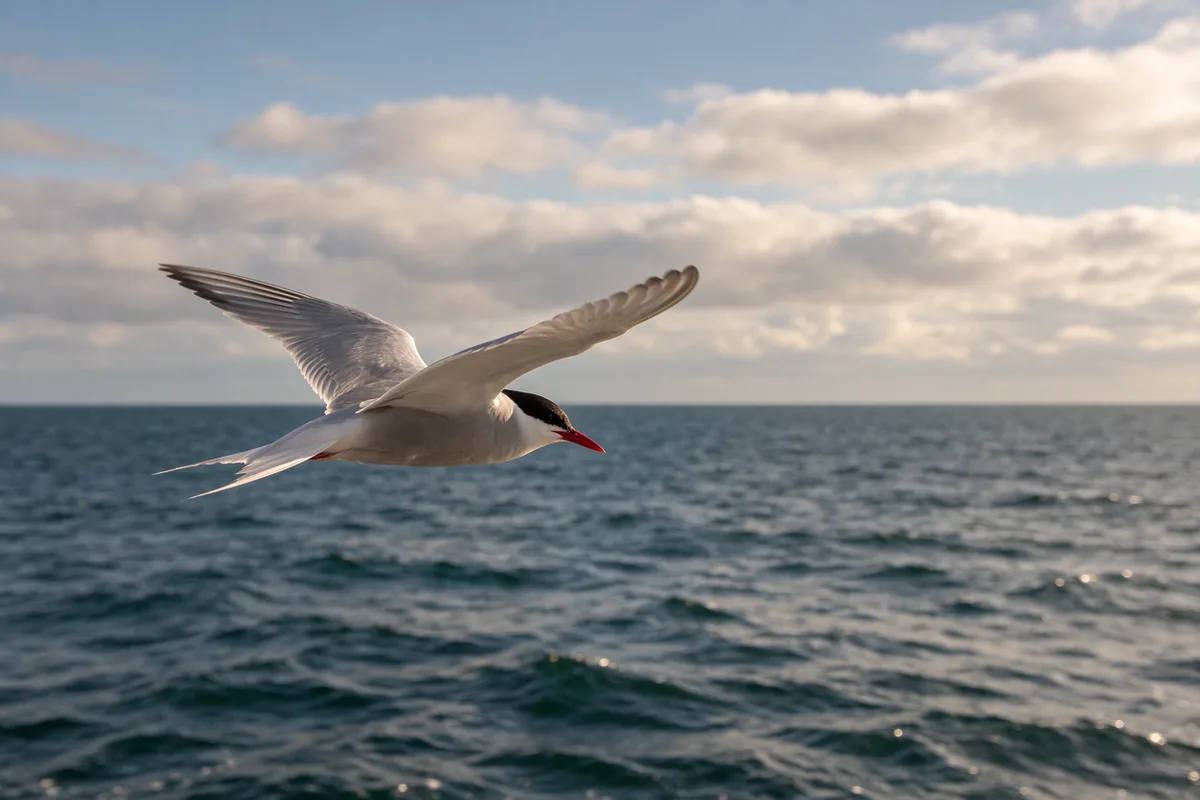
The Arctic Tern makes one of the longest migrations of any animal on earth. It travels from the Arctic to the Antarctic and back every year, a round trip of about 44,000 miles. For its size, it has a short, blood-red bill that it uses to plunge-dive for small fish.
The body is light gray and white with a black cap. When breeding, the bill is a deep, vivid red. Outside of breeding season, it can fade slightly. The Arctic Tern is a joy to watch in flight, with its long, forked tail and effortless glide.
Bill type: Short, pointed, blood-red
Habitat: Arctic tundra, open ocean, Antarctic waters
Range: Worldwide, breeds in Arctic, winters in Antarctic
Quick Comparison Table
| Bird | Bill Shape | Habitat | Where to Find |
|---|---|---|---|
| Northern Cardinal | Thick, conical | Woodlands, gardens | Eastern North America |
| American Oystercatcher | Long, blade-like | Coastal beaches | Atlantic and Gulf coasts |
| Red-billed Chough | Long, curved | Mountain cliffs | Europe and Central Asia |
| Common Moorhen | Short, stout | Ponds and marshes | Worldwide |
| Purple Gallinule | Short, stout | Freshwater marshes | Southeastern US, South America |
| Caspian Tern | Large, heavy | Lakes and coastlines | Worldwide |
| Black Skimmer | Asymmetric, red and black | Coastal beaches | Atlantic and Gulf coasts |
| Red-billed Oxpecker | Short, pointed | African savannah | Sub-Saharan Africa |
| Rose-Ringed Parakeet | Curved, hooked | Forests, urban parks | Africa, Asia, worldwide feral |
| Arctic Tern | Short, pointed | Arctic tundra, open ocean | Worldwide migrant |
If you enjoy spotting birds with striking features, you might also want to explore our guide on birds that lay green eggs, which covers another fascinating set of species you can identify by a single surprising trait. You can also check out our list of birds that look like cardinals if you want to learn more about red-colored birds in North America.
For tips on bringing more birds to your yard, our guide on the best seeds for cardinals is a great place to start. The Northern Cardinal is the easiest red-beaked bird to attract at home.
Frequently Asked Questions
What birds have red beaks?
Many birds have red beaks, including the Northern Cardinal, American Oystercatcher, Common Moorhen, Purple Gallinule, Caspian Tern, Black Skimmer, Red-billed Chough, Red-billed Oxpecker, Rose-Ringed Parakeet, and Arctic Tern. They live in habitats ranging from backyard gardens to coastal shores and African savannahs.
What backyard bird has a red beak?
The Northern Cardinal is the most common backyard bird with a red beak in North America. Both males and females have a thick, orange-red bill. They visit feeders year-round and are easy to attract with sunflower or safflower seeds.
What large bird has a long red beak?
The American Oystercatcher has a long, bright orange-red bill that it uses to open oysters and clams. The Caspian Tern also has a large, heavy coral-red bill. The Red-billed Chough has a long, curved red beak designed for probing rocky soil.
Why do some birds have red beaks?
Red beak color often signals health and fitness to potential mates. The brighter the bill, the more attractive the bird tends to be. Some red-beaked birds also use their bills for specialized feeding tasks, like prying open shells, skimming water surfaces, or picking parasites off mammals.
What water bird has a red beak?
Several water birds have red beaks, including the Common Moorhen, Purple Gallinule, Caspian Tern, Black Skimmer, and American Oystercatcher. Most of these birds use their red bills for catching fish, prying open shellfish, or foraging along shorelines.