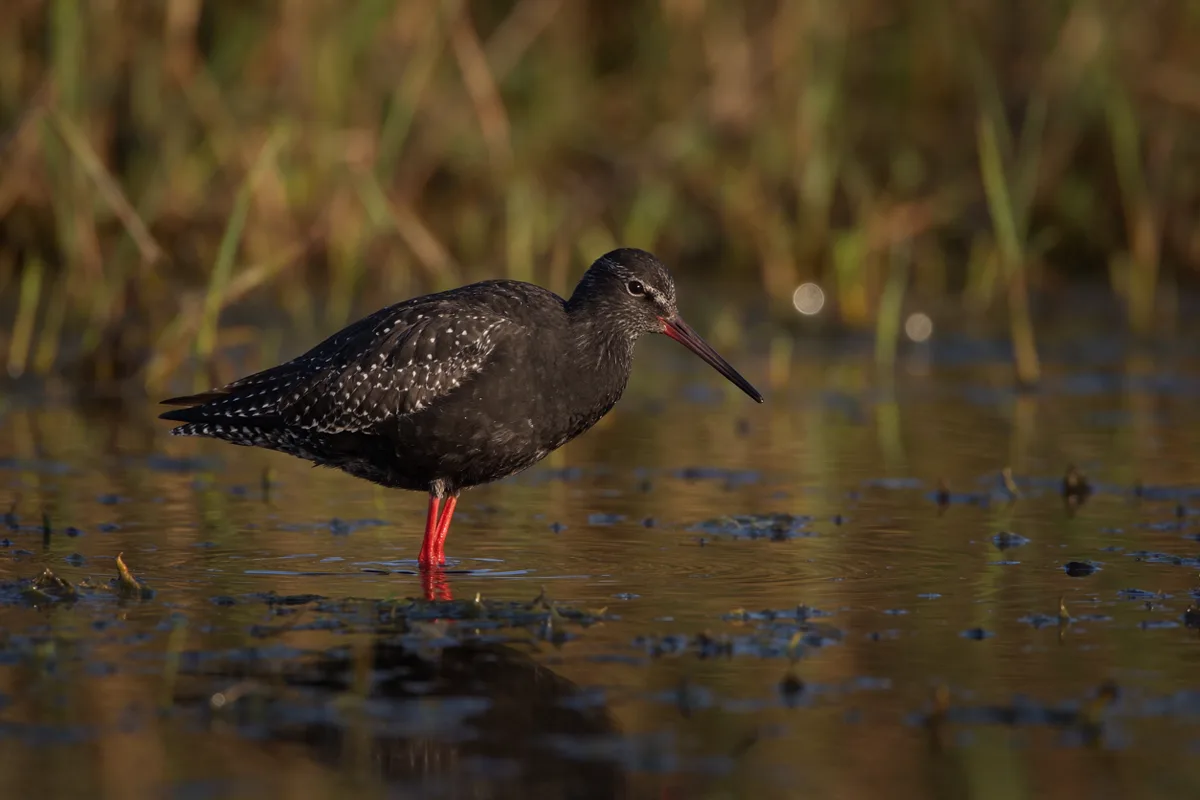
The spotted redshank (Tringa erythropus) is a slender, long-legged wading bird famous for its striking black breeding plumage and its unusually deep-water foraging style. It breeds across the remote Arctic tundra from Scandinavia to Siberia and spends winters along the coasts of Africa, the Mediterranean, and South Asia. Here is everything you need to know about how to identify this bird, where it lives, what it eats, and what makes it stand out from other waders.
Spotted Redshank at a Glance
| Trait | Detail |
|---|---|
| Scientific Name | Tringa erythropus |
| Family | Scolopacidae (sandpipers) |
| Length | 29 to 31 cm (11 to 12 in) |
| Wingspan | 61 to 67 cm (24 to 27 in) |
| Weight | 120 to 200 g (4.3 to 7.2 oz) |
| Lifespan | Up to 9 years |
| Conservation Status | Least Concern (IUCN); Amber Listed in the UK |
How to Identify a Spotted Redshank
The spotted redshank looks different depending on the time of year. It has two very distinct plumages: one for the breeding season and one for winter. This makes it one of the more dramatic waders to observe across both seasons.
Breeding Plumage (Spring and Summer)
In spring and summer, the adult spotted redshank turns almost entirely jet black. Fine white spots cover the back and wings, and the flanks show faint white barring. Males tend to be darker and more uniform in color, while females show heavier white speckling across the upperparts. This is one of the darkest plumages of any European wader.
Winter Plumage (Non-Breeding)
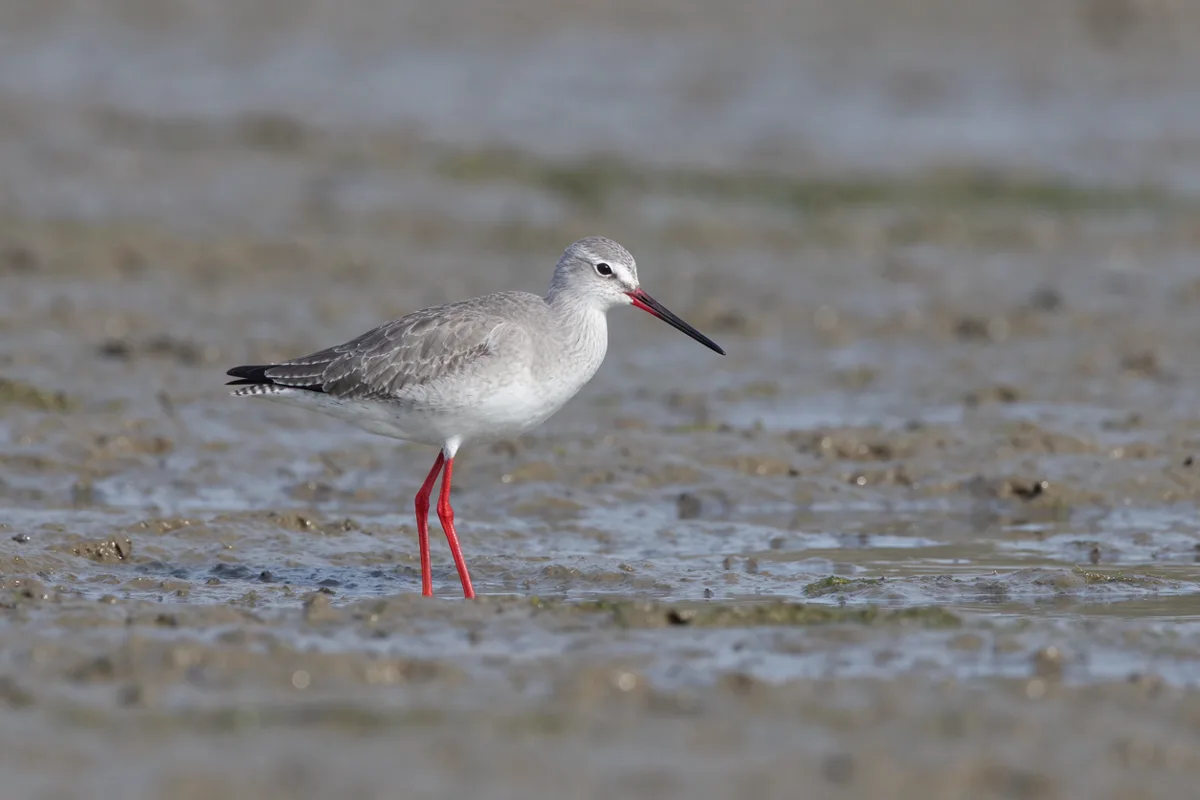
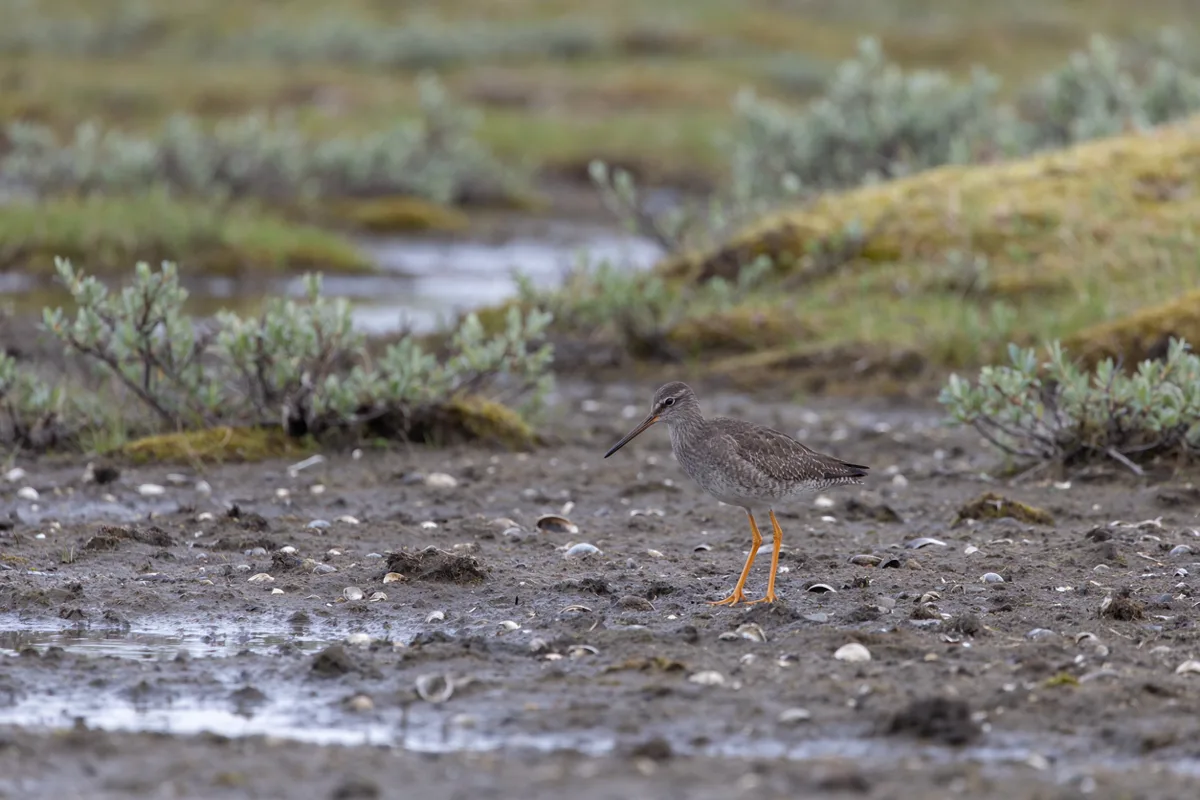
By autumn and winter, the bird transforms into a much paler version of itself. The upperparts turn a clean, frosty grey, and the underparts become white. A distinct white stripe runs above the eye from the base of the bill, called the supercilium. This field mark helps separate it from similar waders at a distance.
Juvenile Plumage
Young birds resemble winter adults but have brownish, heavily barred upperparts and finely streaked underparts. Their legs are orange-yellow rather than the vivid red seen in adults.
Bill, Legs, and Flight Pattern
The bill is long, slender, and black with a slight downward droop toward the tip. A small red or orange patch marks the base of the lower mandible. The legs are bright red in adults. In flight, spotted redshanks show a long white wedge up the lower back, but they lack the bold white trailing wing edge that you see on the common redshank.
The scientific name erythropus comes from Greek and means “red foot,” a direct reference to the bird’s most recognizable field mark.
Spotted Redshank vs. Common Redshank
These two species are often confused, especially in winter. Here is a quick comparison to help you tell them apart in the field.
| Feature | Spotted Redshank | Common Redshank |
|---|---|---|
| Size | Slightly larger (29 to 31 cm) | Slightly smaller (27 to 29 cm) |
| Build | Slender, long-legged, elegant | Stockier, shorter-legged |
| Bill | Long, fine, slightly drooped | Shorter, straighter, red-orange base |
| Summer plumage | Jet black with white spots | Brown, heavily streaked |
| Winter plumage | Pale silvery grey, clean white below | Grey-brown, streaked chest |
| Wing pattern in flight | No white trailing edge | Bold white trailing edge |
| Legs | Bright red (orange in juveniles) | Bright orange-red |
Habitat and Range
Where Spotted Redshanks Breed
Spotted redshanks nest across the high north, from northern Scandinavia east through Russia and Siberia. They favor open, boggy taiga forest edges, mossy tundra, and swampy areas near the treeline. These are remote areas that few birdwatchers ever visit during the breeding season.
Where They Spend the Winter
In autumn, spotted redshanks migrate south to spend the winter around the Mediterranean, tropical Africa, the Middle East, India, and Southeast Asia. In the UK, only a small number of birds overwinter, mostly at coastal estuaries and sheltered wetlands. The RSPB notes that fewer than 100 individuals typically winter in Britain each year, making every sighting a treat for birders.
During migration, spotted redshanks stop at tidal mudflats, salt marshes, flooded fields, rice paddies, and freshwater lagoons. These stopover sites are critical for the birds to rest and refuel before continuing their journey.
What Does a Spotted Redshank Eat?
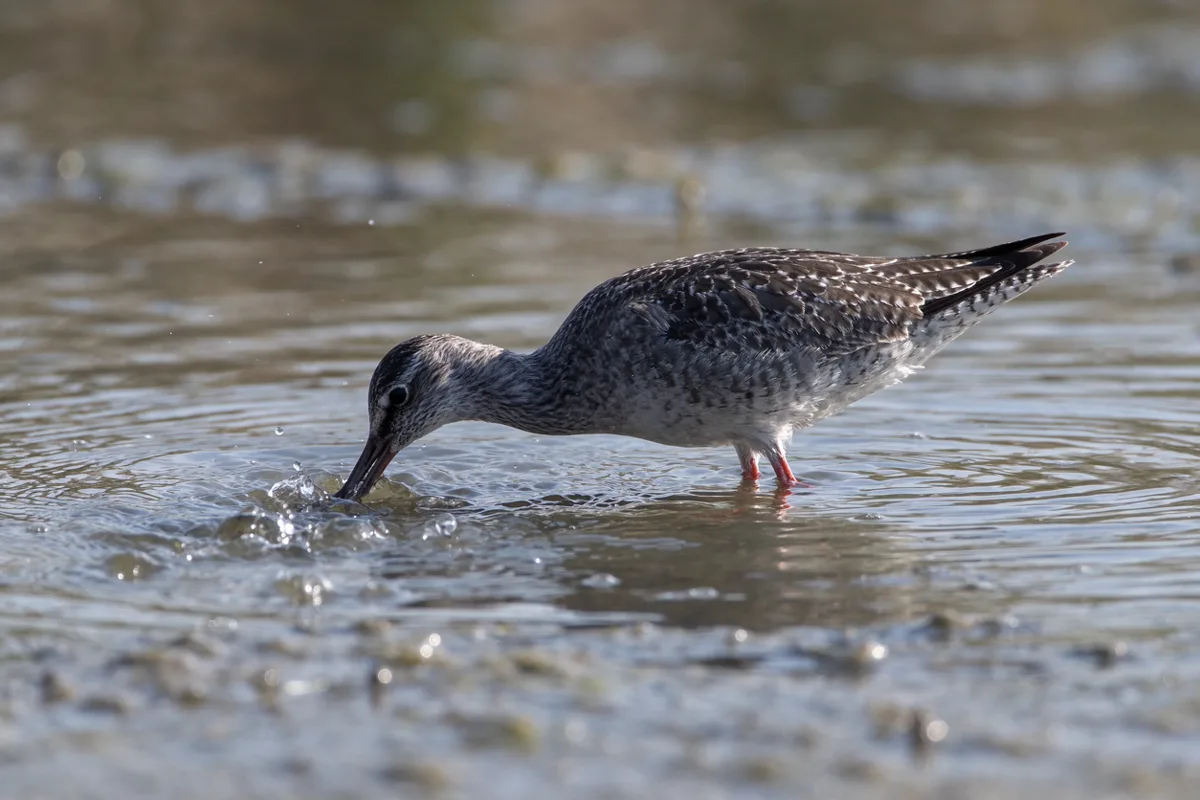
Spotted redshanks eat a wide range of small aquatic animals. Their diet includes aquatic insects and their larvae, small crustaceans such as shrimps, worms, molluscs, and small fish. The exact prey varies by season and location.
What sets spotted redshanks apart is their feeding behavior. Because of their long legs and neck, they wade into much deeper water than most waders of similar size. They are known to tip forward and completely submerge their heads to catch prey below the surface. Some individuals even swim briefly in deeper pools, something you rarely see from other sandpiper-sized birds.
To spot a feeding spotted redshank, look for a wader wading noticeably deeper than others in the same flock. Its habit of dunking its head underwater is a reliable identification clue even when you cannot see the leg color clearly.
Breeding Behavior and the Unusual Role of the Male
Spotted redshanks arrive on their Arctic breeding grounds in early May. The nest is a shallow scrape on the ground, usually hidden near tree trunks, grass tussocks, or boggy vegetation. The female lays a clutch of four eggs.
What happens next is unusual. After laying, the female begins migrating south again, often leaving as early as late June or early July, well before the eggs hatch. The male takes over all incubation duties, sitting on the eggs for about three to four weeks. He then raises and protects the chicks on his own until they can fly. This reversal of the typical parenting roles puts the spotted redshank among fewer than one percent of all bird species that follow this pattern.
According to the Cornell Lab of Ornithology’s All About Birds, role-reversed parental care is a rare but documented strategy seen in a small group of waders and shorebirds, where it has evolved alongside other unusual mating behaviors.
Call and Voice
The spotted redshank is a vocal bird. Its most common call is a clear, ringing, two-note whistle, often written as “chu-it” or “chew-whit,” delivered with a rising inflection. Once you learn this call, you can often hear a spotted redshank before you see it. The call is sharper and more clipped than the softer calls of the common redshank.
Conservation Status
Globally, the spotted redshank is listed as Least Concern by the IUCN Red List, meaning it is not currently threatened with extinction. However, in the UK and parts of Europe, it is on the Amber List. This reflects concern about its relatively small wintering and passage populations and the ongoing loss of coastal wetlands and estuaries that the bird depends on during migration.
Coastal wetlands used by spotted redshanks during migration are under pressure from development, pollution, and sea level change. Protecting estuaries and tidal mudflats along migration routes is essential for maintaining stable populations of this species.
Where to See Spotted Redshanks
In the UK, the best chance of seeing a spotted redshank is during spring passage (April to May) or autumn migration (July to October). Coastal reserves with open mudflats and shallow lagoons are ideal locations. A smaller number of birds stay through winter at a few sheltered sites along the south and east coasts of England.
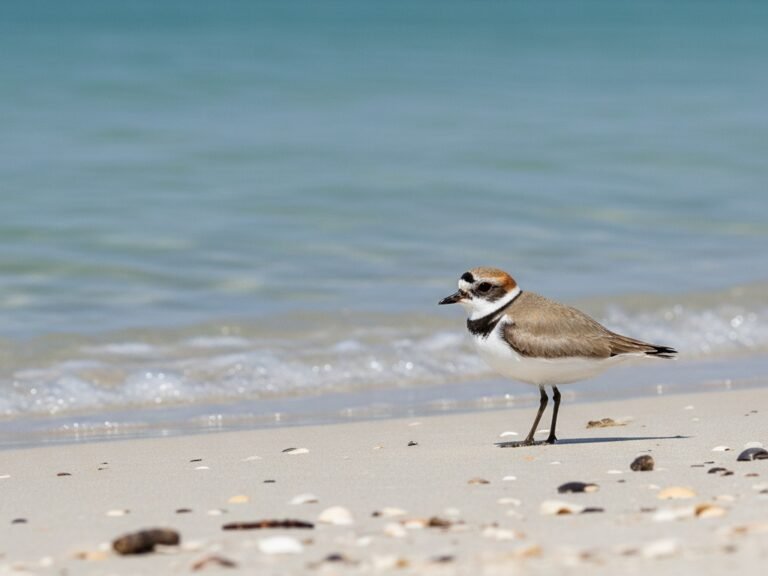
If you enjoy finding shorebirds like this one, our guide to the Kentish Plover covers another scarce coastal wader worth watching for. You may also find our profile on the African Jacana useful if you are interested in wading birds with unusual behaviors.
Frequently Asked Questions
What is the difference between a spotted redshank and a common redshank?
The spotted redshank is slightly larger, more slender, and has a longer, finer bill. In summer it turns jet black with white spots, while the common redshank stays brown. In winter the spotted redshank is paler grey. In flight, the spotted redshank lacks the bold white trailing wing edge that is a key feature of the common redshank.
Is the spotted redshank rare?
It is uncommon rather than truly rare. It is a regular passage migrant in the UK and western Europe, but only a small number of birds overwinter each year. Finding one outside of migration periods is considered a good sighting for most birders.
Why does the male spotted redshank raise the chicks alone?
This is a result of a breeding strategy called sex-role reversal. The female departs south early after laying her eggs, leaving the male to incubate and raise the chicks on his own. This pattern likely evolved to allow both parents to maximize their annual survival and future reproductive success.
What does the spotted redshank eat?
It eats aquatic insects, shrimps, worms, molluscs, and small fish. It catches prey by wading into deep water and sometimes submerging its head completely, which is an unusual feeding style for a bird of its size.
Where does the spotted redshank breed?
It breeds across the Arctic tundra and boreal forest zones of northern Scandinavia and Russia, extending east across Siberia. It nests in bogs, swampy forest edges, and open tundra near the treeline.